Undersea cakes range from a single afternoon of fondant modeling to a full weekend build, and the list below covers both quick buttercream techniques and longer gumpaste projects.
The deciding factor is your own schedule and what the kid actually wants: a mermaid tail needs shimmer dust and a soft palette, while a pirate ship scene means rigging and sails.
The Wilton 2A round tip works for jellyfish bells and later shapes coral and sea grass if you are working the whole reef in buttercream.
1. Fondant Sea Creatures Cake
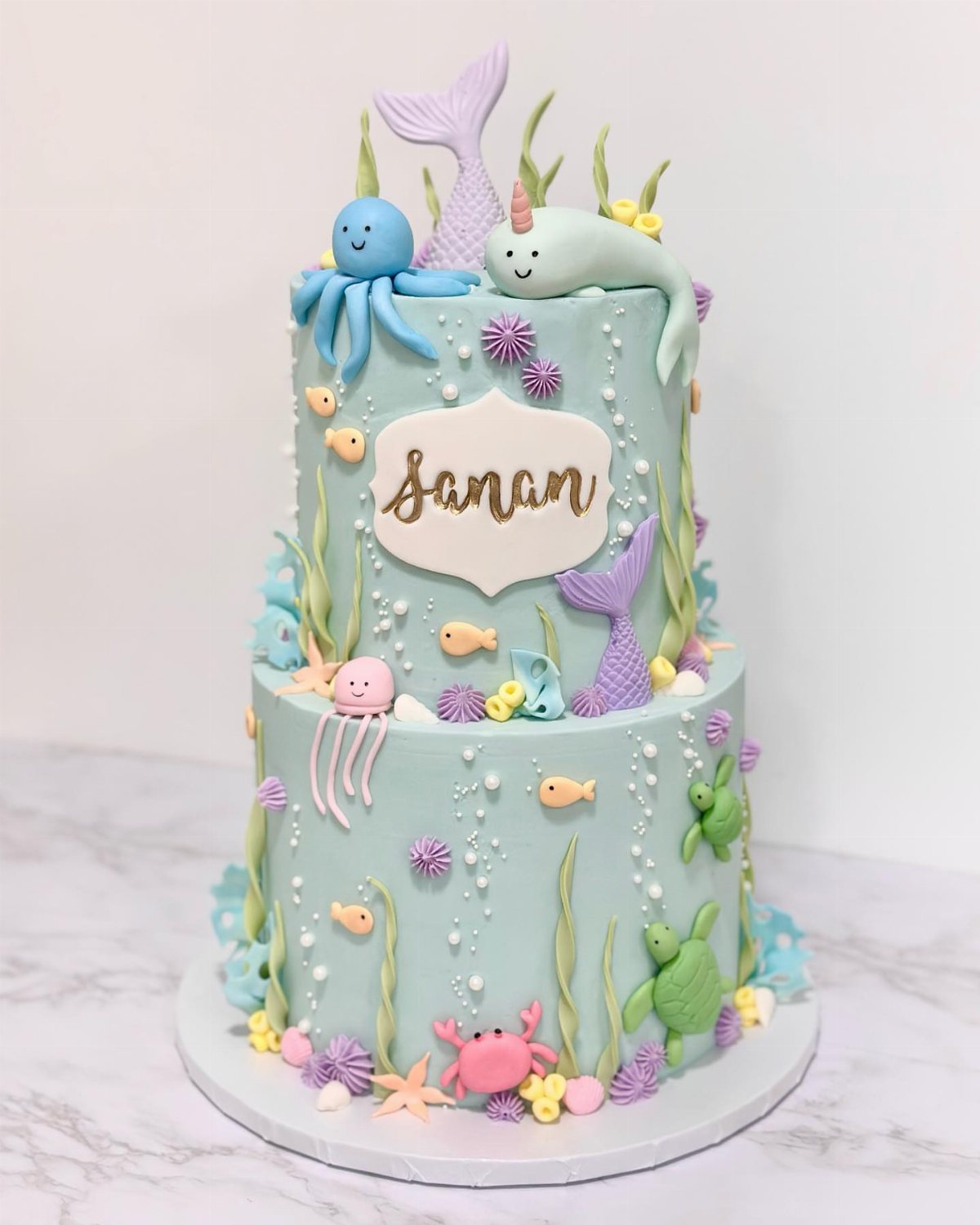
Fondant sea creatures let you build a whole reef in sugar. I start with a pale blue buttercream base, then model narwhals, turtles, and crabs from tinted fondant a day ahead so they firm up.
The ones on the cake I saw sat at different heights, some on coral stalks, which keeps a two-tier from looking flat.
Wilton rates this advanced, and I agree: between the modeling, the painting, and the arrangement, plan for most of an afternoon. A handful of creatures on a single tier still reads undersea without the full assembly.
2. Mermaid Tail Cake
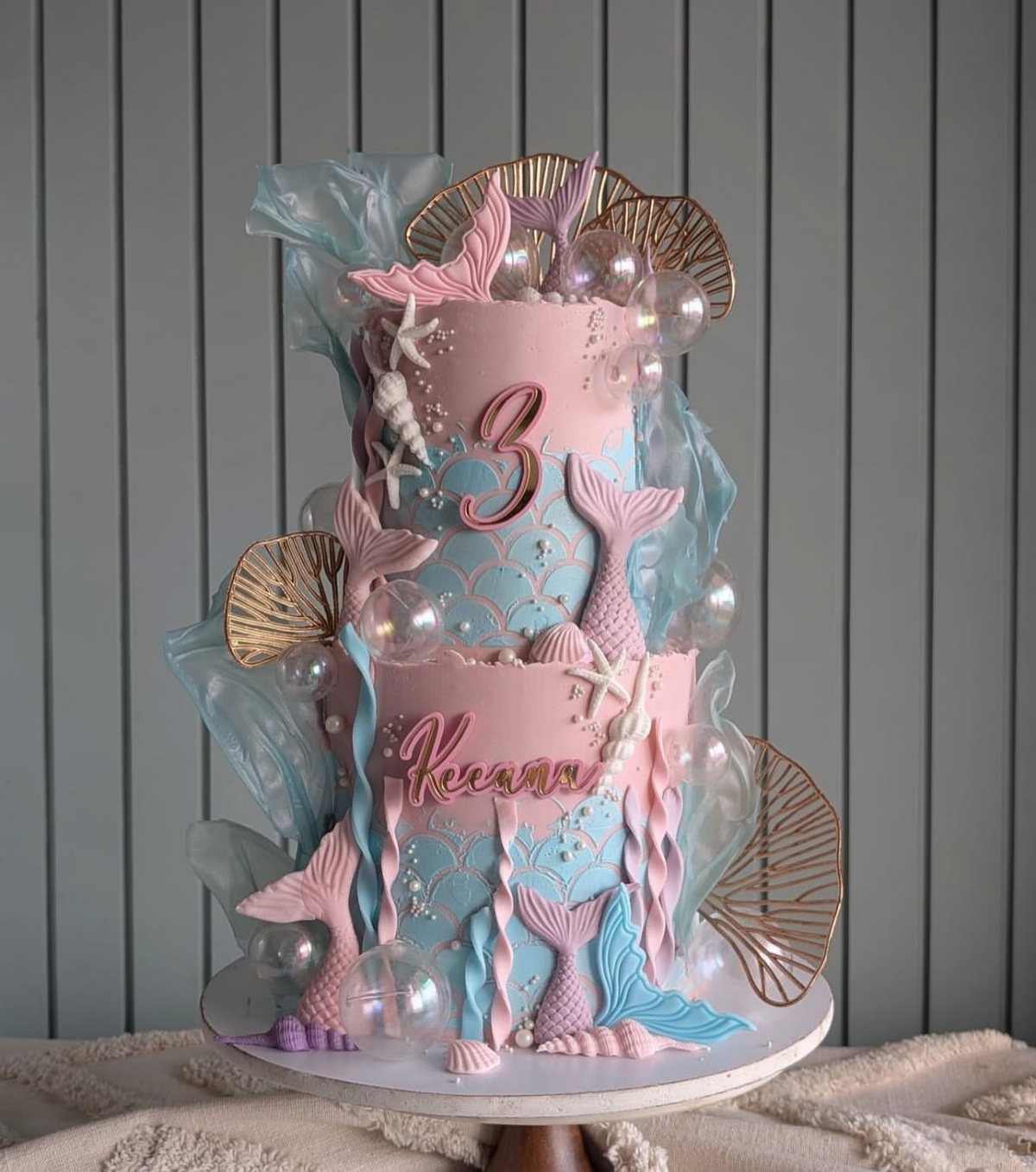
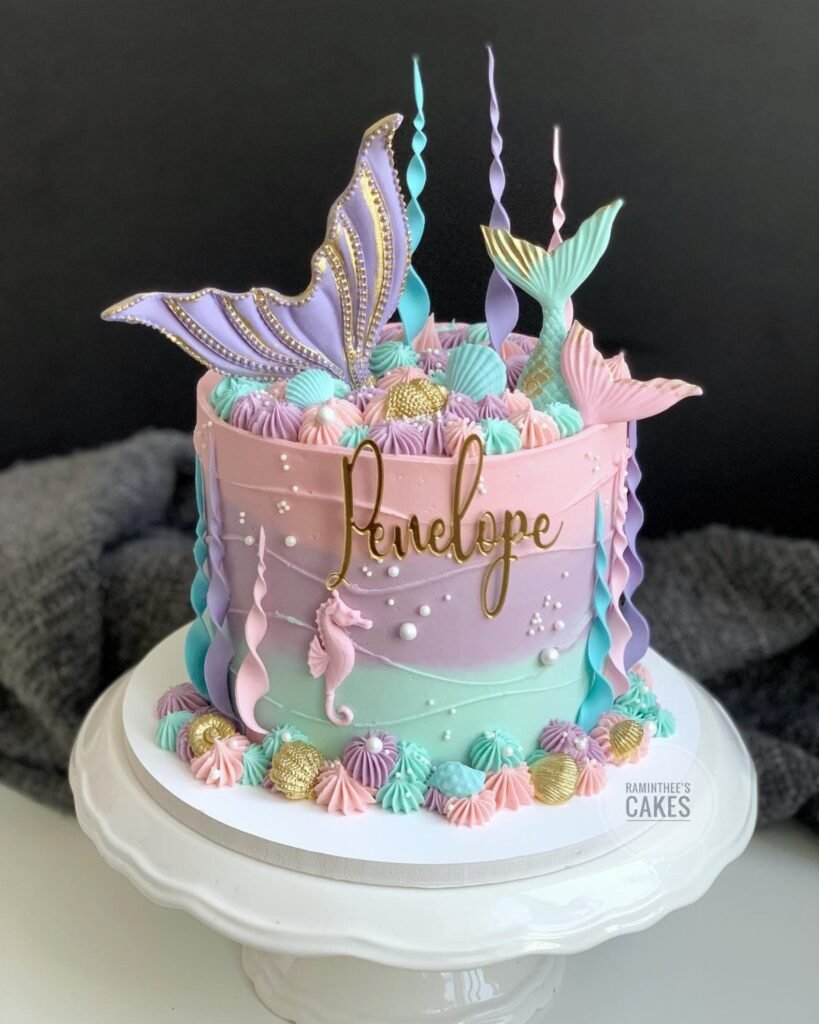
A mermaid tail cake leans into pinks, blues, and anything that catches light. A pink tier above blue, with tails and bubbles in fondant or candy, keeps the palette soft.
I like this for a third birthday, partly because the "3" topper fits the scale: the tail itself becomes a focal point without needing a full figure.
Shimmer dust on the scales is the move that sells it, applied dry with a soft brush.
Going "all out" with more creatures is an option, but the tail and a few shells already carry the theme if time runs short.
3. Octopus Cake
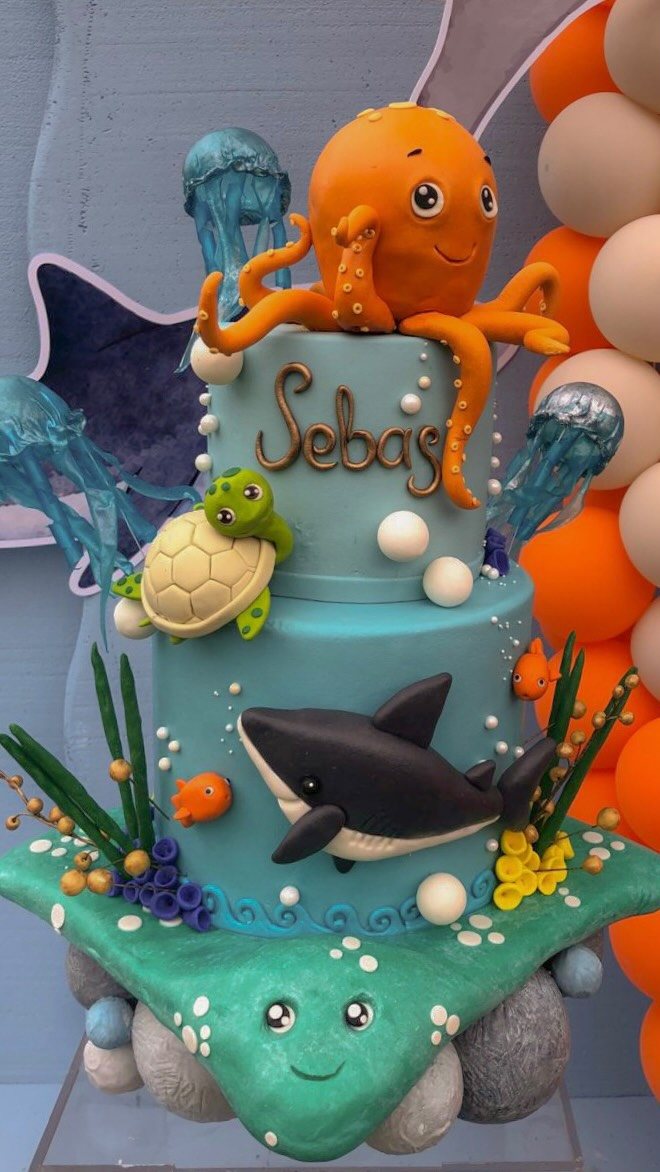
An octopus cake lives or dies by the tentacles. Orange fondant arms wrapping both tiers means building them on a curve while the fondant is still soft; let it skin over and the shape cracks.
I would make the body as a rounded dome on top, then attach legs with edible glue, working bottom to top so gravity helps. A cartoon face keeps it friendly for younger kids.
A green base is a nice touch, sand-colored sugar instead of a board that reads as sky.
4. Seashell and Pearl Cake
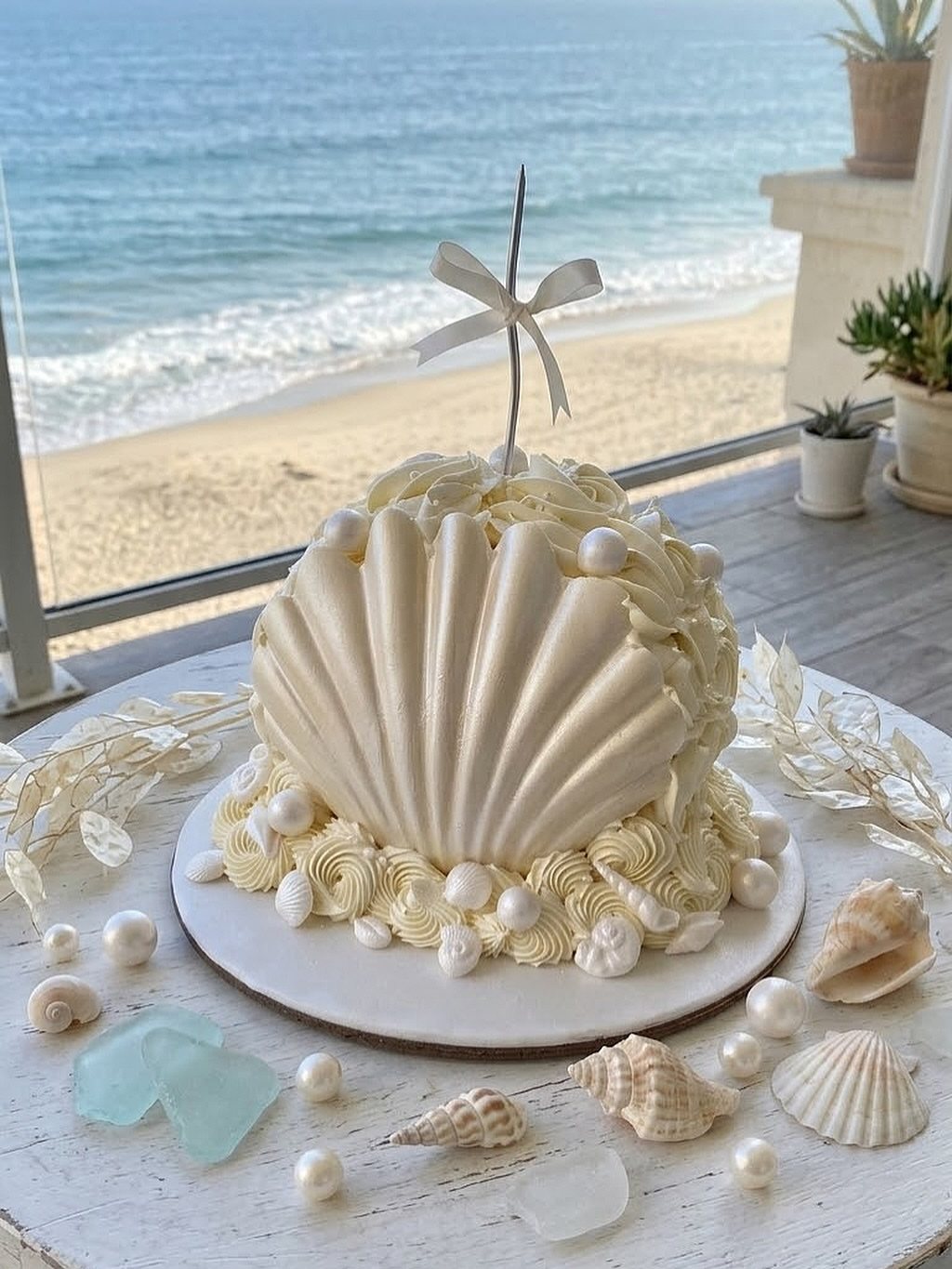
This is the choice when the party skews older or the guest list mixes adults and kids. Ivory buttercream, piped texture, and fondant or chocolate shells in white and blush: the effect is beach-wedding elegant rather than cartoon ocean.
I have used pearl Sixlets for the accents; they catch light like real nibs and cost less than a specialty shop pearl. This palette works outdoors because it stays sun-faded, not neon.
For piping practice, Sugar and Sparrow’s sequence runs coral dots, then grass with a Wilton 104, then open stars in purple and yellow with a 4B. The drop flowers at the end fill gaps without looking fussy.
5. Shark Attack Cake
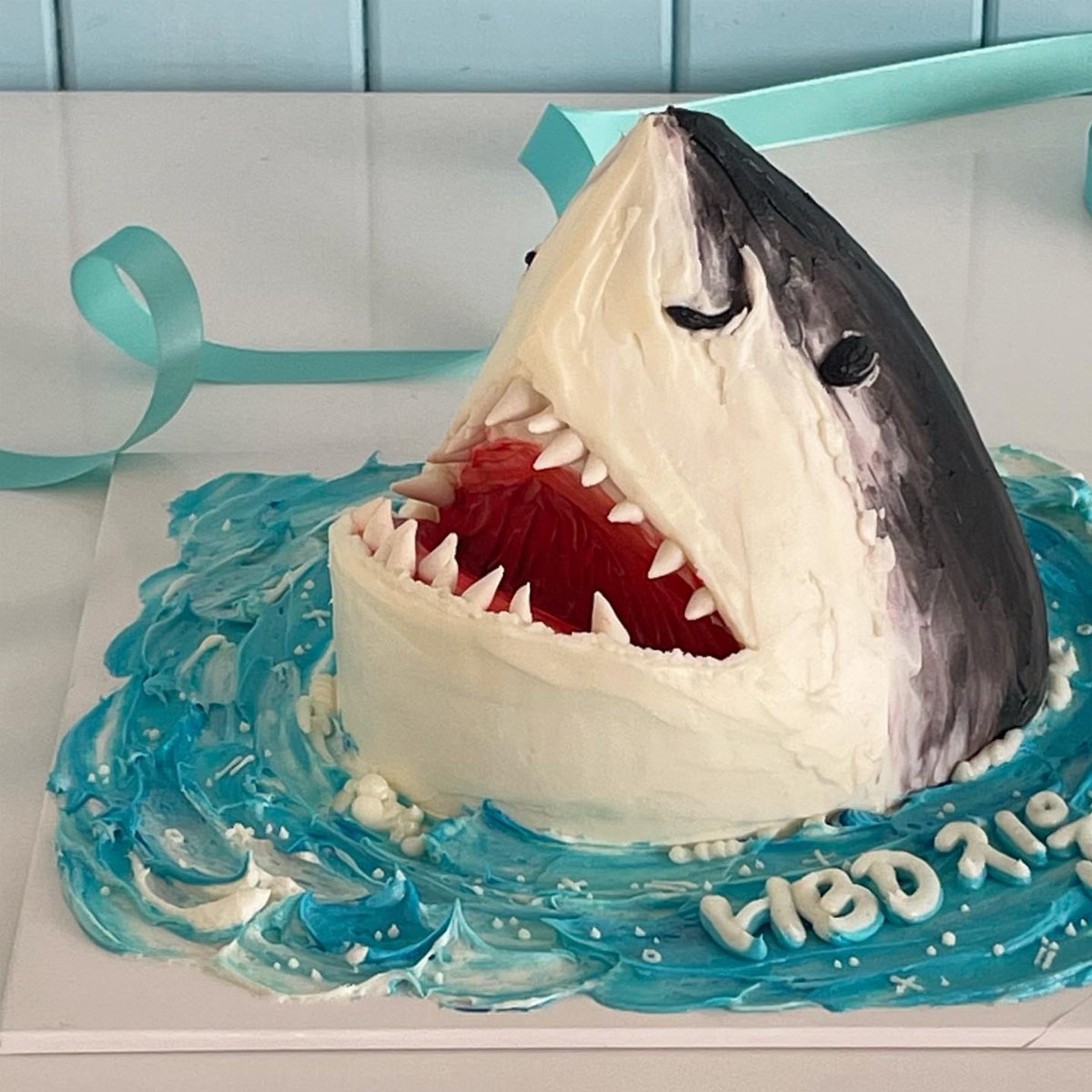
A shark head breaking through blue frosting reads pure adrenaline, and the "HBD" board tells me this was a home kitchen job, not a bakery commission.
The shape is carved cake, which I have messed up: freeze layers firm first, or the knife drags crumbs into the frosting. White buttercream foam around the base hides the seam where shark meets water.
The notes pitch this for boys, which tracks for the age range where sharks are still peak cool; I would not force it on a kid who has moved on to space or dinosaurs.
6. Pirate Ship Ocean Cake
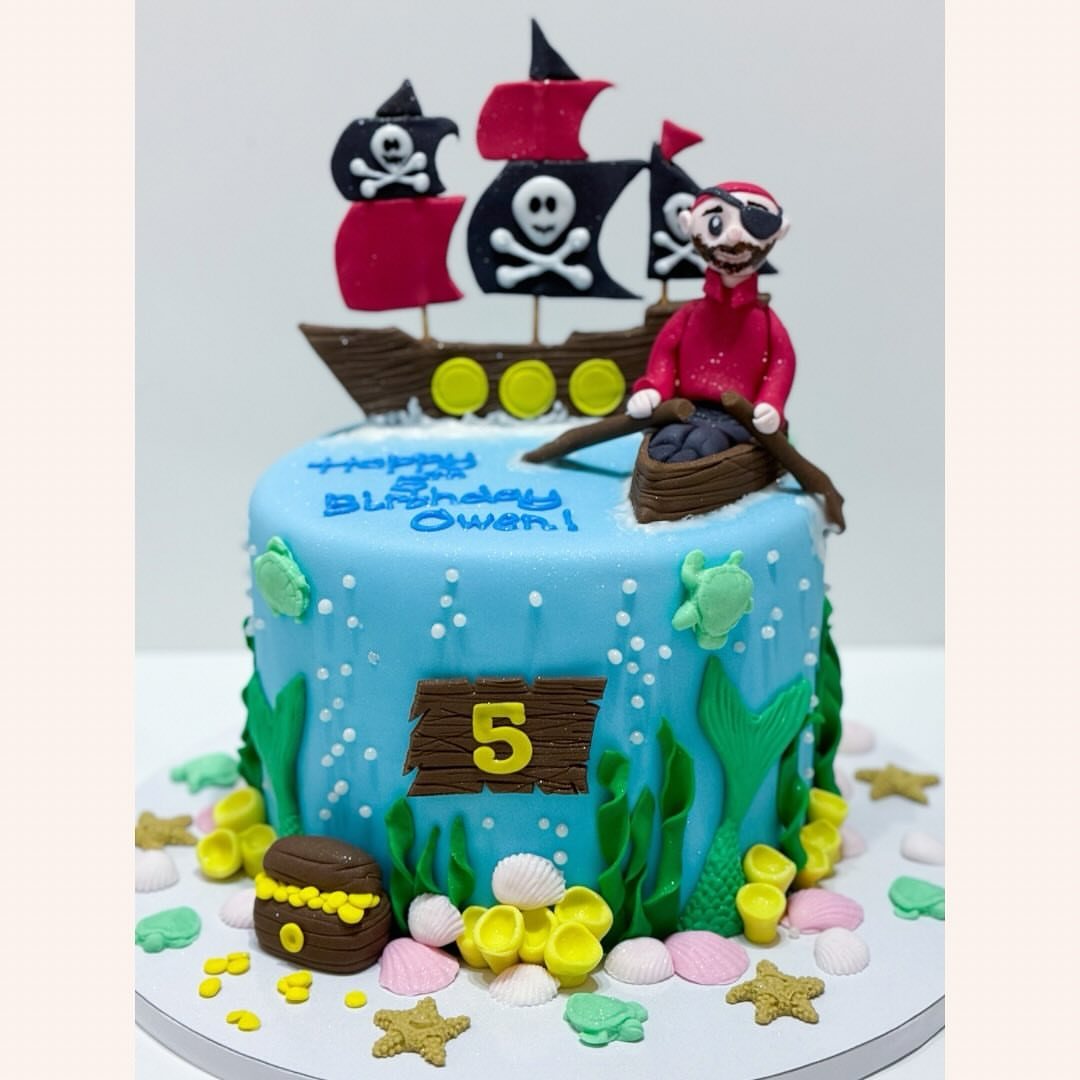
A pirate ship topper turns the undersea theme into a story with actors.
Keeping the ocean half light blue buttercream, then loading the top with a rowboat figure, a full ship, and seaweed in fondant, gives the eye plenty to do.
I notice the "5" and the name in matching script: at five, a kid wants to see themselves in the scene, not just admire the decoration.
The ship itself can be a toy washed clean, which saves hours of modeling and becomes a take-home gift after. For a tighter budget, a single captain in a boat carries the same narrative without the second vessel.
7. Jellyfish Undersea Cake
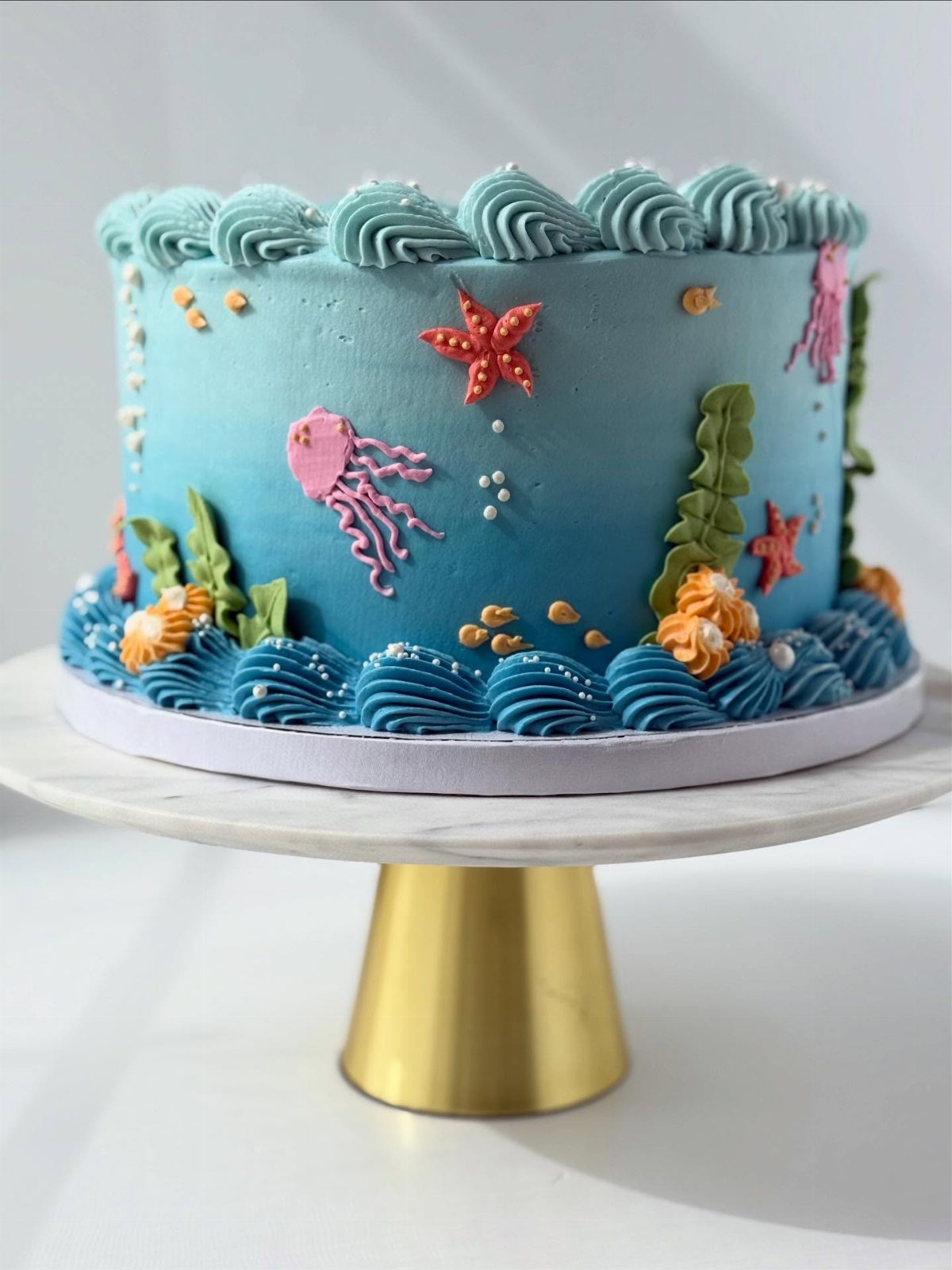
Pink jellyfish piped onto blue buttercream give this cake its personality without needing fondant figures. I would use a Wilton 2A or similar round tip for the domed bells, then drag a smaller tip downward for trailing tentacles.
The ombre base, light to dark, reads as water depth without extra work. Fondant coral and starfish fill gaps if your piping runs thin, though the jellyfish alone carry the theme at smaller scales.
This sits at intermediate skill: the shapes are forgiving, but the spacing takes eyeing. I like it for a host who wants undersea without the full creature menagerie.
Pearl sprinkles at the base hint at bubbles or sand, a cheap add-on that finishes the scene.
8. Coral Reef Sheet Cake
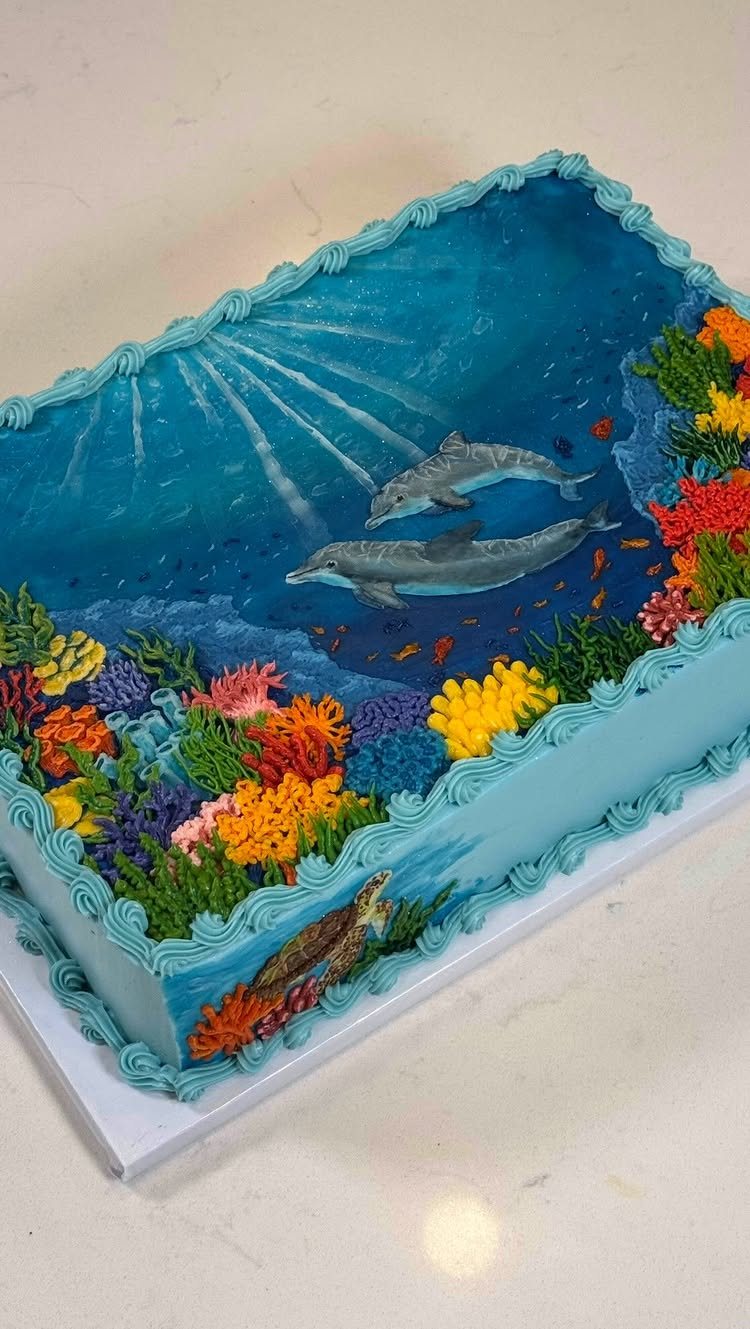
A rectangular cake is the practical choice when the guest list tops 20, and piping the decoration directly means no fragile toppers to transport.
The dolphins and turtle sit at the surface, coral and seaweed along the borders, sunbeams angling down: the composition uses the whole rectangle instead of fighting it.
Piping animals freehand with a small round tip, Wilton 5 or similar, needs a steady arm.
I anchor my elbow to the counter and trace the outline with a toothpick first; smoothing with a small offset spatula or a square of acetate keeps the buttercream from looking lumpy.
Chelsweets added a whole school, whale to squid, though a few centered animals still read. Bubbles in white buttercream dots or round sprinkles fill the open water so the blue does not look forgotten.
This is a time trade: one long session, comfortable chair, rather than the stop-and-start of fondant work.
For a host baking at home with a day to spare and a crowd to feed, the sheet format removes the tiered-cake stress entirely.
Gumpaste Sea Life
Gumpaste dries in 24 hours where fondant needs 72, which matters when you are scheduling a weekend bake. Both start from the same 1-inch pieces kneaded to a uniform consistency with shortening.
Press the color into the mold, roll it flat with a small rolling pin, and trim the extra with an X-Acto knife.
The Sea Life Mold releases by gentle pulling; wax or parchment paper underneath lets you flip pieces midway so both sides dry evenly.
I have not used this mold myself, but the timeline gap between gumpaste and fondant is worth weighing against your delivery date.
For piped accents instead, a small petal tip like the Wilton 103 handles seaweed, and a Wilton 5 round tip covers coral and starfish. A comfortable chair matters; this piping takes long enough that posture becomes a real variable.
Buttercream Techniques
For an ombre base, split 4.5 cups of buttercream across three bowls: dark blue, medium blue, light blue. Frost from the bottom up in thirds, darkest at the base, then scrape smooth with an icing scraper.
Leave the top edge uneven; it reads as small waves without extra work. A 30-minute chill firms the buttercream before you add textures.
Reserve 2 cups of white frosting in a piping bag with a coupler, or cut a 1/2 cm hole if you do not have one. White around the top edge looks like breaking waves.
Work the extra piping colors in the same bowl, light to dark, so you wash fewer dishes. A Wilton 2A tip shapes the jellyfish bells; switch to a 104 petal tip for coral and sea grass.
The gradient at the base is optional, but it sells depth without any fondant work.
Cake Layering
A greaseproof board or flat plate keeps the cake from sliding; a dab of buttercream anchors the first layer.
Spread each layer even with a large offset spatula, add sprinkles if you want them, then press down with both hands to settle the stack and push out trapped air.
Crumb coat first, then chill. For the ombre finish, the lightest blue goes on top with an angled spatula while the cake spins on a turntable.
Run the scraper around the sides for a smooth finish, but leave the top uneven on purpose. Another chill, at least 30 minutes, hardens the buttercream before piping or placing toppers.
If the finish still looks rough, the technique is in smoothing, not more frosting. A bench scraper or large offset spatula does the final pass on the sides; the top texture stays as your water surface.
Decorative Elements
Edible sand and pearl sprinkles do the finishing work that fondant figures usually carry.
For the breaking wave effect, pipe white buttercream around the top edge after the second frosting layer, then leave the top textured while smoothing the sides.
The color scheme beyond blue is choose-your-own: 5 to 10 additional frosting colors, mixed in sequence from light to dark in one bowl to save washing. Each color gets its own small piping bag with a coupler so you can swap tips.
The green sea grass uses a Wilton 104; coral and details use a small round tip. Pick accent colors that match your party; the scene should feel like yours, not a template.