
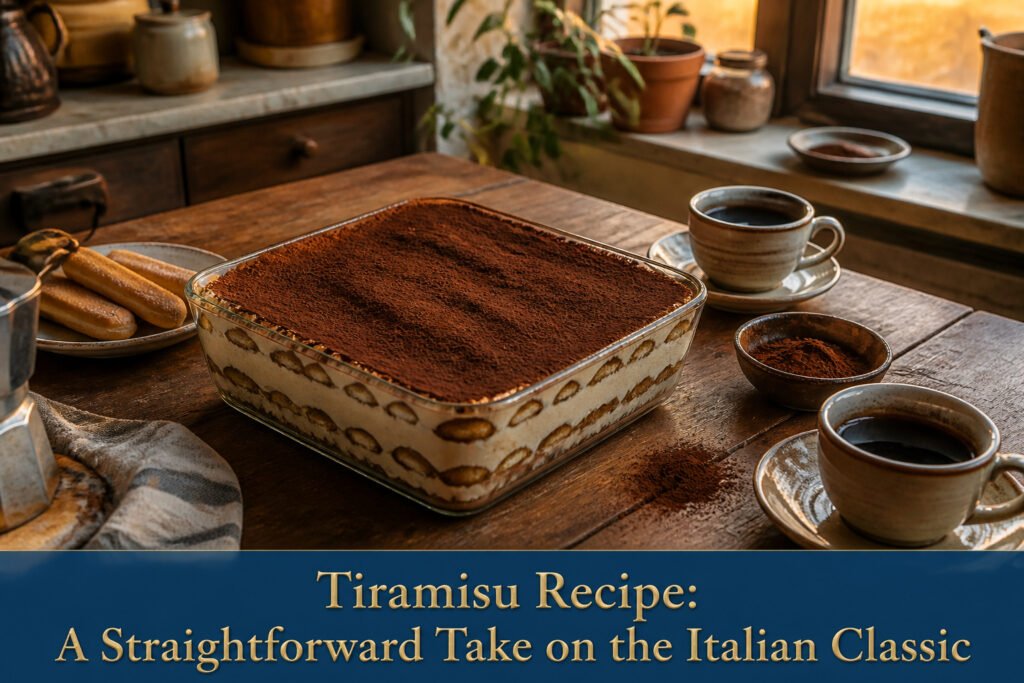
This version sets in four hours, though overnight turns the cream stable enough to slice cleanly and lets the coffee soften the ladyfingers into something closer to cake.
The difference from most recipes is the custard: egg yolks and sugar whisked to 154–158°F over simmering water, which thickens the mascarpone base without the raw-egg worry.
Fourteen ounces of room-temperature mascarpone and 1⅔ cups cold heavy cream, whipped separately and folded in, keep the filling light rather than dense.
Tiramisu Recipe

An 8- to 12-serving tiramisu needs just a few core components, plus a couple of extras worth considering.
- 5 large egg yolks and ½ cup plus 2 tablespoons sugar form the base of the cooked custard. I set the bowl over gently simmering water and whisk until the mixture thickens and hits 154–158°F; this step matters for both texture and food safety.
- 14 oz mascarpone at room temperature and 1 ⅔ cups cold heavy cream build the filling. Whip the cream separately to stiff peaks, then fold it in so the mixture stays light rather than dense.
- 1½ cups brewed espresso, cooled completely, is what you dip the ladyfingers into. Cold liquid keeps the biscuits from turning soggy; 36 to 40 Savoiardi usually fills a 9×13-inch dish in two layers.
- Cocoa powder for dusting goes on right before serving, not before chilling, so it stays sharp on top.
- Optional but useful: 2 tablespoons Marsala, brandy, or coffee liqueur stirred into the warm espresso, and ½ teaspoon vanilla extract whisked into the mascarpone mixture. Some traditionalists skip both, and the dessert holds up fine without them.
The Method
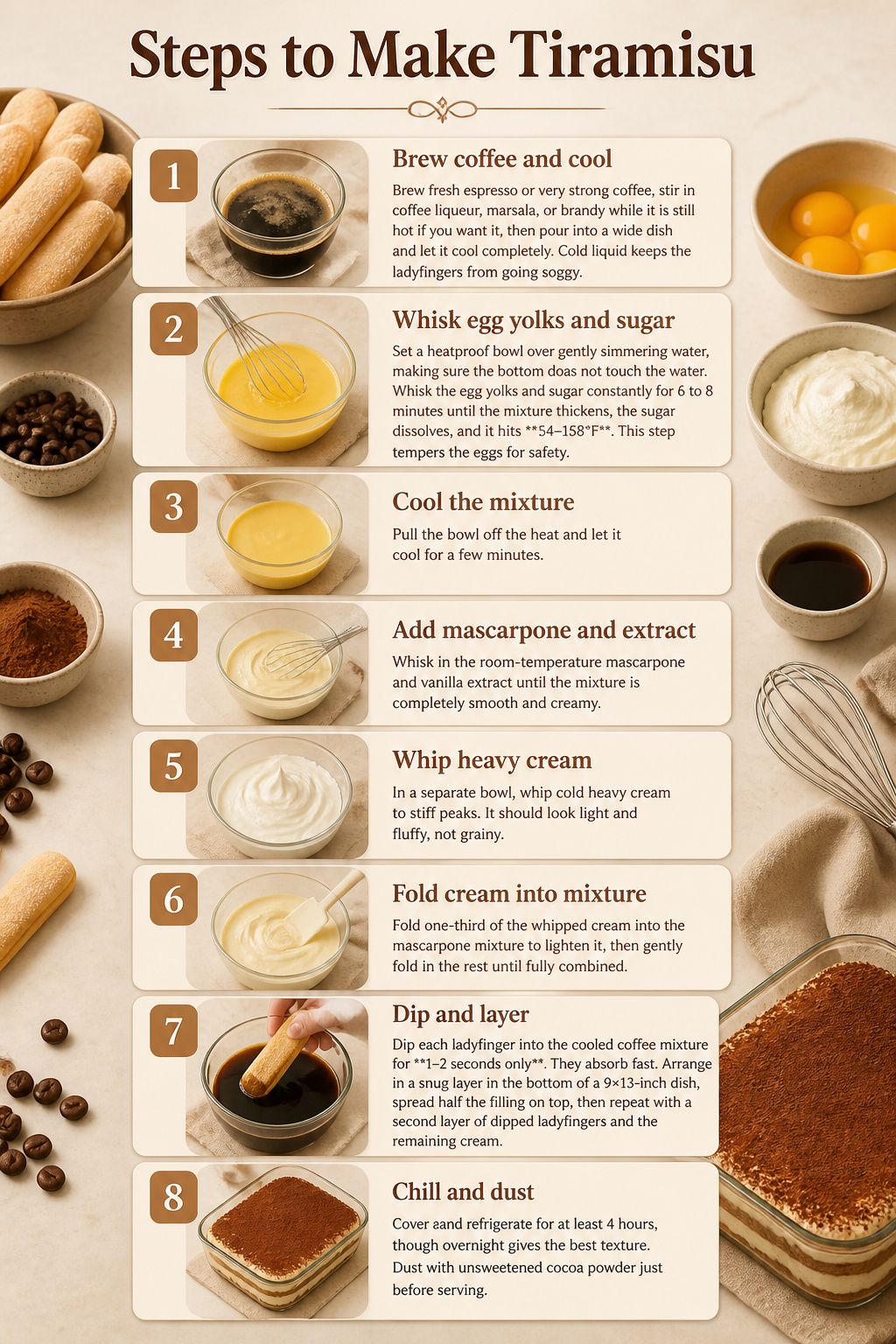
- Brew fresh espresso or very strong coffee, stir in coffee liqueur, marsala, or brandy while it is still hot if you want it, then pour into a wide dish and let it cool completely. Cold liquid keeps the ladyfingers from going soggy.
- Set a heatproof bowl over gently simmering water, making sure the bottom does not touch the water. Whisk the egg yolks and sugar constantly for 6 to 8 minutes until the mixture thickens, the sugar dissolves, and it hits 154–158°F. This step tempers the eggs for safety.
- Pull the bowl off the heat and let it cool for a few minutes.
- Whisk in the room-temperature mascarpone and vanilla extract until the mixture is completely smooth and creamy.
- In a separate bowl, whip cold heavy cream to stiff peaks. It should look light and fluffy, not grainy.
- Fold one-third of the whipped cream into the mascarpone mixture to lighten it, then gently fold in the rest until fully combined.
- Dip each ladyfinger into the cooled coffee mixture for 1–2 seconds only. They absorb fast. Arrange in a snug layer in the bottom of a 9×13-inch dish, spread half the filling on top, then repeat with a second layer of dipped ladyfingers and the remaining cream.
- Cover and refrigerate for at least 4 hours, though overnight gives the best texture. Dust with unsweetened cocoa powder just before serving.
Ingredients

Mascarpone is the only cheese that belongs here. Its 60–75% fat content gives the filling its characteristic silkiness without the tang that cream cheese brings, and swapping the two produces something closer to cheesecake than tiramisu.
If a store near you stocks nothing else, a mix of 8 ounces softened cream cheese with ¼ cup heavy cream will pass, though the texture turns heavier.
Savoiardi are built for dipping. These Italian ladyfingers are dry and porous enough to drink up coffee in a one-second dip, then hold their shape through slicing.
A moister cookie collapses into paste; the cellophane-wrapped packages from brands like Balocco or Vicenzovo are what you want lined up on the shelf.
Strong coffee means espresso if you have the means, or the darkest brewed coffee you can manage, cooled completely before it meets the cookies. Warm coffee melts the sugar coating and turns the sponge to mush.
The alcohol is optional but not silent. Marsala contributes a warm, nutty sweetness that reads almost like brown sugar against the coffee; dark rum, brandy, or a coffee liqueur like Kahlua work in its place.
Skip it entirely and the dessert still holds, though the depth thins slightly.
Raw egg yolks carry the zabaglione base, and the risk, while low, is real. Pasteurized eggs in shell solve this cleanly if your store carries them.
Without that option, some cooks replace the yolks with 2 cups heavy cream whipped to medium-soft peaks, accepting a lighter, less custardy set in exchange for peace of mind.
Chilling Time

The waiting period is where a tiramisu recipe either earns its reputation or falls apart. Four hours in the refrigerator is the minimum before the mascarpone filling sets enough to hold a shape, though overnight produces a noticeably better result.
During that time, the coffee seeps into the ladyfingers and softens them into something closer to cake layers, while the mascarpone, egg, and sugar mixture firms up into a stable, sliceable cream.
Without adequate chilling, the dessert stays runny. The emulsion breaks, the filling pools, and any attempt at neat portions ends in spoonfuls rather than squares.
A full night gives the flavors time to meld, too; the coffee mellows, the chocolate settles into the cream, and the whole thing tastes less like separate ingredients and more like tiramisu.
This recipe yields 8 to 12 portions depending on how generous the cuts are. A sharp knife wiped clean between slices produces the neatest squares, though a big spoon works fine for a more casual presentation.
The chilled dessert keeps covered in the refrigerator for up to 4 days, and the texture actually improves on day two.
Variations
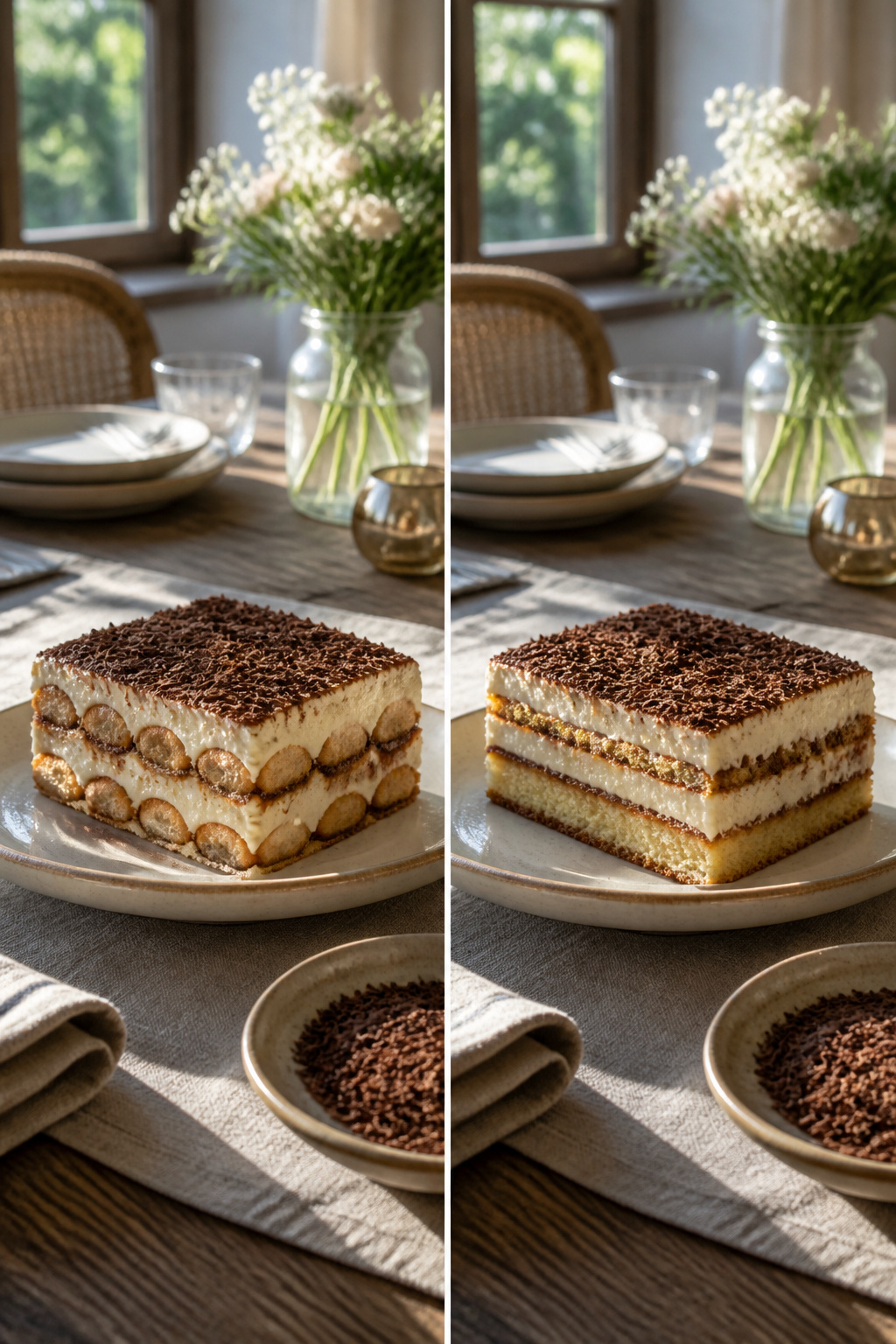
Cream cheese stands in for mascarpone more often than purists like to admit, and the swap is workable if you accept the tradeoff.
The flavor sharpens and the texture turns slightly denser, but in parts of the US where mascarpone runs scarce or expensive, cream cheese keeps the dessert within reach.
I have used both, and the cream cheese version still disappears at gatherings, though it reads more cheesecake than Italian.
Ladyfingers are the traditional scaffold, but a store-bought pound cake cut into half-inch slices does the job when the cookie aisle comes up empty. Sponge cake works too, and panettone around the holidays adds its own kind of logic.
For the filling, whipped heavy cream can replace egg whites entirely, two cups beaten to medium-soft peaks, which sidesteps the raw-egg question altogether and still yields an airy layer.
If you want the rum note without the alcohol, a quarter teaspoon of rum extract mixed with two tablespoons of water fakes it convincingly; otherwise, extra coffee deepens the flavor on its own.
Chocolate shavings between layers are not traditional, but they add textural contrast that some eaters prefer to the standard dusting on top alone.
Serving and Storage

A clean slice through tiramisu takes a knife wiped between every cut, otherwise the cream smears and the layers blur together.
I use a metal spatula to lift each piece out; it keeps the edges intact better than a wide serving spoon.
Dust the cocoa just before you carry the dish to the table, not while it sits in the refrigerator.
The moisture in the chilled layers turns cocoa dark and clumpy within hours, and you lose that sharp bitter contrast against the mascarpone.
For pairing, a shot of espresso keeps the theme honest, though a glass of Prosecco or Vin Santo feels more like a closing gesture to a dinner party.
Grated dark chocolate over the top adds texture without the sweetness of syrup, and it catches the light in a way cocoa powder alone does not.
Tiramisu freezes well for up to 2 months if you wrap it tight in plastic, then foil. Thaw it overnight in the refrigerator, and only then dust with cocoa.
The texture stays creamy, though I would not serve it straight from cold; ten to fifteen minutes on the counter lets the flavors open up.
Frequently Asked Questions
Can I use cream cheese instead of mascarpone?
Yes, though the result strays from the Italian original. Cream cheese sharpens the flavor and weighs down the texture, giving something closer to cheesecake.
If mascarpone is scarce, blend 8 ounces softened cream cheese with ¼ cup heavy cream as a passable substitute.
How long should I chill tiramisu?
Four hours is the minimum, but overnight delivers the best texture. During chilling, the mascarpone filling sets enough to slice cleanly, the ladyfingers soften into cake-like layers, and the flavors meld from distinct ingredients into actual tiramisu.
Is it safe to eat raw eggs in tiramisu?
Raw yolks carry a real if low risk of salmonella, so pasteurized eggs in shell are the cleanest fix. Without those, some cooks replace the yolks with 2 cups heavy cream whipped to medium-soft peaks, accepting a lighter, less custardy set.
What can I use instead of ladyfingers?
Sponge cake or store-bought pound cake sliced half an inch thick works when ladyfingers run out. Panettone also substitutes around the holidays.
Avoid moist cookies; they collapse into paste instead of holding structure through dipping and slicing.
Can tiramisu be frozen?
Yes, for up to 2 months wrapped tight in plastic then foil. Thaw overnight in the refrigerator, dust with cocoa only after thawing, and let it sit at room temperature for 10–15 minutes before serving so the flavors open up.
Why is tiramisu special?
It is one of the most forgiving make-ahead desserts in the repertoire. It doesn’t come out of the fridge as the same thing you put in.
The chilling period does the actual work of making separate components into one dish, and the contrast of bitter coffee and cocoa against rich, unsweetened mascarpone rarely fails at the table.
What to serve with tiramisu?
A shot of espresso keeps the theme direct, while Prosecco or Vin Santo suits a dinner party close. Grated dark chocolate over the top adds texture and catches light better than cocoa powder alone.
How to make tiramisu from scratch?
Cook egg yolks and sugar over simmering water to 154–158°F, then cool slightly and whisk in room-temperature mascarpone.
Fold in separately whipped heavy cream, dip ladyfingers briefly in cooled coffee, layer filling and biscuits in a 9×13-inch dish, and chill at least 4 hours before dusting with cocoa.