
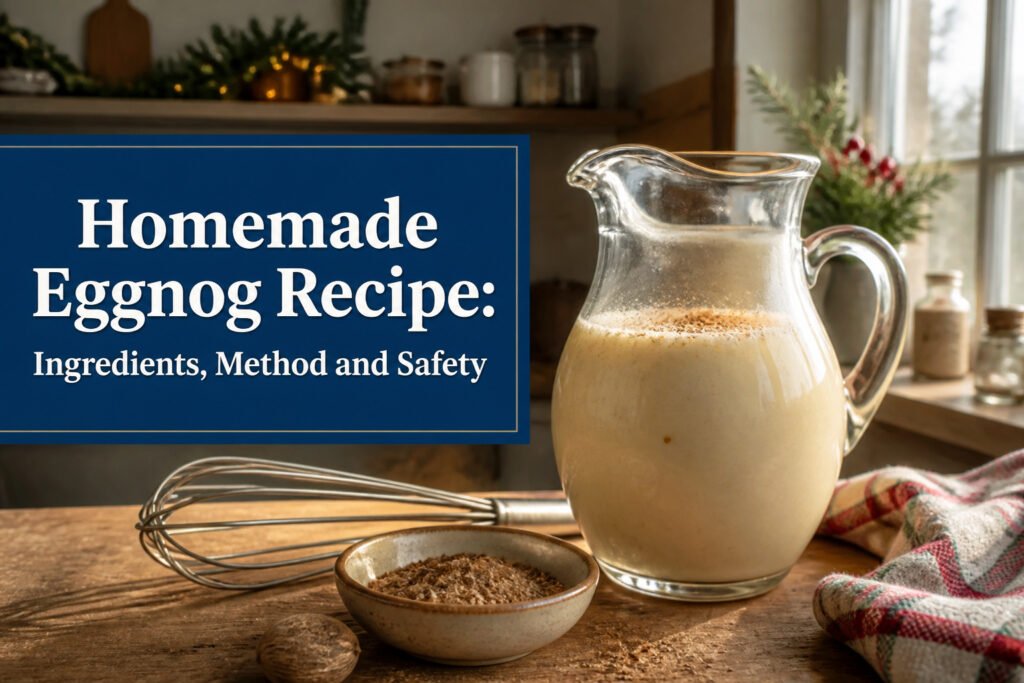
This eggnog is thick, cold and heavy with nutmeg, and the cooked custard base hits 160°F on the stove so you can serve it to kids without the raw-egg conversation.
The whole thing needs twenty minutes of actual work, plus a few hours of chilling. One batch makes six cups, enough for a small holiday gathering without drowning you in leftovers.
What This Is and When to Make It

Homemade eggnog is a creamy, spiced custard beverage served cold, traditionally made for Christmas and New Year’s gatherings.
The base cooks to 160°F on the stove, which takes the raw edge off the eggs and gives the drink its thick, rich texture.
From start to finish, expect about 20 minutes of active cooking, plus at least three hours of chilling before anyone gets a glass. The batch yields 6 cups, enough for a small party without leaving you drowning in leftovers.
For a host mapping out a holiday gathering, this lands in that sweet spot between impressive and manageable. The stirring happens early in the day or even the night before, so the kitchen is quiet when guests arrive.
Store-bought cartons have their place, but a pitcher of homemade eggnog on the counter signals that someone planned ahead without planning too hard.
Ingredients

The base of this eggnog is just six ingredients, all of them standard grocery-store stock.
I keep the sugar at 1/2 cup granulated rather than the full cup some recipes call for; the finished drink still tastes rich and the lower sweetness lets the nutmeg come through.
- 6 large egg yolks
- 1/2 cup granulated sugar
- 2 cups whole milk
- 1 cup heavy cream
- 1/2 teaspoon ground nutmeg
- 1 teaspoon vanilla extract
If you want it spiked, bourbon, rum, or brandy stirred in at the end is the usual move.
I leave it out when there are kids around, which is most of the time at our house, and the nog does not suffer for it.
Method
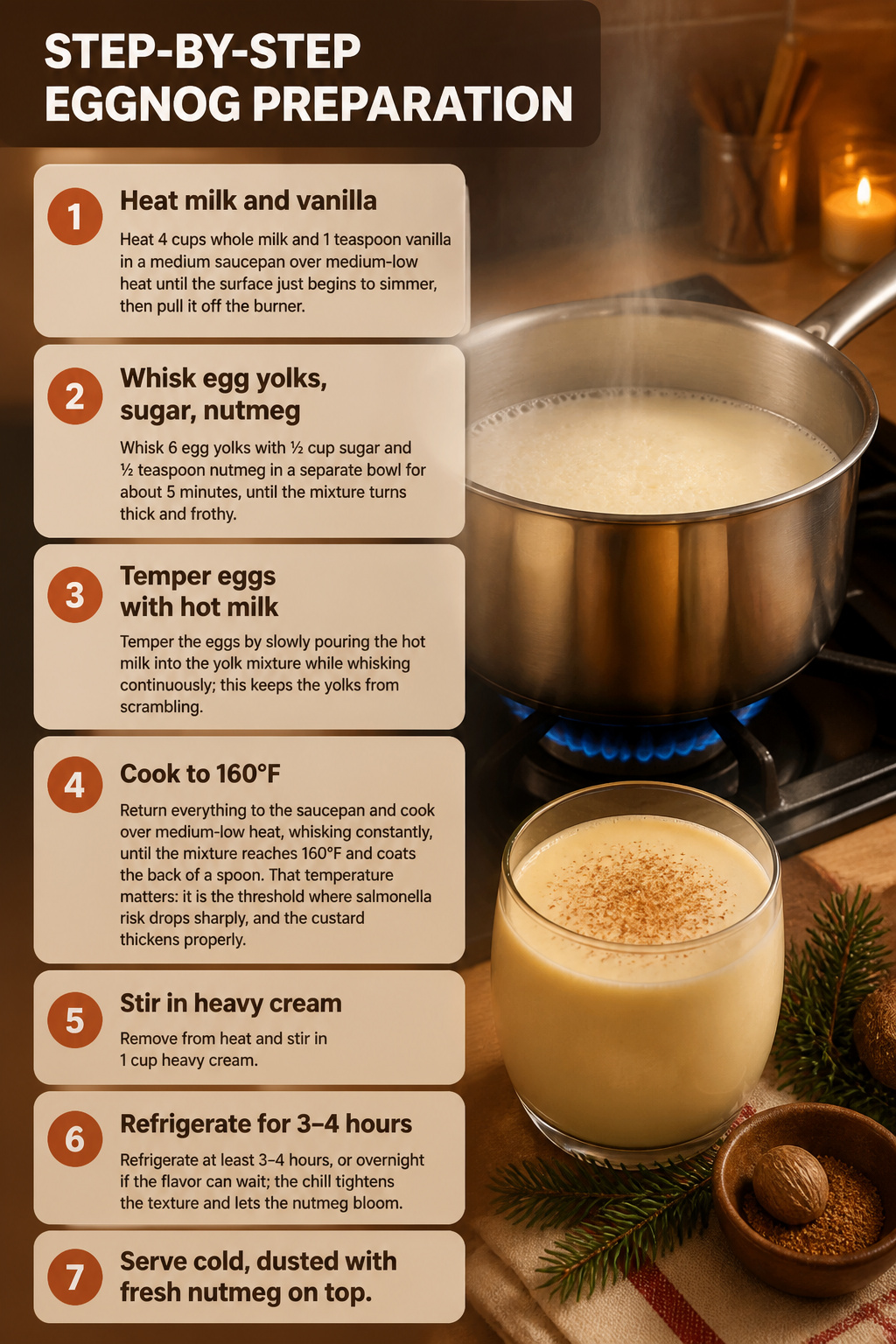
- Heat 4 cups whole milk and 1 teaspoon vanilla in a medium saucepan over medium-low heat until the surface just begins to simmer, then pull it off the burner.
- While the milk warms, whisk 6 egg yolks with ½ cup sugar and ½ teaspoon nutmeg in a separate bowl for about 5 minutes, until the mixture turns thick and frothy.
- Temper the eggs by slowly pouring the hot milk into the yolk mixture while whisking continuously; this keeps the yolks from scrambling.
- Return everything to the saucepan and cook over medium-low heat, whisking constantly, until the mixture reaches 160°F and coats the back of a spoon. That temperature matters: it is the threshold where salmonella risk drops sharply, and the custard thickens properly.
- Remove from heat and stir in 1 cup heavy cream.
- Refrigerate at least 3–4 hours, or overnight if the flavor can wait; the chill tightens the texture and lets the nutmeg bloom.
- Serve cold, dusted with fresh nutmeg on top.
Yield, Storage and Make-Ahead

This batch yields 6 cups, enough for a small gathering with some left for seconds. Plan on about four ounces per glass; the richness goes further than you think.
Non-alcoholic eggnog keeps for 2 to 3 days refrigerated. Add bourbon, rum or brandy and that stretches to a week, the alcohol buying you a few extra days.
Either way, store it covered, and expect separation: a quick stir or whisk before pouring brings it back together. If it thickens more than you like, loosen it with a splash of cold milk.
Patience is what makes the difference here. Chilling overnight, or even a full day, lets the nutmeg and vanilla meld into something deeper than fresh-poured eggnog delivers.
I make the base two days ahead when I can, stash it in a pitcher with a tight lid, and give it a shake before the first guest arrives.
The timing also splits the work, which matters more than it sounds when you’re juggling a dozen other dishes.
Safety and Kids

The cooked-egg question comes up every time I set out the nog bowl at a family gathering, and the answer is straightforward: this custard hits 160°F to 165°F, which is the temperature that kills salmonella in eggs.
That makes it a different drink entirely from the traditional raw-egg versions still served at some holiday parties.
A candy thermometer is non-negotiable here. I watch the dial while I whisk, and the moment it touches 160°F I pull the pot off the heat.
Without that number, you are guessing at safety.
Because the eggs are fully cooked into the custard base, this homemade eggnog is suitable for children.
I keep the batch alcohol-free and spike individual mugs for adults afterward, usually with about an ounce of bourbon or spiced rum per serving.
That way the same pitcher works for everyone at the table, and I am not managing two separate recipes on Christmas Eve.
Substitutions and Variations

Dairy-free eggnog swaps in coconut or almond milk, but the texture turns thinner and less coating on the tongue. That silkiness comes from heavy cream’s fat content, and plant milks do not fake it well.
For a lighter pour, swap half the heavy cream for whole milk, or go the other direction and use only egg yolks instead of whole eggs for a thicker, custard-like body.
Reducing sugar by about 2 tablespoons still leaves the flavor balanced if you add an extra pinch of nutmeg.
Spiking is where the real choices sit.
About 1/2 cup of bourbon, rum, or brandy per batch lands in the traditional zone; clear rum keeps it smooth, spiced rum pushes harder on the palate, and bourbon or cognac bring their own warmth.
Stir spirits in after chilling, and only when serving adults. One to 2 tablespoons per glass works if you are portioning individually rather than batching.
Serving and Per-Guest Cost

Cold small cups or mugs work better than tall glasses for homemade eggnog. The cream sits heavy, and guests finish a modest pour before it warms.
A fresh nutmeg grate on top is the move that makes this worth the effort; pre-ground nutmeg looks the same but reads flat against the nose.
This batch serves 8 to 10 people at a gathering, which lands it squarely in the range for a holiday open house or the drink station at a cookie swap.
The per-guest cost runs about $0.50 to $0.75, depending on whether cream and eggs are priced at a holiday spike or a baseline week.
Store-bought cartons are available and save the tempering step, though the flavor is flatter and the texture thinner than what comes off the stove.
For the extra ten minutes of active work, the homemade version reads as something you bothered with, which at a party is half the point.
Frequently Asked Questions
Is homemade eggnog safe to drink?
Yes, because this recipe cooks the eggs into a custard that reaches 160°F, the temperature where salmonella risk drops sharply. A candy thermometer is non-negotiable; without that number, you are guessing at safety.
The cooked base is a different drink entirely from traditional raw-egg eggnog served at some holiday parties.
How long does homemade eggnog last?
Non-alcoholic eggnog keeps for 2 to 3 days refrigerated. Add bourbon, rum, or brandy and that stretches to a week, the alcohol buying you a few extra days.
Either way, store it covered and expect separation; a quick stir or whisk before pouring brings it back together.
Can kids drink this eggnog?
Yes, because the eggs are fully cooked into the custard base at 160°F to 165°F. Keep the batch alcohol-free and spike individual mugs for adults afterward, usually with about an ounce of bourbon or spiced rum per serving.
That way the same pitcher works for everyone at the table.
What is the best alcohol to put in homemade eggnog?
Bourbon, rum, or brandy are the traditional spirits for old-fashioned homemade eggnog.
About 1/2 cup per batch lands in the traditional zone; clear rum keeps it smooth, spiced rum pushes harder on the palate, and bourbon or cognac bring their own warmth. Stir spirits in after chilling, and only when serving adults.
How is eggnog made from scratch?
Heat milk and vanilla until simmering, whisk egg yolks with sugar and nutmeg until frothy, then temper the hot milk into the yolks slowly so they do not scramble.
Cook the mixture to 160°F while whisking constantly, stir in heavy cream, and chill at least 3 to 4 hours before serving cold with fresh nutmeg on top.
What are common eggnog mistakes?
Adding hot milk to the egg mixture too quickly scrambles the yolks, so temper slowly while whisking continuously.
Letting the custard come to a hard boil can curdle it; stick to medium-low heat and pull it at 160°F. Skipping the thermometer is another frequent error, since that number governs both safety and proper thickening.