
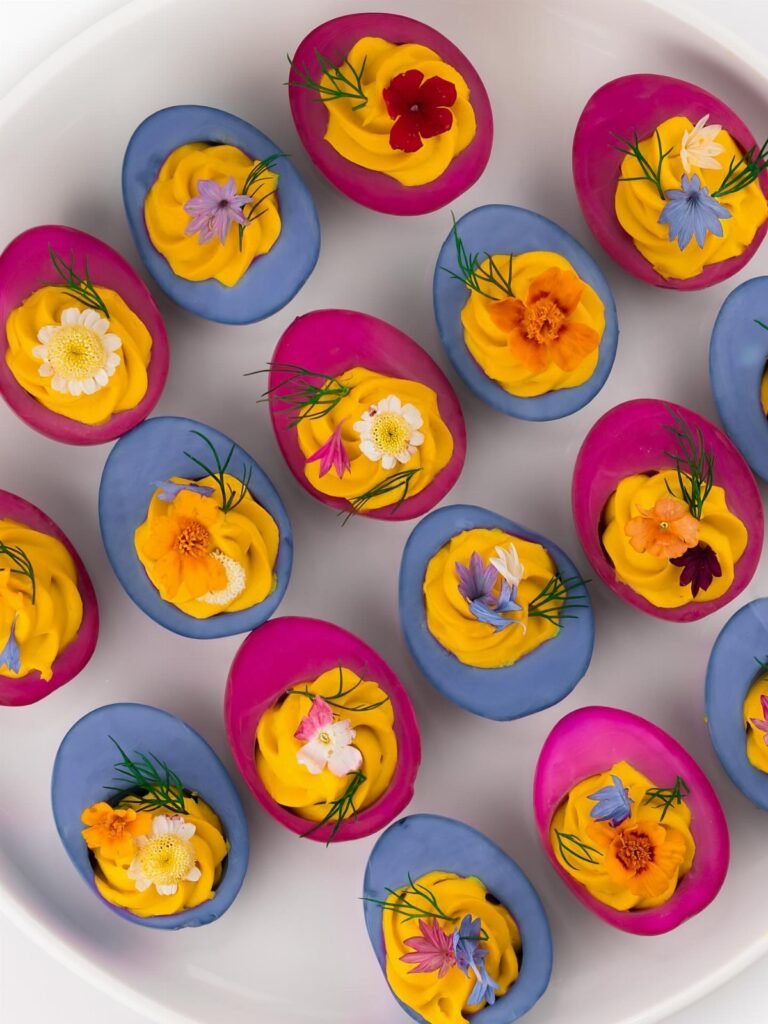
Dyed deviled eggs run from soft pastels for a spring brunch to midnight blue for a Halloween table, with natural dyes or a single drop of gel coloring setting the look.
Natural dyes like beet juice and red cabbage need a longer soak, while food coloring and vinegar set the shade in minutes, so the deciding factor is how much time you have before guests arrive.
I keep 1 drop of color per 1/2 cup water as my baseline for the predictable route, and I still reach for store-bought hard-boiled eggs when the morning gets away from me.
1. Natural Dyed Colored Deviled Eggs
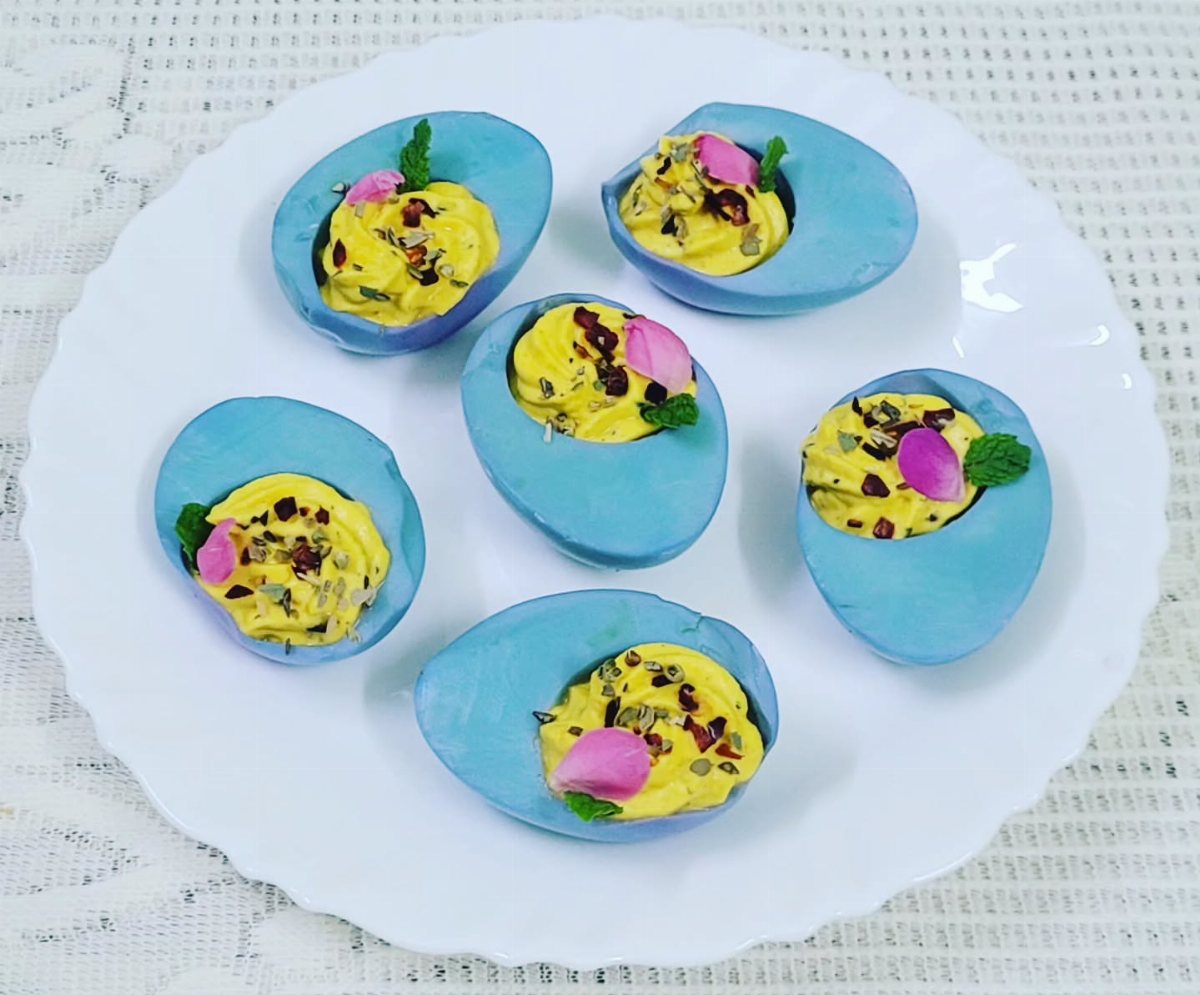
Hard-boiled eggs take on soft blue from red cabbage, warm gold from turmeric, or dusty rose from beets after the shells come off.
A shallow bath gives the white real color without turning the whole thing wet and strange; check at intervals until the shade looks right.
I slice mine afterward, fill with the usual yolk and mayonnaise, and set them out on a plate that lets the color read. Pressed petals on top make the dish read as intentional rather than odd.
2. Pastel-colored Dyed Deviled Eggs
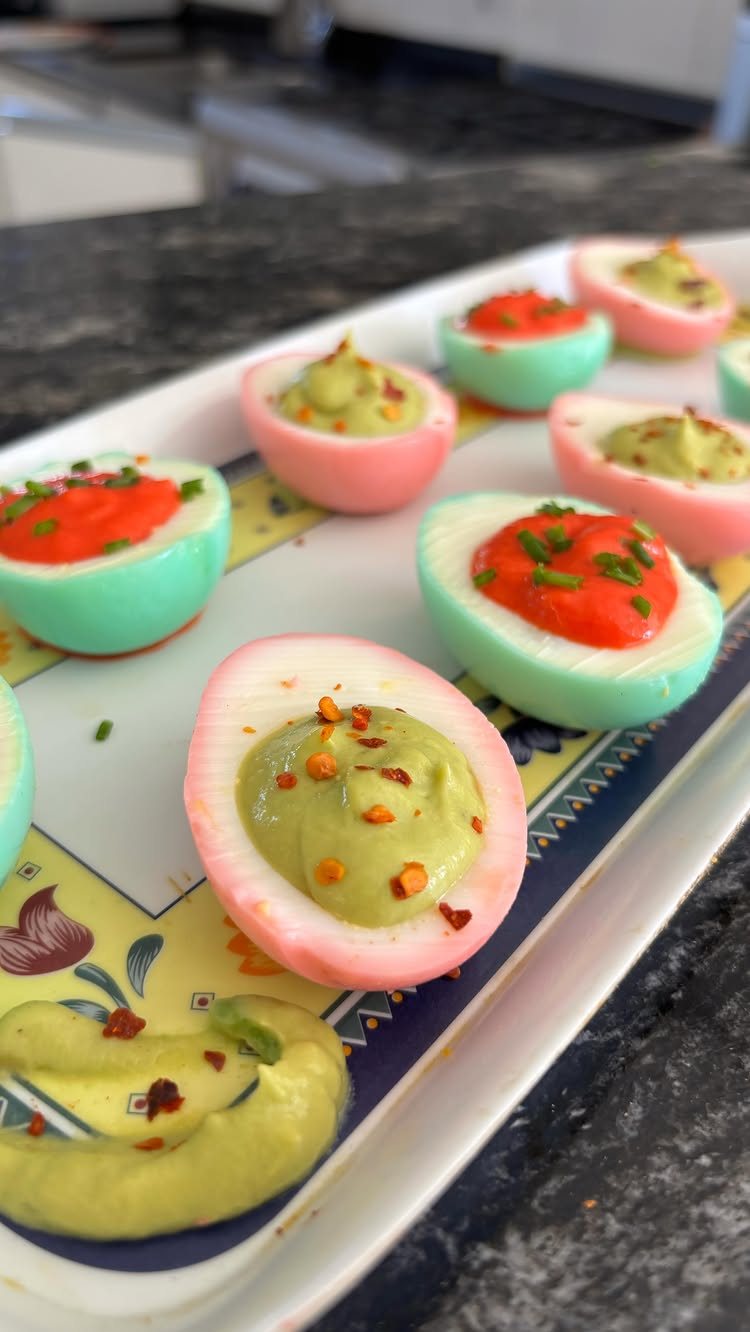
Food coloring and vinegar in water give faster, more predictable results than natural dyes, which matters when you need a matched set for a brunch table.
Pink and teal whites work best when the filling stays pale so the color stays the point.
Start with 1 drop of color per 1/2 cup water plus 1 teaspoon white vinegar, soak the peeled egg halves until the shade looks right, and adjust from there. The vinegar sets the color and keeps it from rubbing off on fingers.
3. Bright Pink Dyed Deviled Eggs
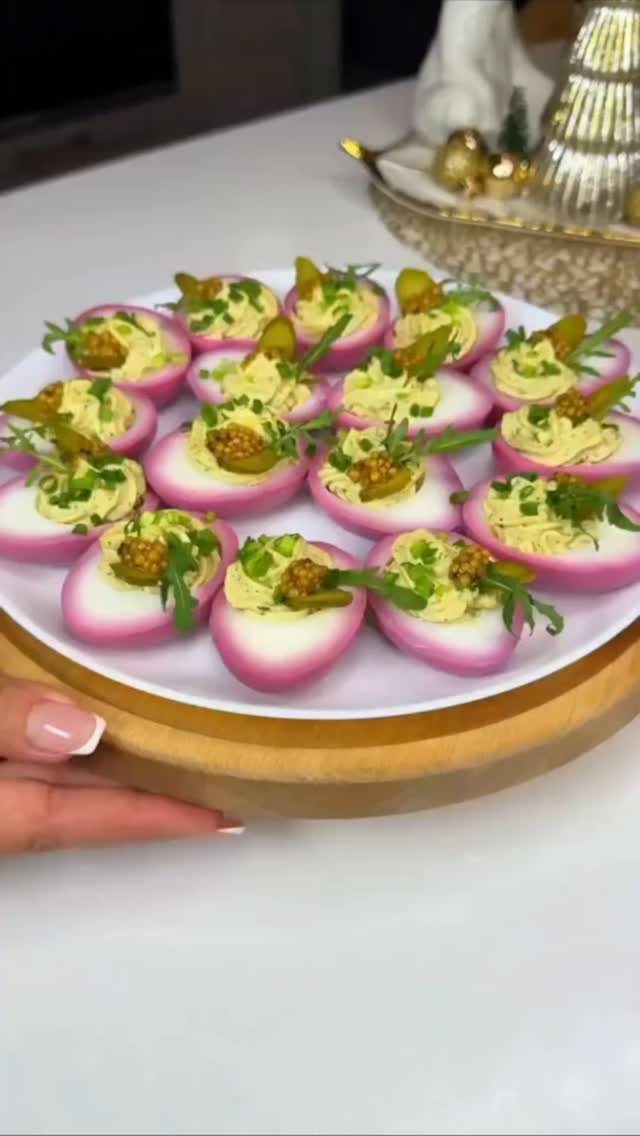
This is the color that makes people ask what you did before they ask if they taste different. They do not; the dye sits only in the white.
Beet juice or a heavy hand with pink gel coloring gets you here, and the contrast with yellow filling is sharp enough that you can skip extra garnish.
Pickles and mustard seeds add crunch and a visual break, but the eggs carry the table on their own. I like these for a shower where the host wants one memorable dish without a full theme.
4. Halloween Blue Dyed Deviled Eggs
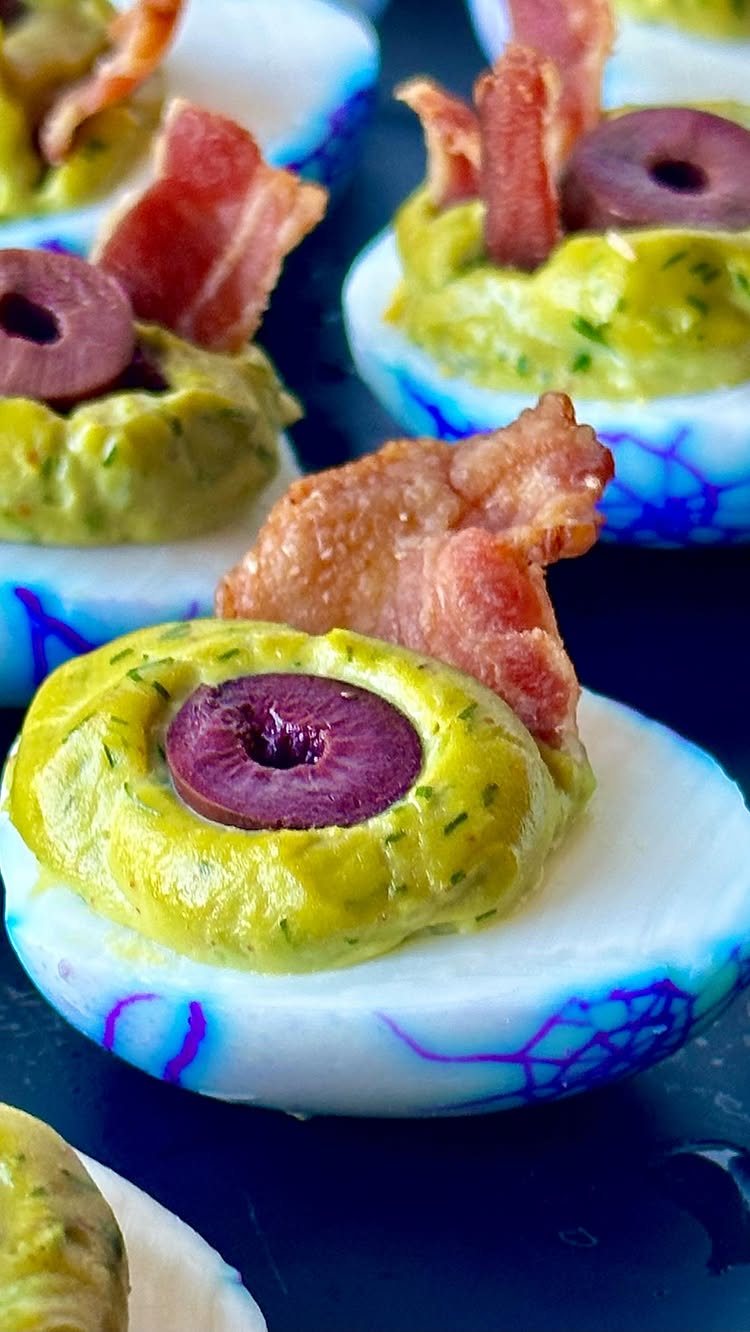
Blue egg whites read as spiderweb or midnight sky depending on what sits on top; a green filling leans into the Halloween angle hard. A few sliced black olives and bacon bits turn a spring technique into October food.
The dye is the same food-coloring method as pastels; the difference is the color choice and the garnish.
I have made these for a potluck where the host wanted savory among all the candy, and they disappeared faster than the cupcakes.
5. Multicolor Dyed Deviled Eggs
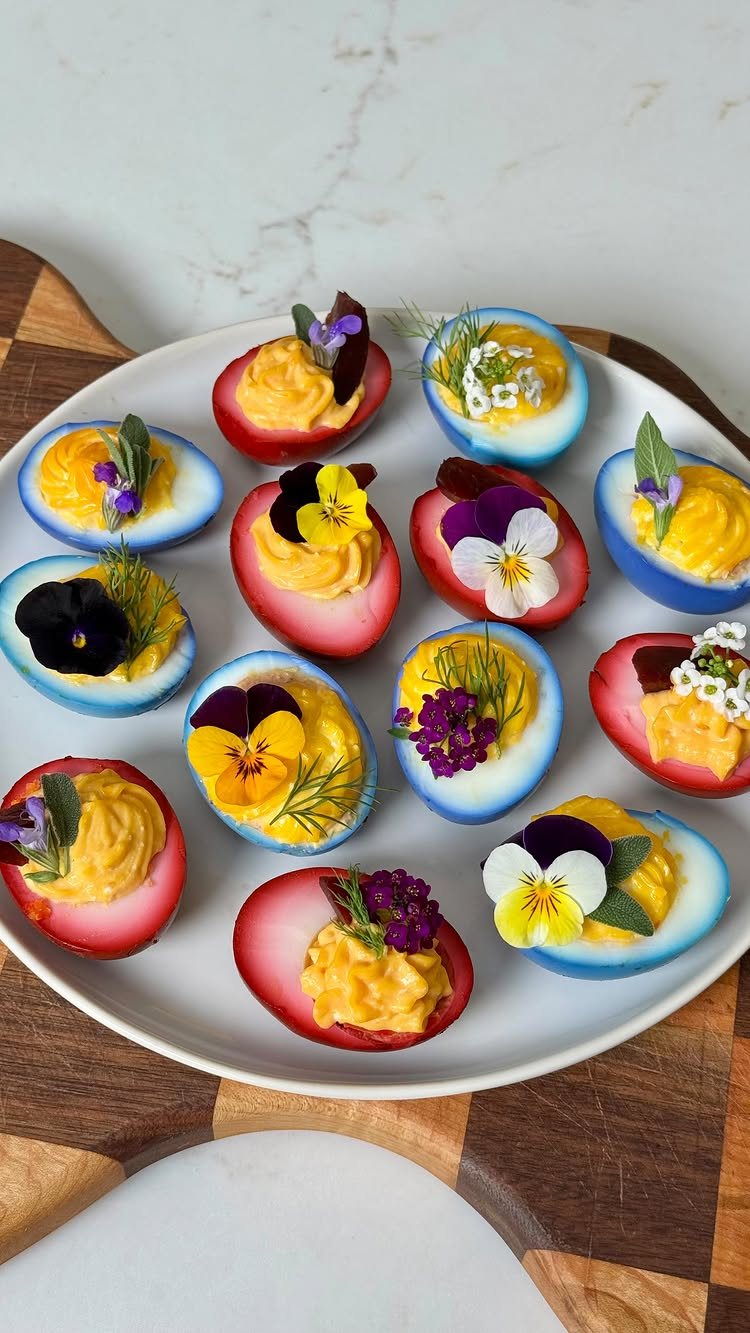
A single platter in several colors looks like you committed to a project, but the work is just repeated batches of the same quick soak.
The photo uses blue and magenta with yellow piped filling; I would add a third color, maybe a pale yellow or green, to fill the plate without crowding it.
Edible flowers are available at most grocery stores now in spring, and they cover any uneven dye line. Do the colors separately so they do not bleed into each other in the bath.
Filling Preparation
The filling starts with yolks mashed until no large lumps remain.
My filling is mayonnaise, mustard, a splash of vinegar, and whatever salt and pepper I have on hand; I mash the yolks smooth before I pipe or spoon them back in.
Mustard and vinegar are common additions if you want more tang. Mix everything smooth before it goes into the whites; a fork works, though a vigorous stir with a spoon gets the mixture slightly whipped and lighter.
Transfer to a Ziploc bag or piping bag with a star tip for neat presentation. The corner of a regular storage bag snipped off works in a pinch.
The dyed whites and the mixed filling can wait in the refrigerator in separate containers until you are ready to assemble. Pipe or spoon just before serving so the colors stay clean and the filling stays fresh.
Hard-boiling Eggs Techniques
I set the eggs in one layer and add enough cold water to sit well above them.
Once the water hits a hard boil, I kill the heat, clap the lid on, and set a timer for somewhere between 13 and 15 minutes. A bowl of ice water stops the cooking and makes the shells easier to lift off.
A faster method: cover with 1 inch of water, bring to a rolling boil, cover and boil 2 minutes, then turn off heat and let sit covered 10 minutes; ice bath for 15 minutes.
The Instant Pot is another reliable route if you have one. Store-bought hard-boiled and peeled eggs are widely available now and save the day when time runs short.
Serving Suggestions
I take them out of the refrigerator maybe 20 minutes before guests arrive, but I watch the clock; two hours at room temperature is the ceiling.
A warm afternoon or a backyard table calls for a larger tray of crushed ice underneath the serving platter. A chilled platter buys you extra time.
Deviled eggs keep up to 2 days refrigerated, and you can make them the day before. For best results, store filling and whites separately, then fill right before serving.
Hard-boiled eggs alone last 4 days refrigerated, so dye them ahead and assemble closer to go time.
Dyeing Techniques
Dye after peeling for the strongest color in the shortest time. Peeled whites absorb natural and artificial dye faster than shell-on eggs ever could.
Red cabbage, turmeric, and beets give blue, gold, and dusty rose. Pat dry before slicing and filling.
Frequently Asked Questions
How do I dye my deviled eggs?
Peel the hard-boiled eggs first, then soak the whites in dye until the shade looks right.
Food coloring goes in at 1 drop for every half cup of water, plus a teaspoon of white vinegar; natural dyes pull from the produce drawer, with red cabbage turning blue, turmeric turning gold, and beets giving that dusty rose color.
Pat them dry before slicing and filling so the color stays clean and does not bleed into the yolk mixture.
Is it okay to eat dyed hard-boiled eggs?
Yes, as long as the dyes are food-safe. Food coloring sold for kitchen use is made to be eaten, and natural dyes from vegetables like red cabbage, turmeric, and beets are just concentrated food.
The color sits only in the white, so the filling tastes exactly the same as an undyed egg.
Can I dye eggs with regular food coloring?
Regular liquid food coloring is the faster route and the one you can predict, where natural dyes take longer and surprise you.
I drop 1 part color into a half cup of water with a teaspoon of vinegar, set the peeled halves in, and tweak the time or strength after seeing what I get.
Vinegar is what locks the color down so it stays on the egg and off your hands.