
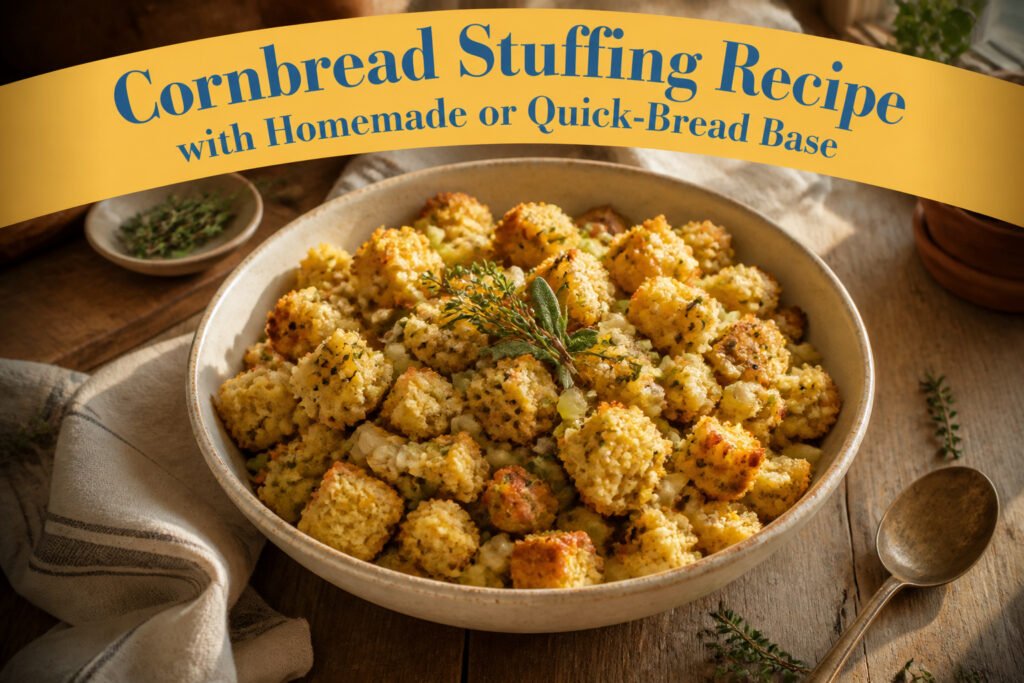
This cornbread stuffing tastes light and herby instead of dense or gummy because the base is actual cornbread, not wet breadcrumbs.
The whole dish needs about 50 minutes, and the one condition that changes everything is whether your cornbread is homemade and genuinely stale or a boxed Jiffy mix crumbled straight from the pan.
Fresh cornbread turns to mush when the broth hits it; day-old, with a rough, almost gravelly crumb, absorbs and holds its structure.
What This Is and When I Make It
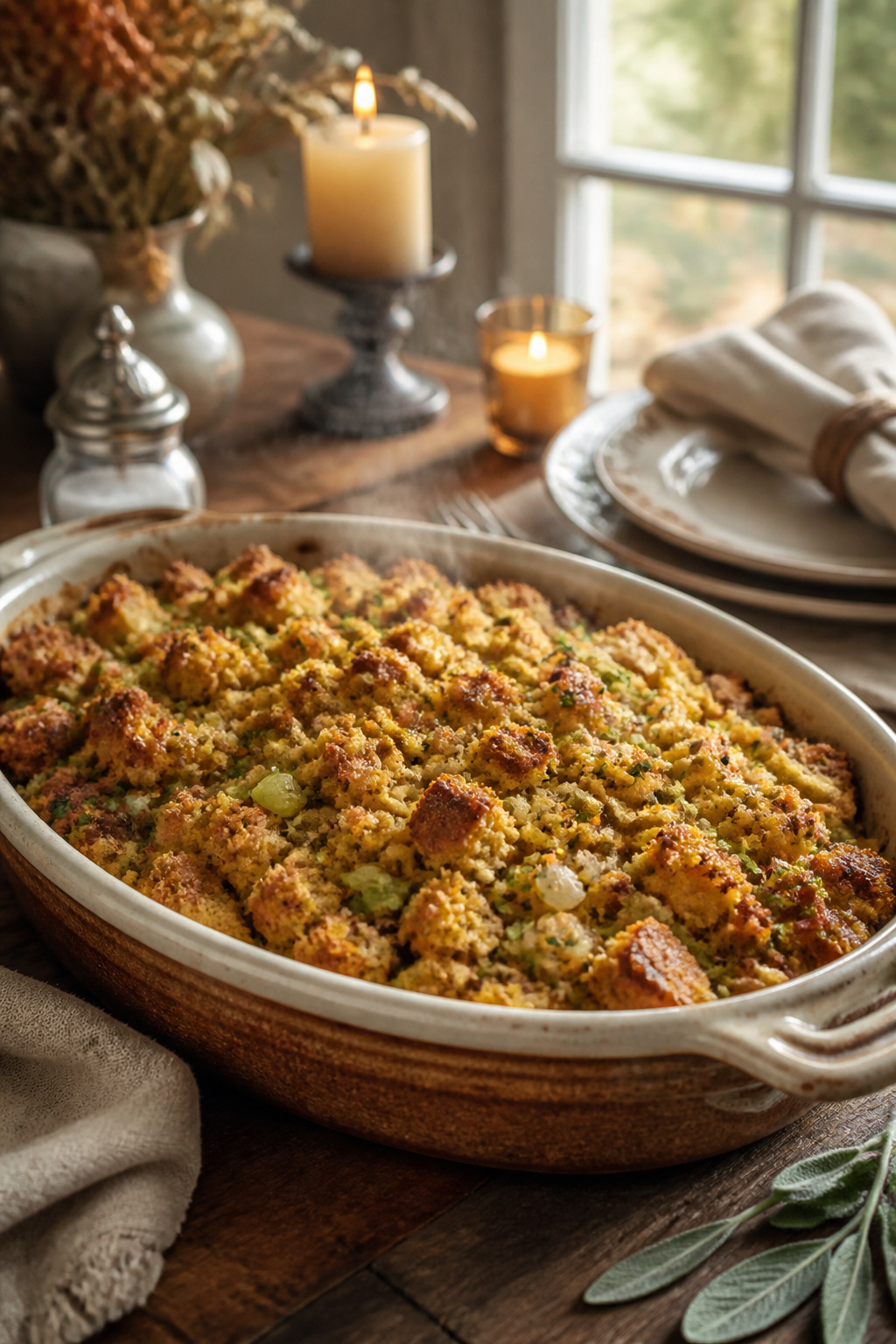
The first time this cornbread stuffing recipe took over my table was Thanksgiving three years ago, when my sister-in-law pushed her plate aside and asked why the stuffing tasted like actual corn instead of wet breadcrumbs.
That is the difference cornbread makes. The dish is a savory baked bread mixture, and whether you call it stuffing or dressing depends mostly on where you grew up and whether your grandmother cooked it inside the bird.
These days the terms are used interchangeably, since food safety guidance means most of us bake it in a casserole dish regardless of what we name it.
This version needs about 50 minutes from start to finish, including 35 minutes in the oven at 350°F. It suits the cook who wants a homemade base you can prep days ahead or a boxed shortcut you can crumble straight from the pan.
Either way, the result is light, herby, and layered with flavor rather than dense or gummy.
Ingredients
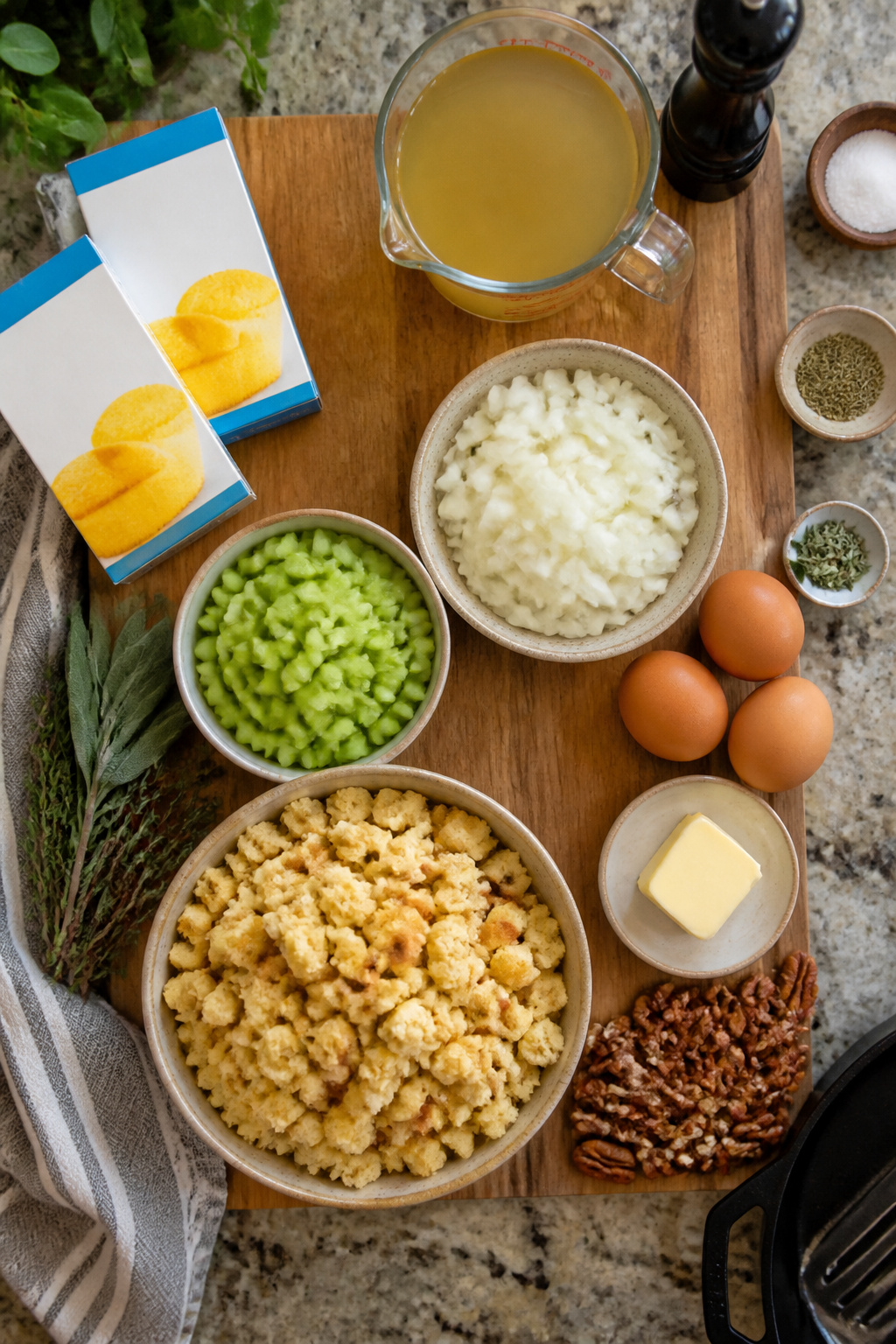
The ingredient list for this cornbread stuffing recipe splits cleanly between the base and everything that seasons it.
2 boxes of Jiffy cornbread mix, baked and crumbled, is the shortcut I use when time is thin; a homemade batch works if you planned ahead.
- 1.5 cups chopped onions
- 1.5 cups chopped celery
- 4 eggs
- 2.5 cups chicken broth
- 1 tablespoon poultry seasoning
- 1/2 teaspoon sage
- Butter, for sautéing the vegetables
- Black pepper, to taste
Store-bought shortcuts are fair game throughout. The Jiffy mix saves a step without changing the final texture much, and plain white breadcrumbs or cubed day-old bread can bulk up the volume if your cornbread yield runs small.
Optional add-ins that show up in most versions:
- 1 lb sausage, browned and drained
- Chopped pecans
I do not measure the butter or the pecans when I add them. The butter is just enough to soften the onions and celery without letting them brown, usually a few tablespoons.
The pecans are a handful or two, toasted if you remember, and the sausage is the full pound or nothing; half a package leaves the pan looking sad.
Make the Stuffing
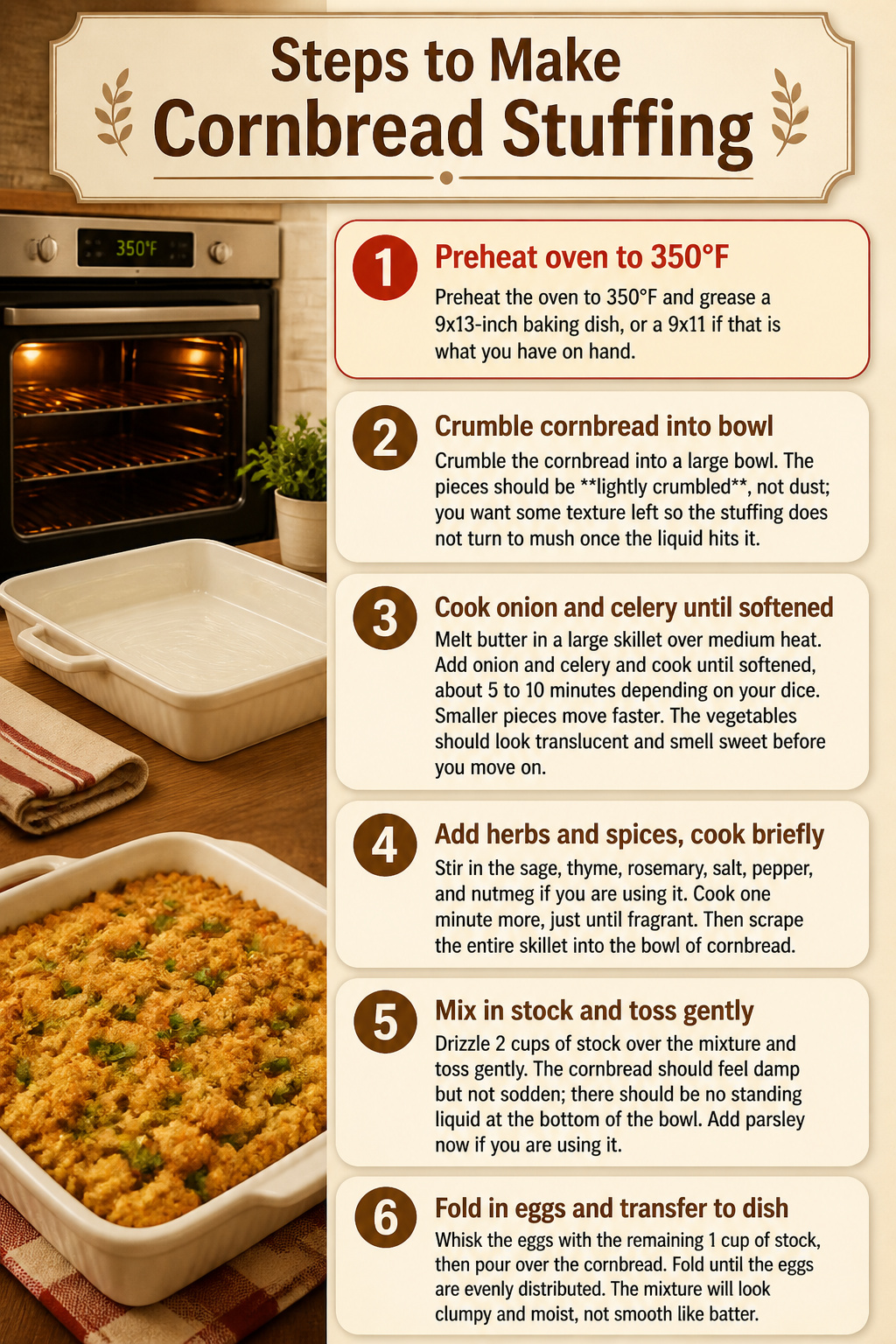
- Preheat the oven to 350°F and grease a 9×13-inch baking dish, or a 9×11 if that is what you have on hand.
- Crumble the cornbread into a large bowl. The pieces should be lightly crumbled, not dust; you want some texture left so the stuffing does not turn to mush once the liquid hits it.
- Melt butter in a large skillet over medium heat. Add onion and celery and cook until softened, about 5 to 10 minutes depending on your dice. Smaller pieces move faster. The vegetables should look translucent and smell sweet before you move on.
- Stir in the sage, thyme, rosemary, salt, pepper, and nutmeg if you are using it. Cook one minute more, just until fragrant. Then scrape the entire skillet into the bowl of cornbread.
- Drizzle 2 cups of stock over the mixture and toss gently. The cornbread should feel damp but not sodden; there should be no standing liquid at the bottom of the bowl. Add parsley now if you are using it.
- Whisk the eggs with the remaining 1 cup of stock, then pour over the cornbread. Fold until the eggs are evenly distributed. The mixture will look clumpy and moist, not smooth like batter.
- Transfer to the greased dish. Cover with foil and bake 30 minutes. Remove the foil and continue baking until the top is golden brown and the center is set, about 30 minutes more. The stuffing is done when a knife inserted in the middle comes out clean and the internal texture reads moist but not wet. Total bake time can run 30 to 50 minutes depending on your dish depth and oven.
Yield and Timeline
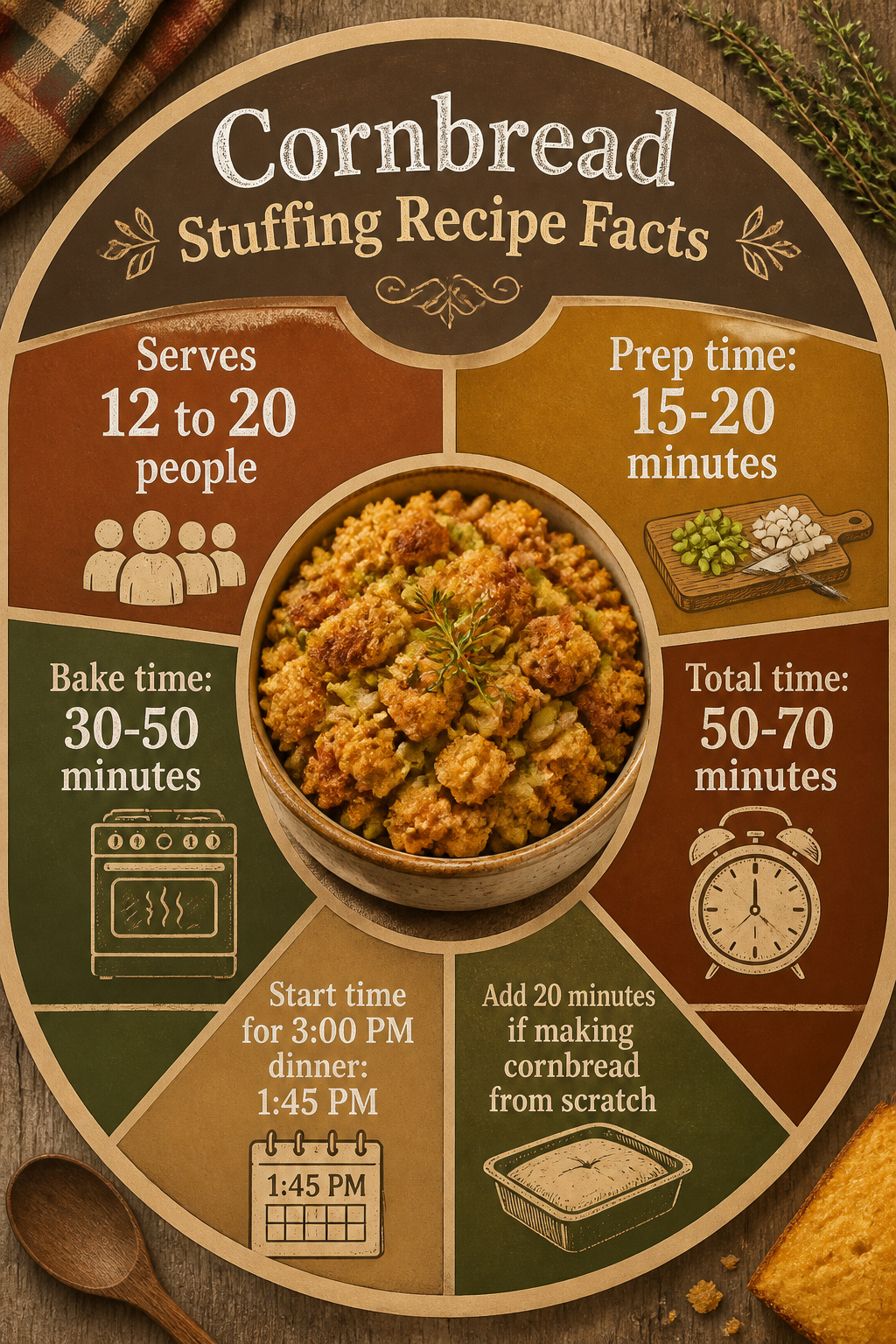
This cornbread stuffing recipe feeds 12 to 20 people, depending on how many other sides are on the table and whether your crowd treats stuffing as a scoop or a pile.
The prep work takes about 15 to 20 minutes, mostly chopping celery and onion if you are using them and crumbling the baked cornbread so it dries slightly.
The bake runs 30 to 50 minutes depending on your oven and how deep your dish is; a 9 by 13 pan at 350°F lands closer to 35 minutes, while a deeper casserole needs the longer end.
That puts the total active-to-table time at roughly 50 minutes to an hour and ten minutes. If dinner is at 3:00 PM, start prepping by 1:45 PM and slide the pan in by 2:10 PM at the latest.
The half-hour buffer is useful because stuffing holds well under foil, but an underbaked center does not.
"Prep time: 15 minutes. Cook time: 35 minutes. Total time: 50 minutes."
— Food.com
That 50-minute total assumes boxed Jiffy mix already baked and crumbled, so add another 20 minutes if you are making the cornbread base from scratch that same day.
Cornbread: Homemade or Boxed
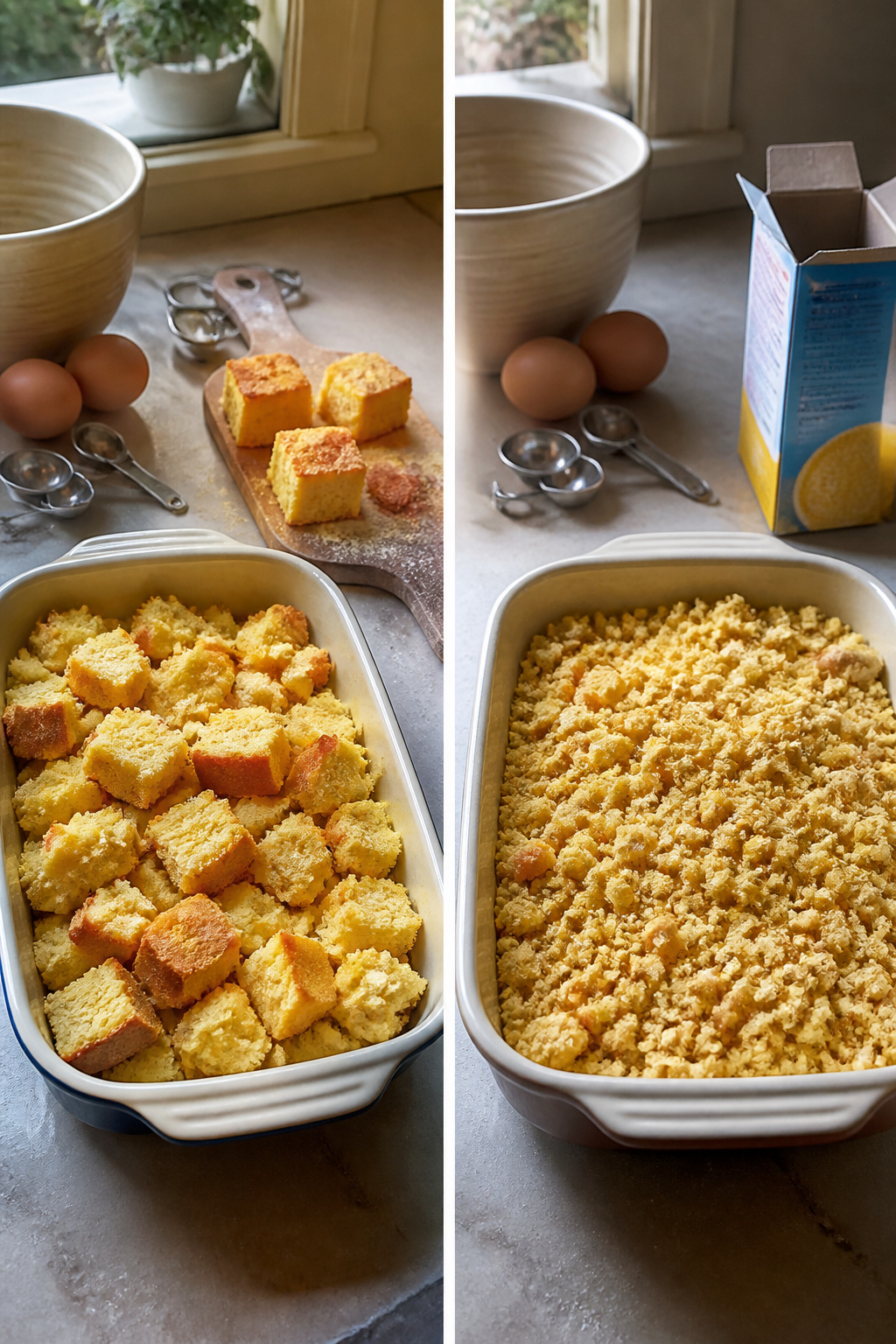
The texture of your finished stuffing hinges on a choice most recipes gloss over: Jiffy mix is sweeter and finer-crumbed than anything you’d bake from scratch, and that sweetness can turn savory stuffing one-dimensional.
I learned this the hard way after a Thanksgiving where the dressing tasted like dessert that had wandered into the wrong course.
The Jiffy boxes, three of them for a standard batch, work fine when your stuffing leans into that sweetness with pecans and scallions, or when you need a fast weeknight side.
For a traditional savory dressing, though, the sugar fights the sage and thyme.
Homemade cornbread needs to be day-old and genuinely stale, not just left out for a couple hours. Fresh cornbread turns to mush when the broth hits it; dry cornbread absorbs and holds its structure.
Bake it in a 9×13 pan so you get a broad, shallow loaf with plenty of surface area to dry out, not a thick square that stays moist in the center.
Skip the sugar entirely, or cut it to a bare tablespoon.
My mother used to crumble hers onto a sheet pan and leave it uncovered in the pantry for two nights, and that crumbly, almost gravelly texture is what you want when you fold in the celery and onions.
The practical outcome is this: boxed mix saves you a bowl and twenty minutes, but homemade cornbread, properly dried, gives you control over sweetness and a rougher crumb that catches the broth without dissolving.
For a holiday table where stuffing is the centerpiece side, the extra day of planning pays off.
Make-Ahead and Storage
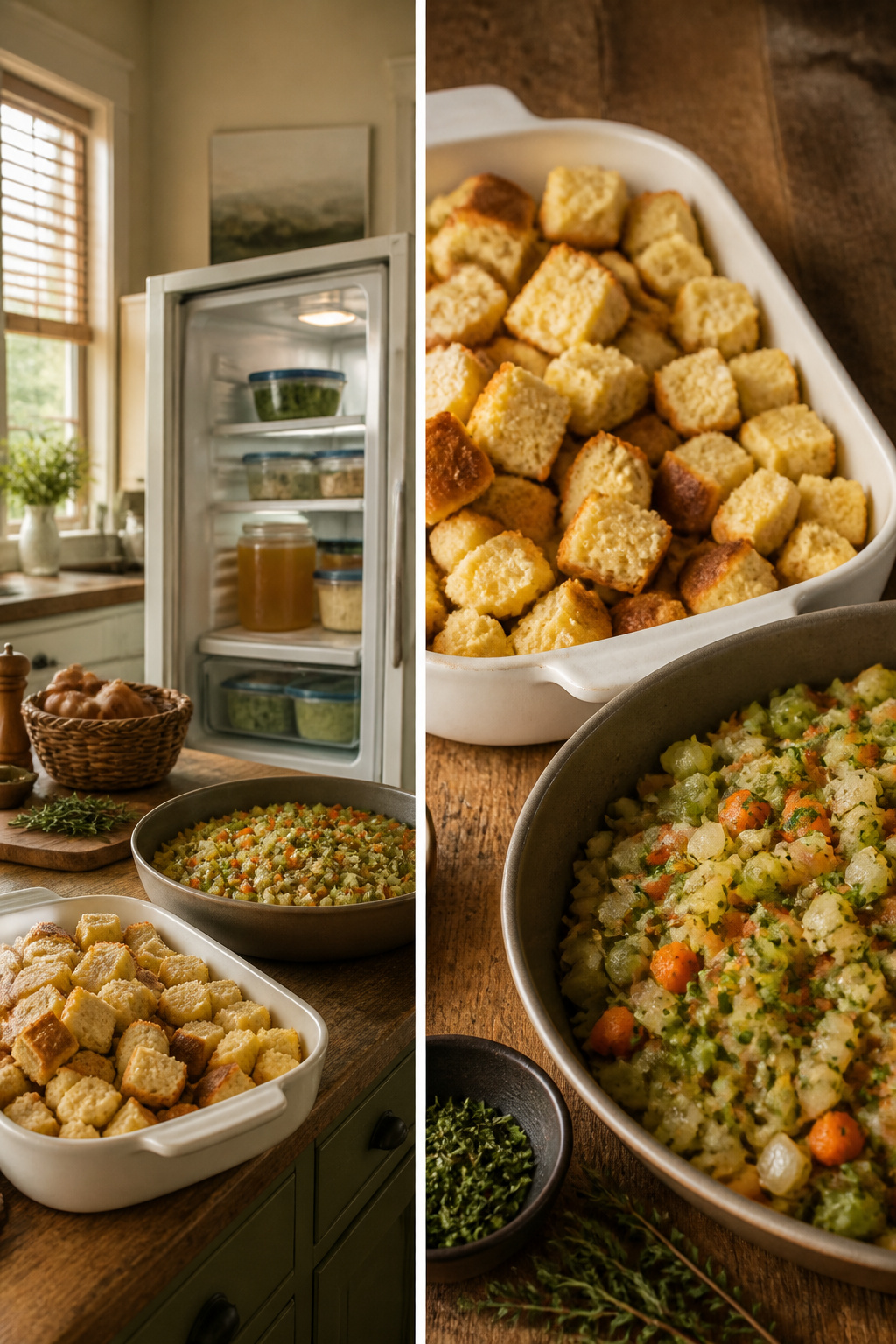
Prepping the full dish a day ahead carries a real sogginess risk.
The cornbread sits in stock overnight and turns wet, so I assemble the components separately instead: dry cornbread cubes in one container, sautéed vegetables and aromatics in another, then combine and add broth right before baking.
What works is that split approach; what does not is the fully mixed pan going into the fridge, which I tried once and ended up with mush at the center, croutons at the edge.
Leftovers keep in an airtight container for 3 to 4 days. Reheating in the oven at 350°F works best, or the microwave if you are in a hurry.
Either way, add a splash of broth before warming; the dressing dries out in refrigeration and that moisture brings it back. Water works too, but broth keeps the flavor intact.
Variations That Actually Work
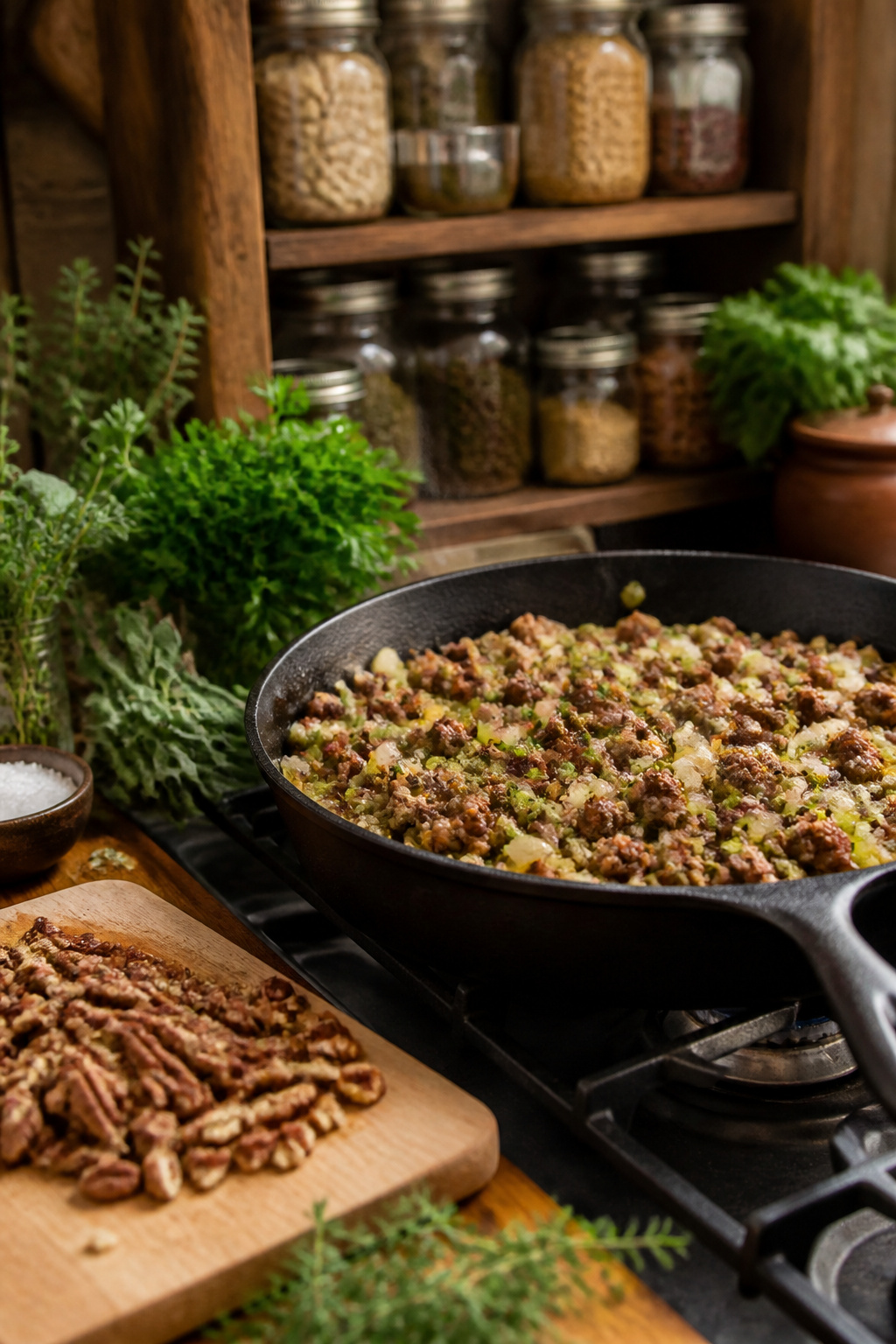
Sausage browns in the skillet with the celery and onion, and the fat left behind carries more flavor than butter alone.
One pound of fresh pork sausage, crumbled and cooked through, turns the whole dish savory in a way that reads as intentional, not improvised.
The pecans are optional on paper but worth the extra step; a half-cup of chopped pieces, toasted or not, gives each forkful something to bite against.
I pulse them in the food processor right after the vegetables, which saves a cutting board and keeps the workflow moving.
Cream of mushroom soup is the shortcut for moisture that some cooks swear by.
A can of condensed soup, or a homemade version built from sautéed mushrooms, butter, flour and milk, replaces part of the broth and binds the crumbs into something closer to dressing than stuffing.
Cream of chicken works too; the flavor shifts but the texture stays the same.
I use the mushroom route when there are vegetarians at the table, since the soup masks the swap to vegetable broth and non-dairy butter without anyone tracking the difference.
The Jiffy mix bakes fine with egg and milk substitutes, and from there it is just vegetable stock and a plant-based spread melted in. The result is lighter than the sausage version, but the cornbread still does what cornbread does.
Choose sausage when the stuffing needs to anchor the plate, soup when it needs to stay moist through a long hold in the oven, and pecans when you want crunch without adding another side dish.
Frequently Asked Questions
What is the difference between cornbread dressing and stuffing?
The two terms are used interchangeably now, though historically stuffing was cooked inside the turkey while dressing was baked in a separate dish.
Food safety guidance means most home cooks bake it in a casserole dish regardless of what they call it. Your regional background and family tradition usually determine which word you use.
Can I make cornbread stuffing ahead of time?
Prep the components separately rather than mixing everything together. Keep dried cornbread in one container and sautéed vegetables in another, then combine with broth right before baking.
A fully assembled pan refrigerated overnight turns wet in the center and dry at the edges.
What can I add to cornbread stuffing for extra flavor?
One pound of browned pork sausage adds savory depth, toasted pecans give crunch, and cream of mushroom soup replaces part of the broth for a creamier, more bound texture.
Sausage works when the stuffing needs to anchor the plate, soup when it must stay moist through a long hold, and pecans when you want crunch without another side dish.
How long will cornbread stuffing last in the refrigerator?
Leftovers keep in an airtight container for 3 to 4 days. Reheat at 350°F in the oven or use the microwave if you are pressed for time, and add a splash of broth before warming since refrigeration dries it out.
How do I know when cornbread dressing is done?
The stuffing is finished when a knife inserted in the center comes out clean and the texture reads moist but not wet. The top should be golden brown and the center set.
Total bake time runs 30 to 50 minutes depending on dish depth and oven; a 9 by 13 pan usually lands closer to 35 minutes after the initial 30 minutes covered.