
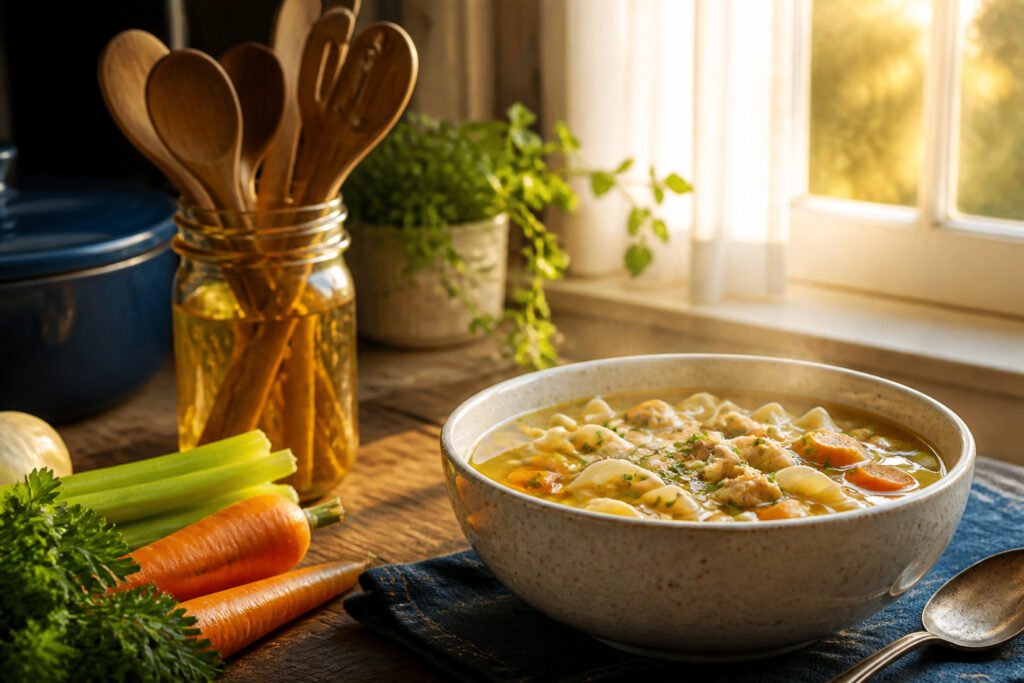
This homemade chicken noodle soup tastes like a Sunday in a bowl: deep broth, juicy chicken chunks, and egg noodles that still have bite by the second helping. The whole thing takes an hour from first chop to bowl.
The order of operations matters most. Sauté the mirepoix too long and the vegetables collapse; add the noodles too early and they bloat to mush before the pot cools.
The hour assumes raw chicken and bones going into the same pot, because that poaching step is what gives the broth enough body that someone will ask what you did differently.
What This Is and When I Make It

The request for chicken noodle soup usually lands in my kitchen on a Sunday night in February, when someone is already sniffling or when the temperature dropped twenty degrees overnight and the heat is running constantly.
This is the version I make then. It feeds 6 to 8 people and takes about an hour from the first chop to the bowl, which matters because the person asking for it is rarely patient.
I used to keep a can of Campbell’s in the pantry for these nights, and I still think that is a fine shortcut when the goal is just calories and steam.
But this recipe earns its place when the goal is something that actually tastes like a Sunday, with chunks of chicken that stay juicy and egg noodles that do not turn to mush by the third bowl.
The broth gets deep enough that someone will ask what you did differently, and the honest answer is almost nothing, just time and the right order of operations.
The hour assumes you are working from raw chicken and making the broth in the same pot. If you already have shredded chicken from another project, the timeline collapses, though the flavor will not be quite the same.
I have made it both ways, and the full version is worth the extra twenty minutes when the person at the table is actually sick and not just cold.
Ingredients

The ingredient list for chicken noodle soup is forgiving, and the protein choice changes the whole timeline. I keep three options on hand depending on how the afternoon looks.
- 1.5 lbs boneless, skinless chicken breasts for the fastest path from raw to bowl
- Bone-in, skin-on chicken thighs or breasts when I want the broth itself to carry more fat and depth; the bones give back something the breasts cannot
- Shredded rotisserie meat for the nights when poaching feels like one step too many; it skips that entire phase and still lands warm
The vegetables and aromatics stay constant: 1 medium yellow onion diced, 3 carrots sliced, 2 celery ribs sliced, and 3 cloves garlic minced. Two bay leaves and 1 teaspoon dried thyme build the base note.
For the liquid, 8 cups low-sodium chicken broth lets me control the salt rather than fight it.
Six ounces of wide egg noodles go in near the end so they do not turn to mush, and a handful of fresh parsley at the finish brightens the color.
Salt and black pepper are the only variables I measure by taste, not by spoon.
Method
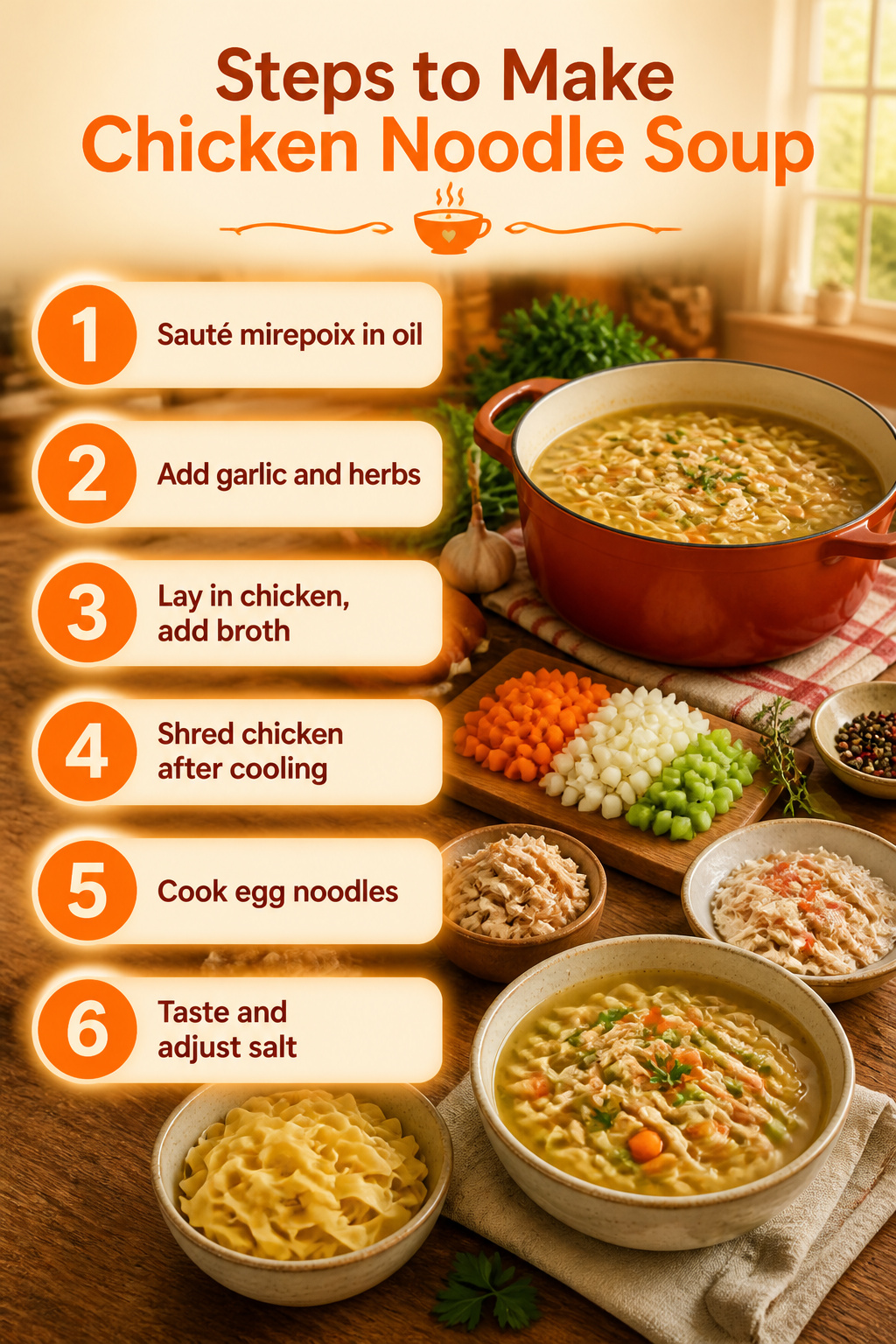
- Sauté the mirepoix in a tablespoon of oil or butter over medium heat. Five minutes gets you fragrant and just soft; ten minutes gets you deeper color and sweetness. I stop when the carrots still have a little fight to them.
- Add the garlic, thyme, bay leaf, salt, and pepper. One minute is enough. The garlic turns from raw-sharp to mellow; the dried herbs wake up in the fat. Anything longer and the garlic starts to brown and turn bitter, which is the first place this soup can go wrong.
- Lay the chicken in and pour the broth over it. Bring it to a full boil, then drop to a simmer. A whole breast takes 20 minutes; bone-in thighs need 35 to 40. The chicken is done at 165°F internal, and the vegetables should be soft enough to split with the back of a spoon but not collapsing into the broth.
- Pull the chicken out and let it cool just until you can handle it. Two forks shred it fast. Return every strand to the pot.
- Add the egg noodles and cook 5 to 10 minutes. Fresh noodles lean toward 5; dried closer to 10. They should bend easily around a spoon but still carry slight resistance when you bite, or they will turn to mush by the second bowl.
- Taste and adjust salt. The broth that tasted right before the noodles went in will need more now. Stir in parsley at the last second so it stays bright. Serve hot.
What the Broth Does
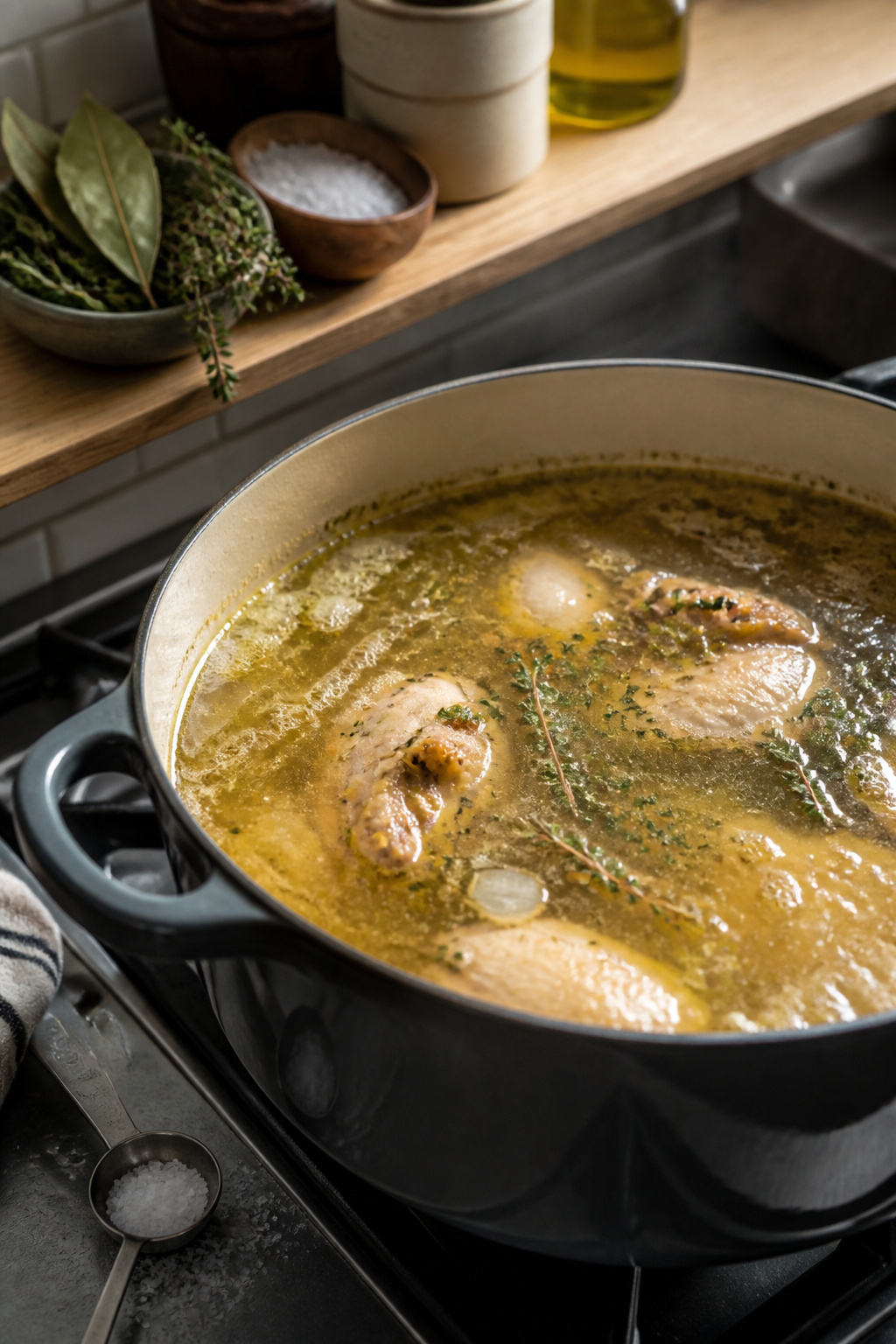
Homemade stock carries more depth because the bones and connective tissue have time to release collagen and minerals into the liquid. The finished broth sits heavier on the spoon and tastes fuller against the noodles.
When I have a carcass left from a roasted bird, that is what goes into the pot.
Store-bought low-sodium broth is the practical fallback, and the control matters more than you might expect. The salt level in regular broth can push the whole pot past what tastes right once the chicken and vegetables add their own.
Low-sodium lets you adjust near the end, after the thyme and bay leaf have done their work.
If neither is on hand, bone-in chicken simmered in plain water makes a passable quick broth. It will not have the body of a long-simmered stock, but the bones still leach enough flavor to keep the soup from tasting flat.
I have done this with chicken breasts on short notice, and the result is thin but serviceable.
Fresh and Dried Herbs

Dried thyme and a single bay leaf go in early, when the broth is still building its base.
The simmering water pulls the oils out slowly; ten minutes is enough for the vegetables to soften and for those dried herbs to stop tasting like paper and start tasting like soup.
Fresh thyme works too, but it needs that same long stretch to mellow. Without it, the raw edge stays sharp against the chicken.
Fresh parsley is different. It goes in at the very end, chopped fine and stirred in once the pot is off the heat.
The heat still on the broth is enough to wilt it, but not enough to cook the brightness out.
That last-minute hit is what keeps a batch that simmered for an hour from tasting like it sat on a steam table all afternoon. Dried herbs build the broth; fresh ones wake it back up.
Chicken Cuts and Times

Boneless breasts need 20 to 25 minutes of gentle simmering to cook through without turning stringy, and they are what I reach for when someone texts that they are sick in two hours.
Bone-in thighs ask for 35 to 40 minutes, but the difference is real: the bones and skin leave behind collagen and fat that make the broth taste like it spent half a day on the stove even when it did not.
Rotisserie chicken is the third path, and the fastest one. The meat just needs to warm through in the final 5 minutes, which makes it ideal for a weeknight build.
The trade is depth: you miss the flavor that raw chicken gives up to the liquid as it poaches, so the broth has to do more of the work.
A rotisserie carcass can help bridge that gap if you simmer it separately while the vegetables soften, but that is extra time and an extra pot.
Noodles That Hold Up

Wide egg noodles are the standard for chicken noodle soup because their flat surface catches broth and carries it to the spoon. The problem is that same porousness.
Egg noodles keep absorbing liquid after the pot comes off the heat, and by the next day they have swollen soft and swollen.
You have two ways to stop the mush. Cook the noodles separately and ladle them into individual bowls, then pour the soup over top.
This is the only route that works if you expect leftovers. The noodles stay intact in their own container while the broth keeps in the fridge without turning starchy.
If you are serving the whole pot at once, add the noodles directly to the simmering broth, but only in the last minutes. Wider egg noodles need the full 8–10; finer ones take 5–6.
Pull the pot from the heat as soon as they reach tender and serve immediately. Either way, the noodles should enter hot liquid, not sit in it.
Variations I Have Tried

A few tweaks to the base recipe have made it into my rotation, and a few have not.
- Frozen peas or corn go in during the last 3 minutes of simmering. They heat through without turning gray, and the sweetness is a good break from all that savory depth.
- A squeeze of lemon at the end brightens the broth more than I expected. A splash of fish sauce or a Parmesan rind fixes the soup when the chicken itself is mild and the pot tastes flat.
- Turmeric for color was a miss. The yellow looks artificial against the pale broth, and the earthy note clashes with the parsley.
- Rice instead of noodles works if you add it 20 minutes earlier, since it needs that time to soften. I use 1 cup of uncooked rice, dropped in when the noodles would have gone.
- Gluten-free pasta has to be cooked separately. Every brand I tried dissolved into starch if it sat in the broth, even the ones labeled sturdy. Drain it, hold it aside, and let people add it to their own bowls.
Storage and Reheating

Leftover chicken noodle soup keeps in the refrigerator for 3 to 4 days, though the noodles will have swollen and the broth thickened by then.
I thin it with a splash of broth or water when reheating, which brings it back to a spoonable consistency without much effort.
If I am making this ahead, I skip the noodles entirely and freeze just the base. The broth and chicken hold up for up to 3 months that way.
Egg noodles do not survive freezing; they turn mushy and absorb every drop of liquid once they thaw.
When I pull a frozen batch out, I bring the base to a simmer and add fresh noodles, letting them cook for about 8 minutes until they are tender.
The timing is close enough to the stovetop version that it does not throw off the rhythm of putting dinner together.
Slow Cooker and Instant Pot

A slow cooker turns this into a mostly hands-off project. Bone-in chicken goes in first on low heat for 6 to 8 hours, which gives the broth time to pick up collagen and real depth.
The noodles wait until the end. Switch to high for the last 30 minutes and add them then, or they bloat into mush.
The Instant Pot compresses the same work into about half an hour. Boneless thighs or breast cook under pressure in 15 minutes with a quick release, then you shred the meat right back into the pot.
A smaller amount of liquid at the start is the adjustment that matters here, pressure cooking traps almost all of it where a stovetop pot loses steady steam.
Sauté mode takes the noodles from raw to done in roughly 6 minutes, and the broth stays clear instead of going starchy.
Frequently Asked Questions
Can I use rotisserie chicken for chicken noodle soup?
Yes, but the broth will miss the depth that raw chicken gives up during poaching. Add the shredded meat in the final 5 minutes so it just warms through.
If you want to bridge the gap, simmer the rotisserie carcass separately while the vegetables soften, then strain that liquid into the pot.
How do I keep egg noodles from getting mushy in chicken noodle soup?
Cook them separately and ladle them into individual bowls before pouring the soup over top. This is the only method that works for leftovers.
If you are serving the whole pot at once, add wide egg noodles in the last 8 to 10 minutes of simmering and serve immediately as soon as they bend around a spoon but still carry slight bite.
Can you freeze chicken noodle soup?
Freeze only the broth and chicken base, which holds up for 3 months. Egg noodles turn mushy and absorb all liquid once thawed, so cook fresh noodles when you reheat.
Bring the frozen base to a simmer and add noodles for about 8 minutes until tender.
What is the secret to really good chicken noodle soup?
The right order of operations. Sauté the vegetables until fragrant, bloom the garlic and dried herbs in fat for exactly one minute so they do not turn bitter, and simmer the chicken gently rather than at a rolling boil.
Fresh parsley stirred in at the last second keeps an hour of cooking from tasting tired.
What ingredients are good in chicken noodle soup?
Yellow onion, carrots, celery, garlic, bay leaves, and dried thyme build the base. Low-sodium chicken broth lets you control salt after the chicken and vegetables add their own.
Wide egg noodles catch broth on their flat surface, and a squeeze of lemon at the end adds brightness. Frozen peas or corn dropped in for the last 3 minutes give a sweet break from the savory depth.
What gives chicken noodle soup the most flavor?
Bones and skin from bone-in, skin-on chicken thighs or breasts. The collagen and fat they release during 35 to 40 minutes of simmering make the broth taste like it spent half a day on the stove.
If you only have boneless breasts, the finished soup will be thinner but still serviceable.
What is the secret ingredient in chicken noodle soup?
There is not one, but timing matters more than any single addition.
A squeeze of lemon off the heat brightens a flat batch, and fresh parsley at the last second preserves color and freshness that an hour of simmering would otherwise dull.
Dried herbs build the broth; fresh ones wake it back up.