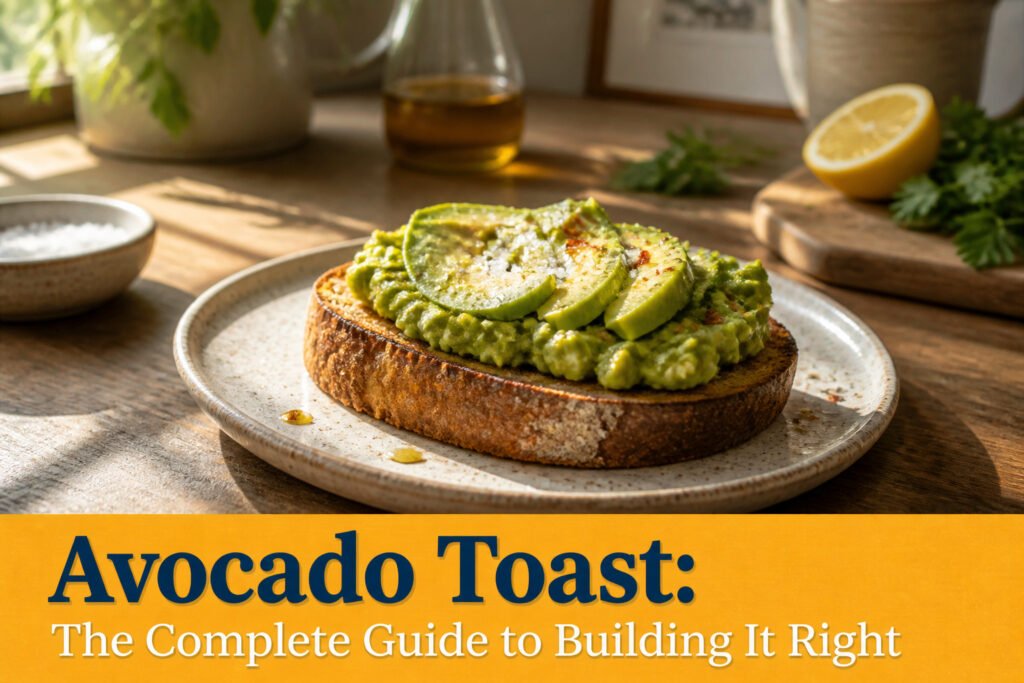
Creamy, bright, and actually filling, the difference here is treating the avocado like fruit that browns, not a spread that waits.
A teaspoon of citrus per half, tossed before the fork hits the flesh, buys you ten minutes of green instead of gray.
The whole build takes five to ten minutes, but the window after assembly is short: serve it while the sourdough still crackles.
The bread matters more than most people think. A slice under a quarter inch collapses into a soggy sponge no matter how dark you toast it.
Thick-cut sourdough or whole grain is the fix, and without it the rest of the toppings sink.
Ingredients
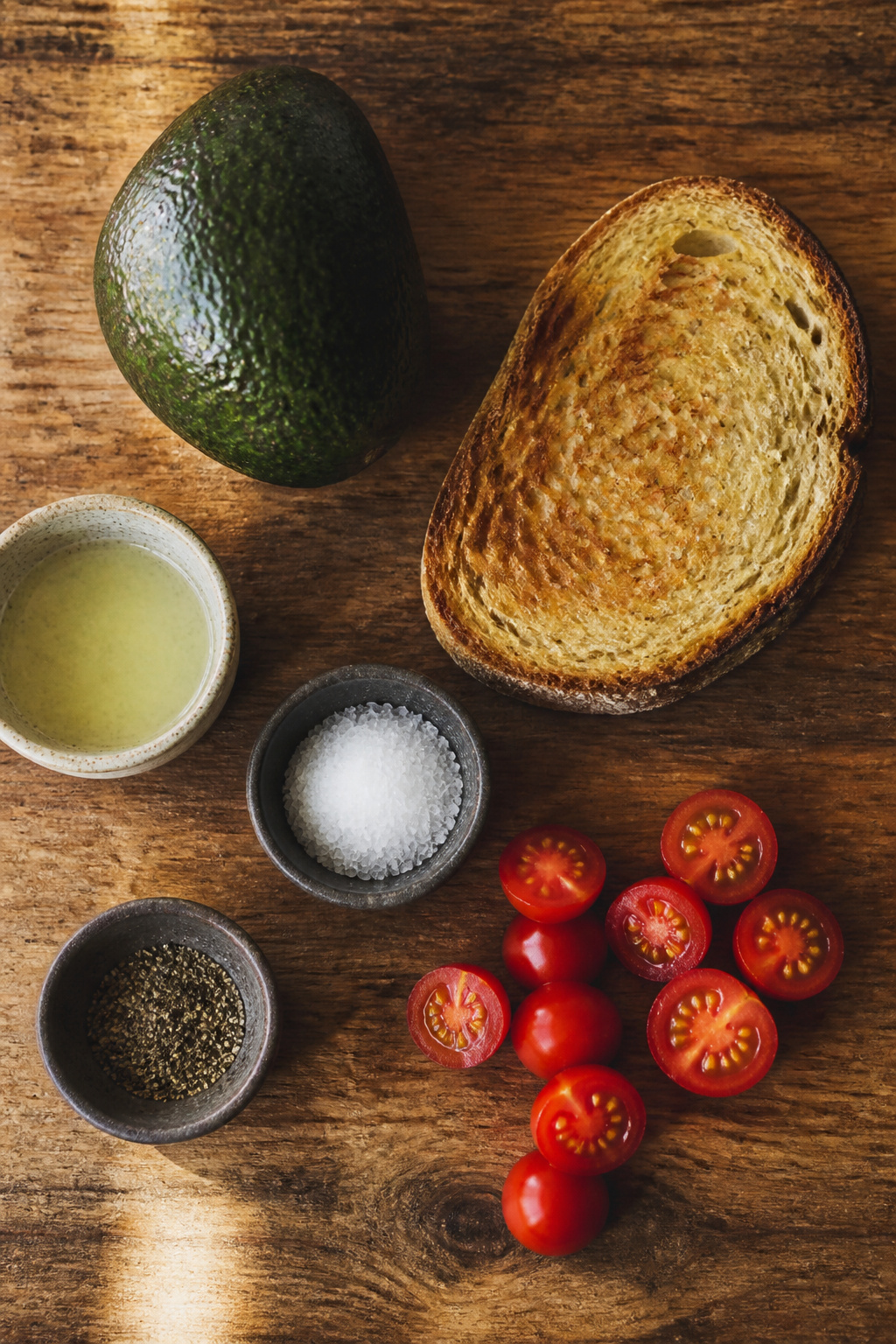
A large avocado runs about 8 oz, and half of one covers a single slice comfortably. The bread needs to be sliced at least 1/4 inch thick or the center goes soggy under the weight.
Per-slice base:
- 1/2 large ripe avocado
- 1 slice bread, 1/4 inch thick or more
- 1 teaspoon lemon or lime juice
- Salt and black pepper
Toppings that actually earn their place:
- 1 egg, fried or poached
- 2 oz smoked salmon
- 1 tablespoon crumbled feta
- 3–4 cherry tomatoes, halved
- 1–2 tablespoons hummus
- 1 teaspoon everything bagel seasoning
- 1 tablespoon pickled onions
- 2 slices bacon, crisped and crumbled
- 2 tablespoons roasted chickpeas
- 1/4 teaspoon curry powder
I keep the acid and salt in even when I am loading up. The lemon does more than flavor; it buys you ten extra minutes before the avocado browns, which matters if you are making more than one round.
Method
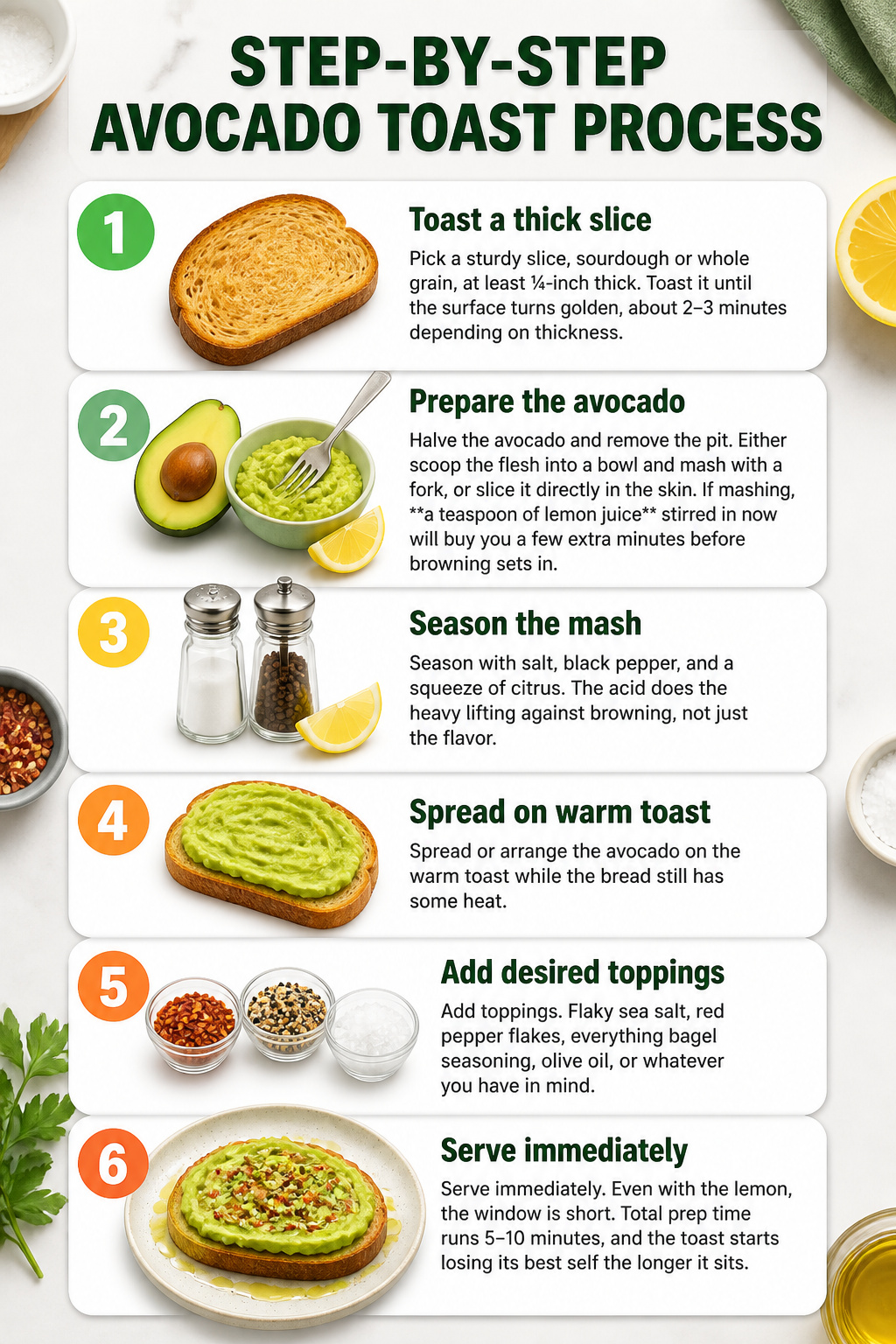
- Pick a sturdy slice, sourdough or whole grain, at least ¼-inch thick. Toast it until the surface turns golden, about 2–3 minutes depending on thickness.
- Halve the avocado and remove the pit. Either scoop the flesh into a bowl and mash with a fork, or slice it directly in the skin. If mashing, a teaspoon of lemon juice stirred in now will buy you a few extra minutes before browning sets in.
- Season with salt, black pepper, and a squeeze of citrus. The acid does the heavy lifting against browning, not just the flavor.
- Spread or arrange the avocado on the warm toast while the bread still has some heat.
- Add toppings. Flaky sea salt, red pepper flakes, everything bagel seasoning, olive oil, or whatever you have in mind.
- Serve immediately. Even with the lemon, the window is short. Total prep time runs 5–10 minutes, and the toast starts losing its best self the longer it sits.
Picking the Right Avocado
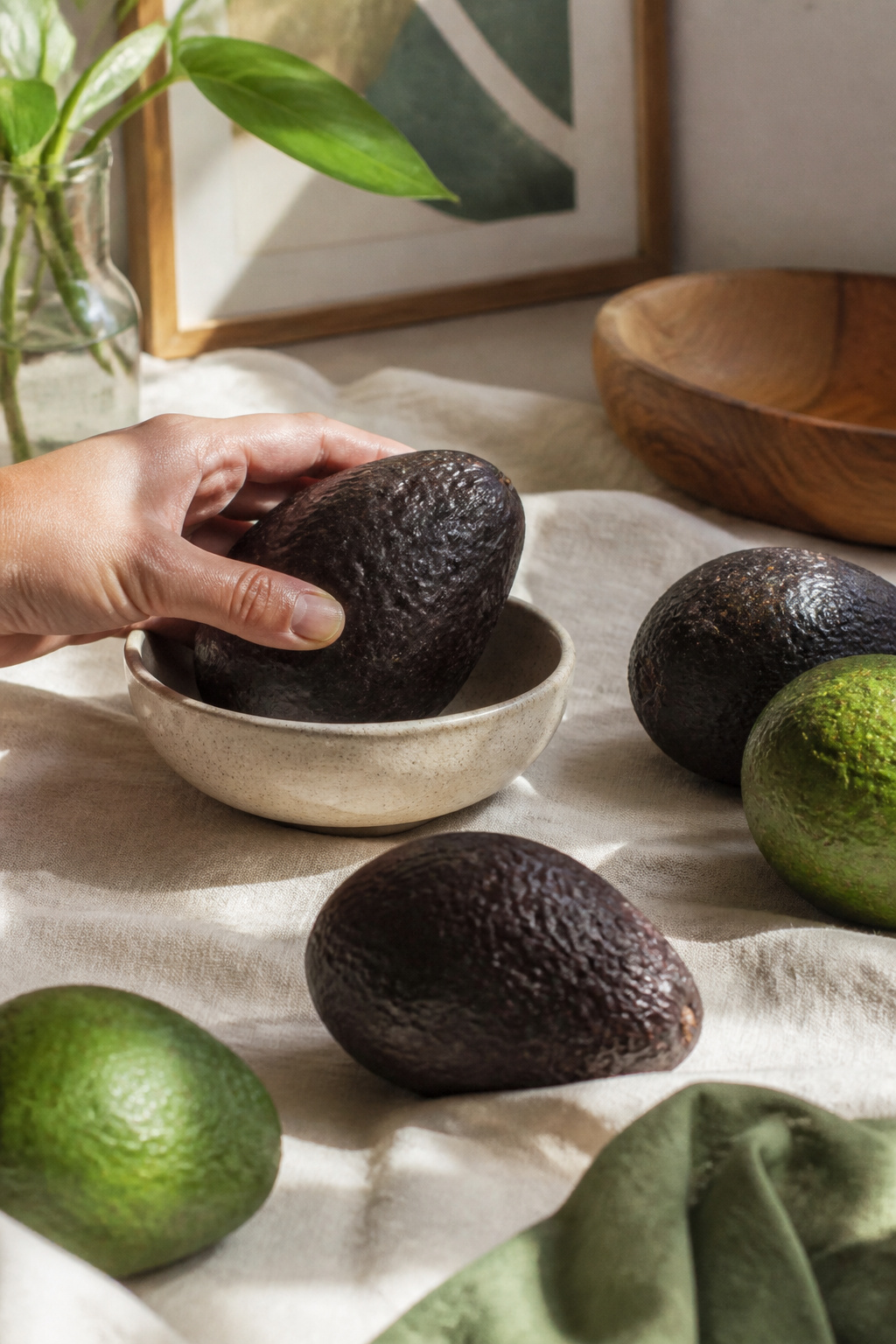
The Hass variety is the one to grab for avocado toast. Its skin turns that dark, almost blackish-green when ripe, and the flesh has the creaminess that mashes without turning watery.
A ripe avocado yields just slightly when you press it with your finger, not so much that your fingertip sinks in, but enough that it feels like pressing on the soft end of a banana.
Rock-hard means three days on the counter; mushy with soft spots means brown streaks inside that you’ll end up scooping out and discarding.
I still pick wrong sometimes. The stem-cap trick has saved me more than once: flick that little nub off with your thumb.
If it fights you, the avocado is underripe. Green underneath means good to go.
Brown underneath means at least some brown spots inside, though the rest is usually still usable if you’re mashing anyway. I slice my toast avocado about half the time, and for that you really do need firm-ripe, not ready-for-guacamole.
The slices hold their shape on the bread instead of collapsing into green smears.
Best Bread for the Job

A slice of soft white sandwich bread will collapse under a smashed avocado before you finish topping it.
Sourdough and whole-grain breads hold their shape because the crumb is tighter and the crust has actual backbone; toasted, they turn into a platform instead of a sponge.
A quarter-inch minimum thickness is what separates toast that carries toppings from toast that tears. Anything thinner than that, and the center goes floppy where the avocado meets it, no matter how dark you toast it.
Thick-cut sourdough is the safest bet, multigrain or whole grain right behind it. The extra heft also means you can toast darker than you think, which buys you a few extra minutes of crunch before the moisture wins.
Salt and Acid

Salt is what separates avocado toast from warm green paste, and acid is what keeps it from turning brown before you finish building the plate.
I learned this the hard way on a morning when I skipped the lemon and ended up spreading something the color of oxidized apple onto sourdough that I’d actually bothered to toast properly.
Use about 1 teaspoon of lemon or lime juice per large avocado, which is enough citric acid to slow the enzyme that browns the flesh without making the mash taste like fruit salad.
Lemon reads brighter; lime gives you a faint edge that works with cumin or smoked paprika if you’re heading that direction.
Either way, toss the juice in while the avocado is still in chunks, before you mash, so every surface gets hit.
Salt needs to go in at the same stage, while the fork is doing its work. Flake salt like Maldon gives you those crisp bursts against the fat; fine salt seasons more evenly through the mash.
Bread and toppings bring their own salinity, so adjust salt to taste; the avocado itself is almost flavorless without it.
I tend to mash, taste, and add more salt than I think I need, since the cold toast will mute it slightly.
Black pepper belongs here too, though the red pepper flakes can wait for the top, where they keep their heat and their color.
Topping Options

A single slice of avocado toast can handle about three tablespoons of toppings before it turns into a fork-and-knife situation.
- Eggs: One egg per toast. Poached gives you a runny yolk that mixes with the avocado; scrambled keeps things neat if you are eating over the sink on a Tuesday.
- Smoked salmon: Two thin slices, maybe three if they are the wispy kind. Add a couple of tomato slices and a few capers. A thin spread of cream cheese underneath the avocado is optional; some find it adds needed richness, others skip it.
- Feta cheese: One tablespoon crumbled. It is salty enough that more fights the avocado.
- Tomatoes or radishes: Two to three tomato slices, or four to five thin radish coins. The cherry tomato route (halved, with a drizzle of balsamic) needs about a tablespoon of those plus a couple of small mozzarella pearls if you are doing the Caprese thing.
- Hummus: Two tablespoons spread directly on the bread, then avocado on top. Otherwise the flavors muddy.
- Everything bagel seasoning: One teaspoon, sprinkled after the avocado so it sticks. This stuff is potent; I have overshot and ended up with a salt bomb.
- Pickled onions: One tablespoon, drained. They are sharp and you want them as punctuation, not the whole sentence.
- Bacon: One slice, crumbled. Two and the toast gets greasy.
- Chickpeas: Two tablespoons, roasted if you have the time. Harissa works well with chickpeas; a teaspoon gives you smoke and heat without a separate sauce.
- Curry powder: A pinch, maybe quarter teaspoon. It blooms in the fat of the avocado and can dominate fast.
Serving and Timing
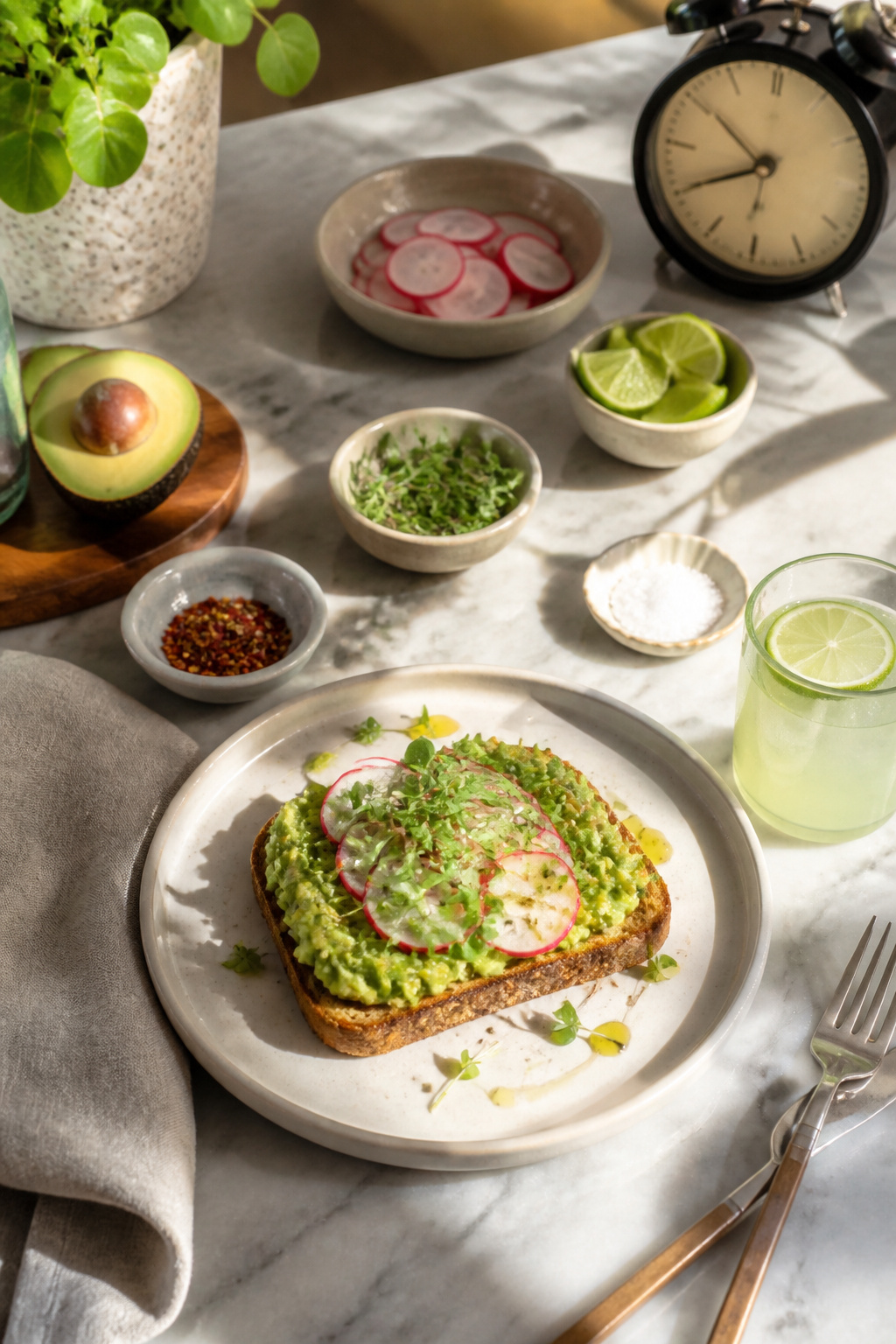
A finished slice of avocado toast sits at about 240 calories, with 22 grams of carbohydrates, 5 grams of protein, and 16 grams of fat, mostly the monounsaturated kind that keeps you full through a morning meeting.
That number shifts depending on how thick you cut the bread or how heavy your hand is with the olive oil, so treat it as a working estimate rather than a promise.
The real clock starts once the avocado hits the toast. The fruit begins browning within minutes of exposure to air, and the lime juice you squeezed on top only buys you a short window, not a pause button.
Green avocado spread turns dull and brown as it oxidizes, and the flavor goes flat right along with the color.
I have left a plate on the counter while answering a text, and ten minutes later the visual appeal had dropped enough that I almost talked myself into a second attempt.
Two days is the outside limit for a cut avocado half in the refrigerator, even with citrus juice to slow the process, so building the toast and walking away is not a strategy that ends well.
The move is simple: toast, mash, season, and serve in one motion, with the plate in hand before the bread cools.
DIY Avocado Toast Bar

A toast bar turns avocado toast into something guests actually gather around. Set out components that keep well ahead of time, and prep the few fresh items at the last minute.
- Budget around ½ large avocado per person, which runs roughly 160 calories of the finished serving. That amount covers 2–3 slices of toast, so guests who want seconds can split another half.
- Buy sturdy sourdough, multigrain, or whole grain loaves; soft white sandwich bread collapses under wet toppings and sends people back for fresh plates.
- Set out lemon juice, salt, pepper, and red pepper flakes as the base station. The lemon and salt are non-negotiable; they make the avocado taste like something rather than green paste.
- Offer four topping tracks: eggs done scrambled, poached, hard-boiled, or sunny-side up; everything bagel seasoning with sliced tomatoes; microgreens; and a vegan hummus layer with kale. Store-bought hummus and pre-sliced tomatoes are allowed.
- Toast the bread in batches, rub each slice with a fresh garlic clove while still warm, then let guests mash their own avocado. The garlic step seems fussy until someone skips it and notices the flatness.
- For a brunch party, add a pitcher of mimosas. The build-your-own format keeps you out of the kitchen and puts the timing in guests’ hands.
Storing Extra Avocado
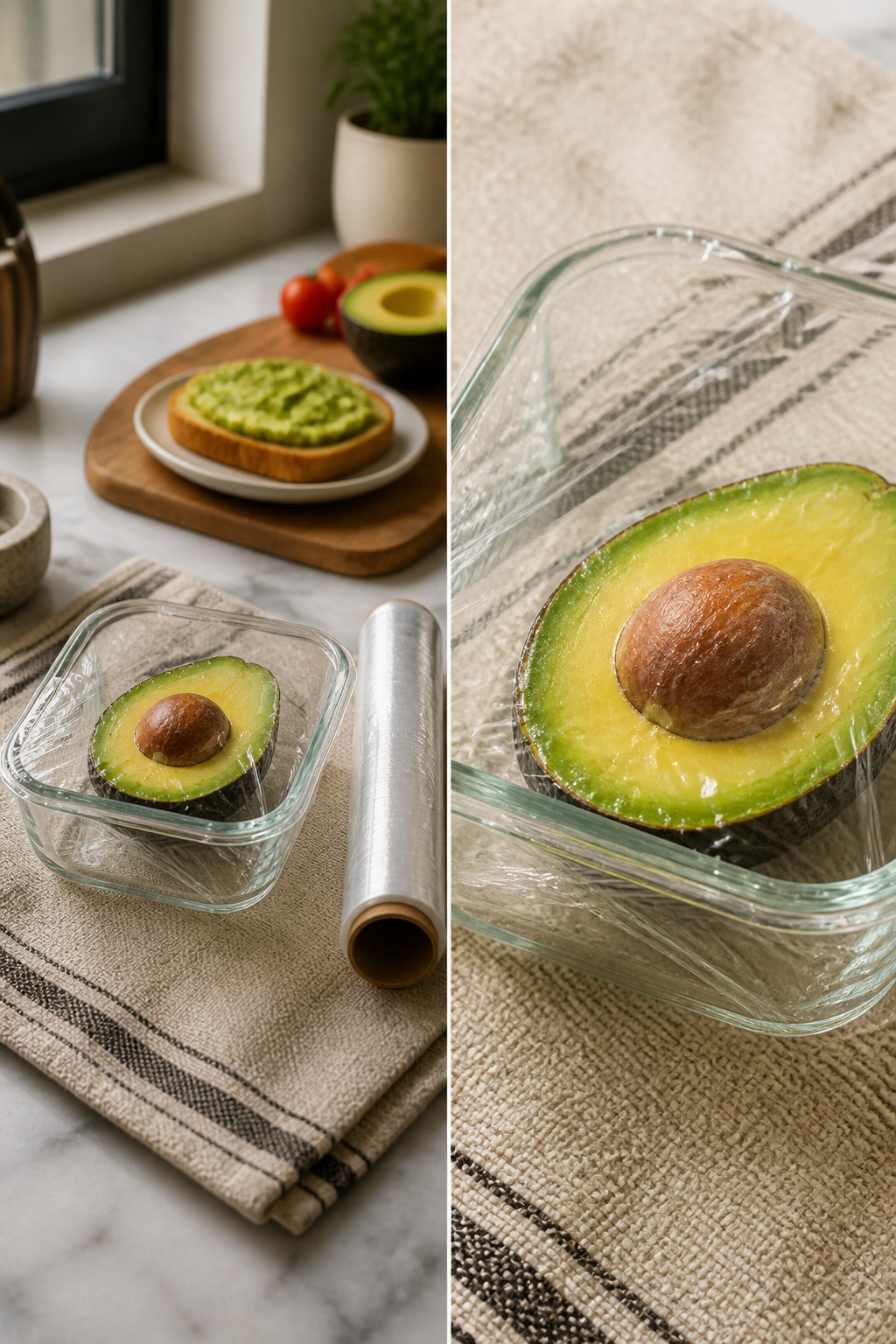
Half an avocado left from breakfast will keep for 3–4 days in the fridge with the pit still in place, sealed in a plastic bag or airtight container.
The pit limits how much flesh browns, though the cut surface still oxidizes where it sits exposed. Before using the rest, slice off the thin brown layer and the green underneath is fine.
Plastic wrap pressed directly against the cut face works in a pinch, especially if you do not have a container small enough.
Some stores sell dedicated avocado keepers shaped to fit the curve; in my experience the wrap-and-pit method is just as reliable and costs nothing extra.
Mashed avocado is a different story. Once the flesh is broken up, oxidation hits fast, so I only mash what I will eat immediately.
For meal prep mornings, hard-boiled eggs hold better and can be sliced on top right before serving.
Frequently Asked Questions
How do you make avocado toast?
Toast a sturdy slice of bread at least 1/4 inch thick until golden, then mash or slice half a large ripe avocado on top.
Season with 1 teaspoon lemon or lime juice, salt, and black pepper while the bread is still warm, then add toppings and serve immediately.
What are the best toppings for avocado toast?
Eggs, smoked salmon, crumbled feta, cherry tomatoes, hummus, everything bagel seasoning, pickled onions, bacon, roasted chickpeas, and curry powder all work well. A single slice can handle about three tablespoons of toppings before it becomes a fork-and-knife situation.
How can I keep my avocado from browning?
Stir 1 teaspoon of lemon or lime juice into the mashed avocado before spreading it; the citric acid slows the enzyme that causes browning and buys you about ten extra minutes.
For leftover halves, leave the pit in place, seal tightly, and refrigerate for up to 3–4 days, slicing off any thin brown layer before using.
What type of bread is best for avocado toast?
Sourdough, multigrain, or whole grain breads work best because their tighter crumb and stronger crust hold up under the weight.
A minimum 1/4-inch thickness is essential; anything thinner turns soggy where the avocado meets it, no matter how dark you toast it.
How do you pick a ripe avocado?
Choose a Hass avocado with dark, almost blackish-green skin that yields slightly when pressed, like the soft end of a banana. Rock-hard needs a few days on the counter; mushy with soft spots means brown streaks inside.
Flick off the stem cap: green underneath means good to go, brown means some spotting inside.
What to mix with avocado to put on toast?
Mix in 1 teaspoon lemon or lime juice per large avocado, plus salt and black pepper. The acid keeps the flesh from browning and brightens the flavor, while salt is what separates avocado toast from warm green paste.
Flaky salt gives crisp bursts against the fat; fine salt seasons more evenly.
Is 2 eggs and an avocado a good breakfast?
Yes, the combination pairs healthy fats and fiber from avocado with high-quality protein from eggs for a nutritious, filling meal.
One egg per slice of toast is the standard ratio, and the finished slice runs about 240 calories with 16 grams of mostly monounsaturated fat that keeps you full through the morning.