
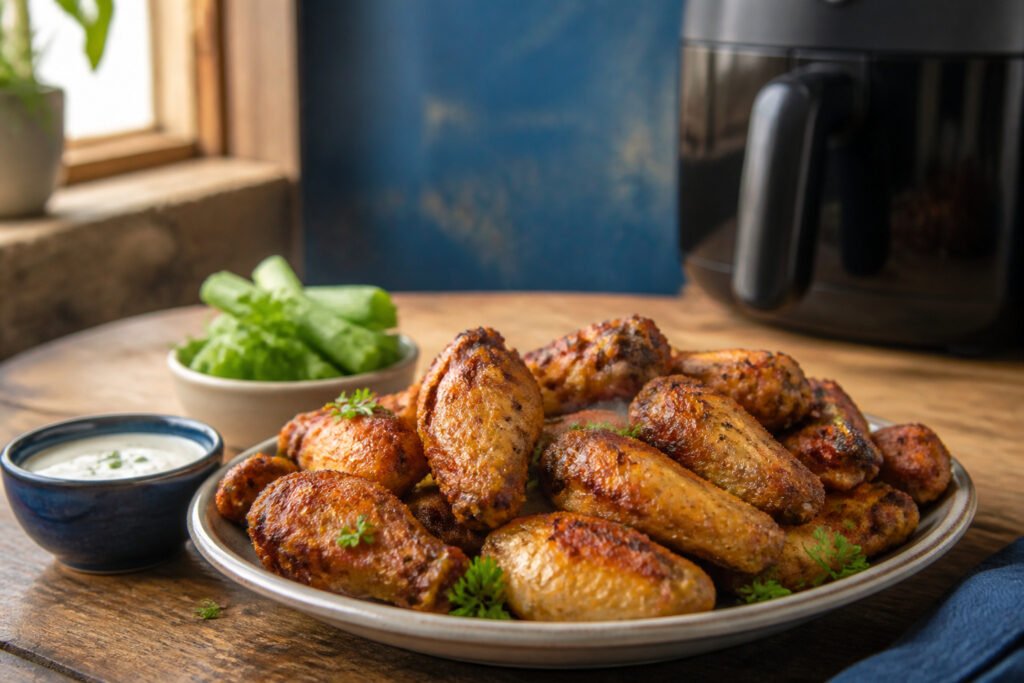
Air fryer chicken wings are chicken wings cooked in a countertop convection oven that circulates hot air around the food. The crisp depends on dryness before they ever hit the basket; moisture steams the skin instead of browning it.
A single teaspoon of baking powder per pound raises the skin’s pH and changes how it reacts to that dry heat, which is why recipes that get consistently crispy results include it.
1. Dry the Wings and Split Them

Moisture is the enemy of crisp skin, and every source I checked treated drying the wings as non-negotiable. A thorough pat with paper towels removes surface water that would otherwise steam the skin instead of crisping it.
I run the towels over both sides and between any folds where water hides.
If the wings came whole, splitting them matters for even cooking. The joint between the flat and the drummette bends easily; pressing there reveals the gap, and a sharp knife goes through with little resistance.
Pre-split wings skip this step entirely, which is why I grab those when my store stocks them. Either way, the drier the skin before seasoning, the better the final texture.
2. Season With Oil and Baking Powder

Dried wings go into a bowl with 1 tablespoon olive oil per batch, just enough to help the seasoning stick and encourage browning.
Then comes the part that changed how my wings turn out: 1 teaspoon baking powder per pound of wings, plus salt, pepper, garlic powder, onion powder, and paprika.
The baking powder raises the pH of the skin, which promotes browning and crispiness in the dry heat of an air fryer. Most recipes that get consistently crispy results include it.
I skip the dried oregano, thyme, and sage some versions add; they fight whatever sauce you toss the wings in later.
The baking powder does its work without adding any taste of its own, so the finished wing still reads as simply seasoned chicken ready for hot sauce or whatever you keep on the door shelf.
3. Preheat to 400°F

Most recipes land on 400°F as the starting point, though a few suggest opening at 370°F and finishing higher.
The lower start gives you a longer window if your wings run large or your fryer runs hot, but I have not found it necessary on the models I have used.
Preheating itself depends on the machine. Basket-style units with exposed coils usually benefit from a 3–4 minute head start; the hot metal jump-starts the crisping before the circulating air has to do all the work.
Oven-style air fryers with a door and rack tend to hold heat differently, so skipping the preheat matters less. If your manual recommends it, do it.
If it stays silent, a short preheat still helps the first batch and costs almost nothing in time.
Spray the basket with oil and air fry the wings for 16 to 22 minutes at 400°F, shaking the basket halfway through.
That 16–22 minute range assumes you started hot. A cold basket adds a few minutes of soft skin at the front end that even the best shake cannot fully correct.
4. Cook 16–25 Minutes and Flip

A single layer in the basket matters more than crowding the rack ever did. The hot air needs to touch both sides of every wing, and stacking turns the bottom pieces into steamed meat with rubbery skin.
Flip at the halfway mark, around minute 8 to 12 depending on your total window, so the pale side gets its turn against the crisping element.
The 16–25 minute spread exists because air fryers vary more than ovens do.
A compact basket model running close to the food finishes small wings in 16 minutes, while a larger oven-style unit with the heating element farther away can stretch the same batch toward 25.
Wing size splits the difference too: the 1–2 ounce party wings clock in nearer the short end, and the 2–3 ounce jumbo flats need the full count.
I set my timer for 18 first, check a thick joint with a thermometer, and add time in two-minute bursts rather than overshoot and dry the meat.
The skin turns the proper color before the interior hits 165°F, so the thermometer keeps me honest.
5. Check 165°F Before Serving

A meat thermometer takes the guesswork out of doneness. Slide the probe into the thickest part of a wing, avoiding bone, and look for at least 165°F on the readout.
That is the FDA minimum for safe poultry, though letting them climb to 175°F or even 185°F adds more flavor and a better bite.
Sauce goes on after the wings leave the basket, never before. The skin has already crisped in the dry heat, and tossing them wet while hot keeps that texture intact.
Buffalo is the obvious choice, though BBQ works for a sweeter crowd and garlic parmesan, tossed with melted butter, pressed garlic and grated cheese, is what I make when I want the kitchen to smell like something happened.
Serve them straight away. Wings straight from the air fryer hold their crunch for maybe a few minutes before steam trapped in a bowl undoes the work.
Frozen Wings Need Thawing First

Frozen wings straight from the bag are the fastest way to ruin an air fryer batch.
The ice crystals melt into pooled water at the bottom of the basket, and that steam keeps the skin rubbery no matter how long you cook.
Some air fryer baskets handle the extra liquid better than others, but thawing overnight in the refrigerator and patting completely dry before seasoning is the only move that reliably fixes it.
Cooking from frozen tacks on 5 to 7 extra minutes and demands more flipping, plus a finishing blast at 400°F just to chase crispness you would already have with thawed wings.
The uneven timing is a headache too: smaller sections dry out while thicker joints finish. Defrosting the night before takes no active work, and the texture difference is immediate.
Store and Reheat Without Sogginess

Leftover wings hold up 3 to 4 days refrigerated in an airtight container. The real test comes at reheating.
A microwave steams the skin back to rubber in about sixty seconds flat. An oven takes twenty minutes and still leaves you with spots that never crisp again.
The air fryer wins because the circulating hot air pulls surface moisture out fast instead of slowly baking it in. Set it to 360°F, give the wings four minutes, and the crunch returns almost like day one.
Some sources split the difference at 380°F for two minutes, but either approach beats the alternatives.
If you are staring down more wings than you will eat, freeze them up to a month and thaw overnight in the fridge before reheating the same way.
Dry Rubs and Marinades Beyond Basics

Most recipes stop at garlic and paprika, but lemon pepper is where the real reward lives. The zest cuts through the fat in a way heavier spices can’t, and the pepper lingers without building heat.
I keep a jar of Cajun seasoning on hand too, the kind with paprika, garlic powder, and a dash of cayenne already mixed in. It saves measuring and the salt in the blend does double duty drawing moisture out.
Five-spice powder works better than you’d expect on wings, especially if you pair it with a honey glaze in the last minute of cooking.
Marinating overnight does add flavor, but the surface has to end up dry before the wings hit the basket. Wet skin steams instead of crisps, no matter how good the rub tastes underneath.
I pull mine from the fridge an hour early, pat them down again, and let them sit uncovered in the cold air while the fryer preheats.
That step never appears in the short-form videos, and skipping it is why some overnight marinades turn out rubbery.
Temperature and Time by Wing Size

The 16–25 minute spread you see across recipes is not a contradiction; it is a size chart. Party wings, the small ones running 12 or more per pound, finish in about 16–18 minutes at 400°F.
Standard drummettes, roughly 10 per pound, sit in the middle at 20–22 minutes. Whole large wings, the 8-per-pound kind, need the full 24–25 minutes, and some models push toward 30.
I sort mine before they go in. Grouping by size keeps the first batch from turning to leather while the rest still renders.
If your two-pound bag holds fewer than 20 wings total, you are in large-wing territory and should plan the longer slot.
| Wing size | Wings per pound | Total time at 400°F | Notes |
|---|---|---|---|
| Small party wings | 12+ | 16–18 min | Flip once; check early |
| Standard drummettes | ~10 | 20–22 min | The common grocery default |
| Large whole wings | ~8 | 24–25 min | May need 30 min in some fryers |
The internal target stays the same: 165°F minimum, though 170°F leaves more room for error on the thick ones.
Flip halfway no matter the size; that is what keeps both sides in moving air instead of stewing in their own rendered fat.
Frequently Asked Questions
How long do you cook chicken wings in an air fryer?
Cook them for 16 to 25 minutes at 400°F, flipping halfway through. Small party wings finish in 16–18 minutes, standard drummettes need 20–22 minutes, and large whole wings take 24–25 minutes.
The exact time depends on wing size and your specific air fryer model.
Do I need to preheat my air fryer?
It depends on your model. Basket-style units with exposed coils crisp faster after a 3–4 minute preheat, while oven-style air fryers with doors and racks handle skipping it better.
If your manual recommends preheating, follow that guidance; otherwise a short preheat still helps the first batch.
Can I use frozen chicken wings in the air fryer?
You can, but thawing overnight in the refrigerator produces far better results. Frozen wings release water that steams the skin rubbery, and cooking from frozen adds 5 to 7 extra minutes with uneven timing.
Pat thawed wings completely dry before seasoning.
Should I season my wings before air frying?
Yes, toss dried wings with 1 tablespoon olive oil per batch plus salt, pepper, garlic powder, onion powder, and paprika.
Add 1 teaspoon baking powder per pound of wings; it raises the skin’s pH to promote browning and crispiness without adding any flavor of its own.
Do you use cornstarch or baking powder for air fryer wings?
Use baking powder, not cornstarch. It leaves no taste behind, so the finished wing stays neutral for whatever sauce you add later.
Why didn’t my wings get crispy in the air fryer?
The most likely culprit is moisture. Pat wings thoroughly dry with paper towels before seasoning, since surface water steams skin instead of crisping it.
Overcrowding the basket also causes trouble; arrange wings in a single layer so hot air reaches both sides of every piece.