

This butter chicken is rich, mild, and built on a yogurt-marinated simmer that feeds eight to ten people from a single batch.
The version below gives you both heavy cream and full-fat coconut milk as finishing options, because the sauce splits one way but stays stable the other, and that choice matters more than the dairy swap alone.
Everything else, from the Kashmiri chili powder to the kasuri methi, is already in your cart or on the spice rack.
What Butter Chicken Is and When I Make It
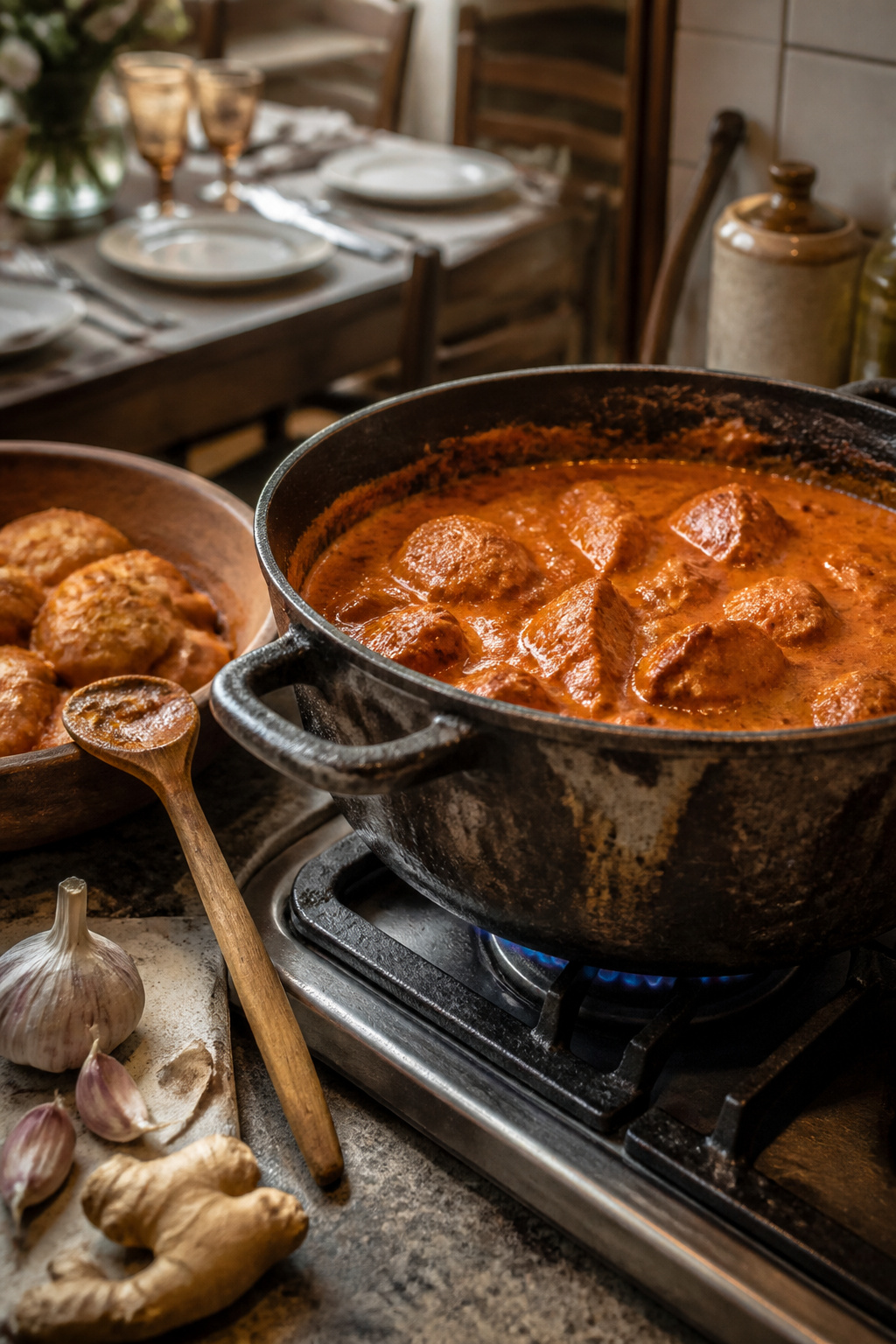
Butter chicken is a creamy, spiced curry built on marinated chicken simmered in a rich tomato-based sauce.
The dish took shape in the 1950s at Moti Mahal restaurant in Delhi, where cooks mixed leftover tandoori chicken into a tomato sauce heavy with butter.
The result spread fast: in just a few decades it went from a single kitchen experiment to a global takeout staple.
The curry was made "by chance" by mixing leftover tandoori chicken in a tomato sauce, rich in butter (makhan/makhani). The chefs were both Punjabi Hindu refugees (after the partition of India) in Delhi from Peshawar. They popularized the dish at their Moti Mahal restaurant in the Daryaganj neighbourhood of Old Delhi in the 1950s.
That origin story matters because it explains why butter chicken works so well for American home cooks: it was designed to rescue leftovers and stretch them into something generous.
A single batch feeds eight to ten people easily, and the sauce alone tastes expensive without requiring costly ingredients. I make it when I’m hosting a dinner party and need one centerpiece dish that does not demand last-minute attention.
The chicken can be marinated the night before, the sauce simmers while guests mingle, and the whole thing holds warm on the stove for an hour without suffering.
Ingredients
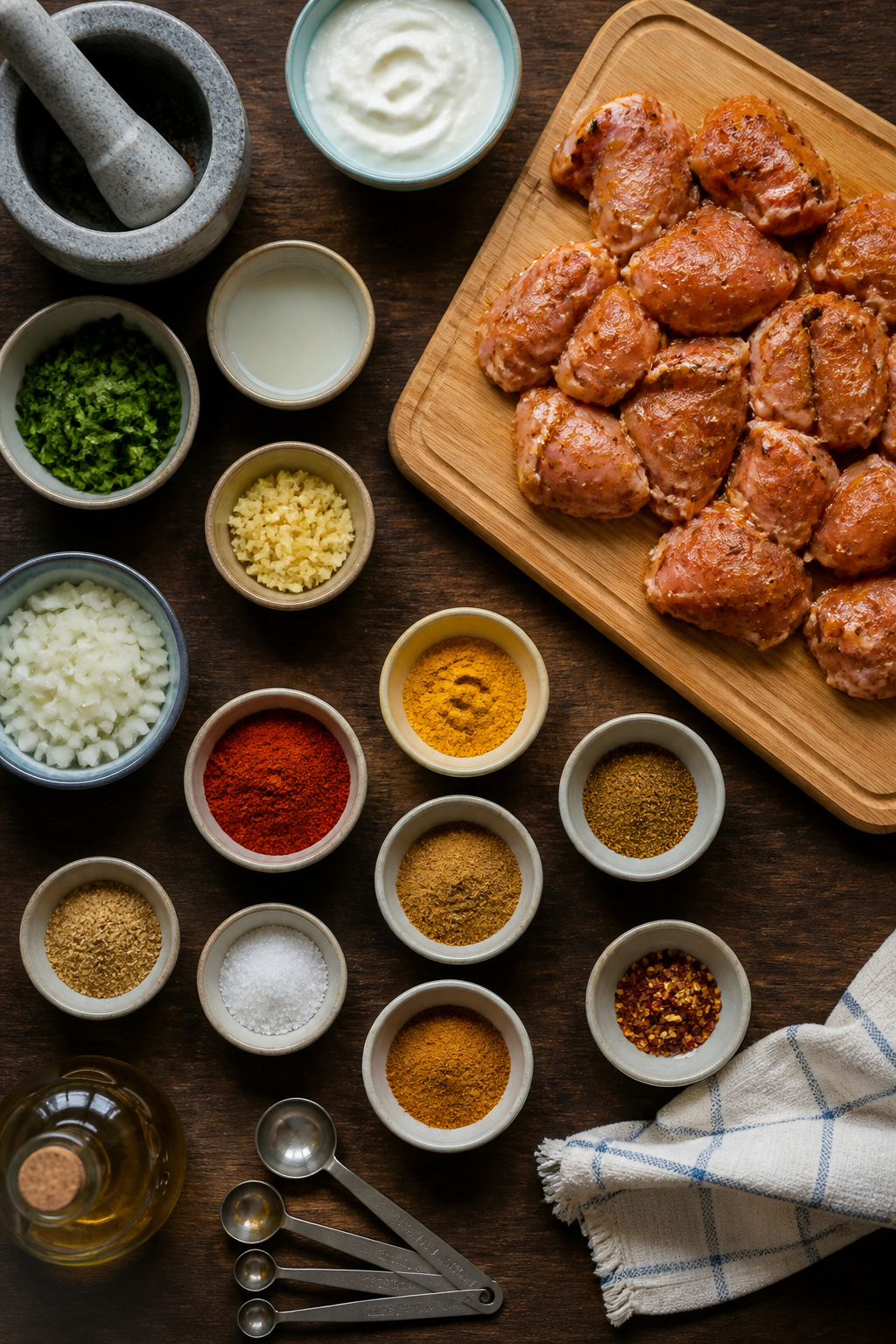
Boneless, skinless chicken thighs hold up better than breasts during the long simmer, though either works. Aim for 1.5 lbs cut into 1 to 1.5-inch pieces.
For the marinade you’ll need:
- 1 cup plain whole-milk yogurt
- 1 tablespoon lemon juice
- 1 teaspoon each fresh grated ginger and grated garlic
- 2 teaspoons garam masala
- 1 teaspoon turmeric
- 2.5 teaspoons Kashmiri chili powder (or standard chili powder)
- 1 teaspoon each ground cumin and coriander
- 1 teaspoon kasuri methi (dried fenugreek leaves)
- 2 teaspoons kosher or sea salt
For the sauce:
- 4 tablespoons ghee or neutral oil, divided
- 1 yellow onion, small dice
- 1.5 inches fresh ginger, finely chopped
- 6 to 7 garlic cloves, finely chopped
- 14 ounces crushed or pureed tomatoes
- 1 tablespoon tomato paste (optional, for depth)
- 2 to 3 teaspoons granulated sugar
- 1 teaspoon each ground coriander, cumin, and garam masala
- ½ teaspoon turmeric
- 1 teaspoon chili powder
- ½ cup heavy cream or 14 ounces full-fat coconut milk
- 1 tablespoon kasuri methi, plus pinch for garnish
- Fresh cilantro, chopped
- Salt to taste
Fresh spices matter more than brand names. Ground cumin and coriander lose punch after six months; buy whole and grind if you can.
Method
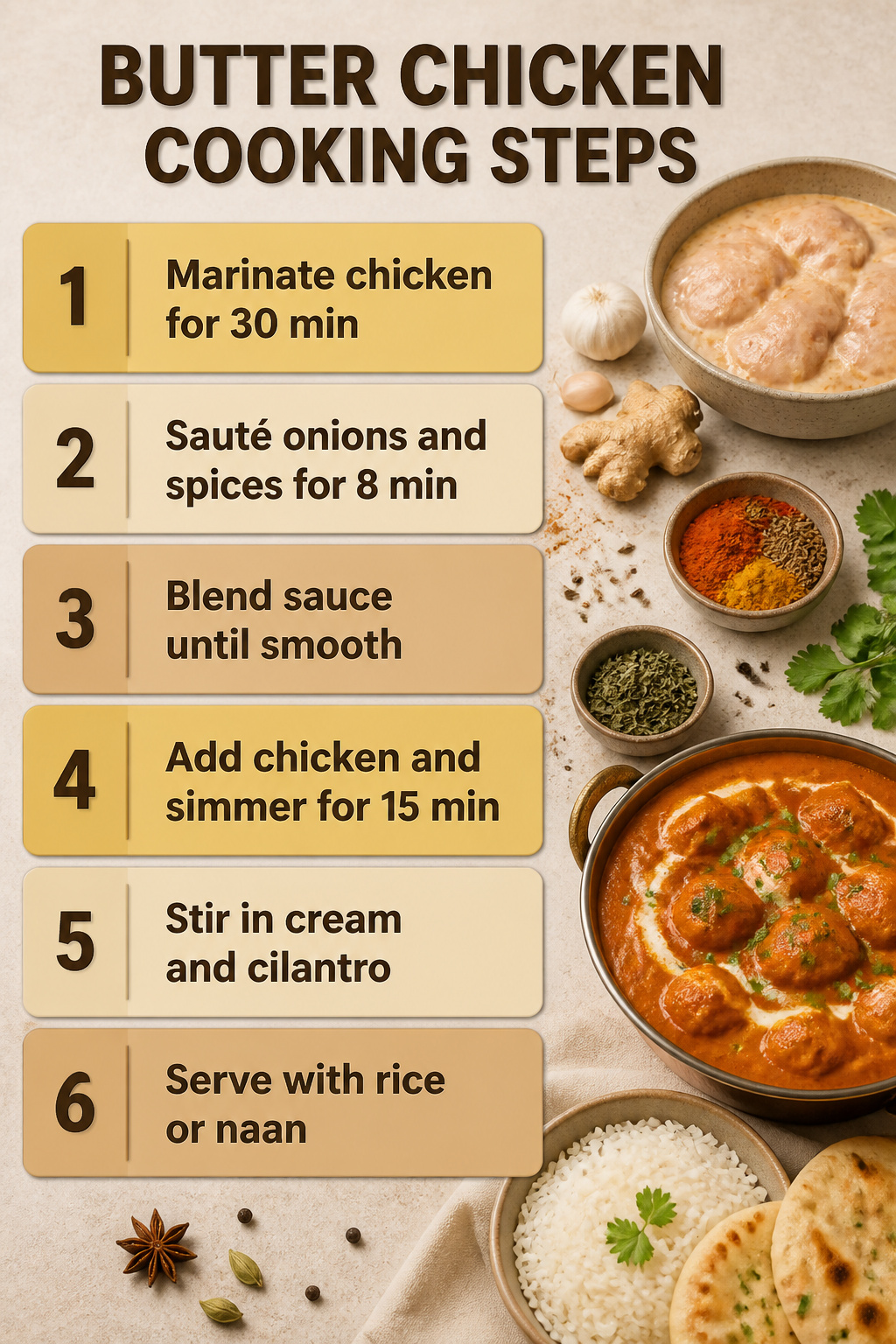
- Marinate the chicken with yogurt, lemon juice, and spices for at least 30 minutes or overnight. The yogurt does the tenderizing work; anything shorter than 30 minutes and the lemon stays sharp on the tongue instead of mellowing into the background.
- Sauté onions, garlic, and ginger in ghee or oil until they soften and turn faintly gold at the edges, about 6–8 minutes. Add your spices and let them fry until the oil separates and the pan smells toasted, not raw. Add tomatoes and simmer until they break down completely, 15–20 minutes.
- Blend the sauce until it is completely smooth, no flecks of tomato skin or onion left. Return it to the pan; the texture at this stage is the texture you will serve.
- Add the marinated chicken and simmer until it is tender and cooked through, roughly 15 minutes for thighs, 12 for breast pieces cut to 1-inch chunks. Cut one open; the center should read 165°F and show no pink.
- Stir in heavy cream, season with salt and a pinch of sugar to balance the tomato’s acid, then crush kasuri methi between your palms and stir it in. Cilantro goes in last, off the heat, so it stays bright.
- Serve with basmati rice or naan. The sauce should pool, not run; if it is too thin, let it reduce for 3–4 minutes before adding the cream.
Chicken Thighs or Breasts

Most restaurant butter chicken uses thighs for a reason. The extra fat and connective tissue carry the spice marinade better, and they stay moist through the long simmer in sauce.
Breasts cook faster, which matters on a weeknight, but they turn stringy fast if they go even a few minutes over.
Boneless skinless thighs usually run cheaper per pound than breasts at US grocery stores, and the gap widens when you factor in how little thigh meat dries out and gets discarded.
If I am feeding a table of mixed eaters, thighs are the safer bet. I switch to breasts only when someone specifically asks for white meat or I need the dish done in under 30 minutes from raw to plated.
| Chicken Thighs | Chicken Breasts | |
|---|---|---|
| Flavor | Richer, more fat to carry spices | Milder, absorbs sauce cleanly |
| Texture | Stays tender even if overdone | Turns stringy if overcooked |
| Cooking forgiveness | High | Low |
| Typical cost | Usually cheaper per pound | Usually more expensive per pound |
| When I use it | Default for guests, parties, or making ahead | Weeknight rush, or white-meat request |
Heavy Cream or Coconut Milk

The choice between heavy cream and coconut milk changes more than just the dairy status.
Heavy cream gives the classic, stable sauce that reheats without breaking, and it carries the butter and tomato flavors in the direction most people expect from restaurant butter chicken.
Coconut milk, usually full-fat, makes the dish dairy-free and adds its own sweetness.
That sweetness shifts the profile noticeably; it is not traditional, but it has become common in US home cooking because it solves the restriction problem without requiring a separate recipe.
| Heavy Cream | Coconut Milk | |
|---|---|---|
| Richness | Thick, coats the back of a spoon | Lighter, slightly less body |
| Flavor direction | Classic, mild dairy backdrop | Sweet, aromatic coconut note |
| Dietary fit | Standard | Dairy-free, vegan if paired with oil instead of ghee |
| Reheating | Stable, sauce stays creamy | Can separate if boiled; gentle warming works better |
I have made both, and the coconut version needs a shorter reheat over lower heat to keep the sauce from looking grainy. For guests with no restrictions, the heavy cream route is the safer bet.
For a mixed table, the coconut milk version is worth the small extra attention at reheat time.
Marination Time
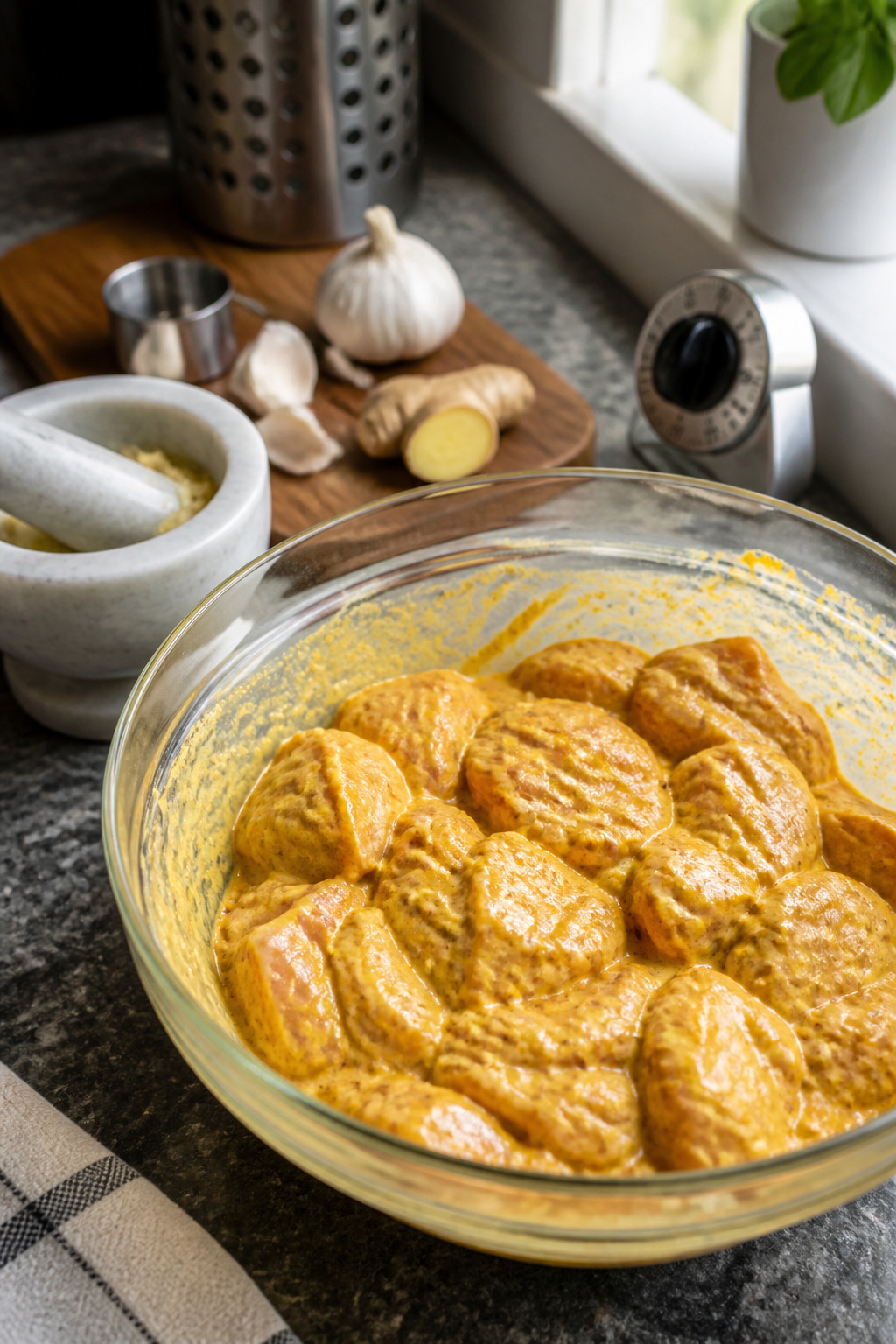
The yogurt marinade works on a sliding scale, and knowing where to stop matters more than chasing the longest possible soak.
Thirty minutes gives you surface flavor; the spices coat the outside, the lemon juice begins its tenderizing work, but the chicken still cooks up like plain poultry with a seasoned crust.
Two to four hours gets the ginger, garlic, and garam masala deeper into the meat, and the yogurt starts breaking down the fibers in earnest.
That window is my usual when I have an afternoon to plan but not a whole day.
I get the best results when I let chicken sit in the marinade overnight, not just for a couple of hours.
The chicken turns almost velvety, and the turmeric and chili powder have time to fully permeate so the pieces brown more evenly and intensely when they hit the pan.
For dinner parties I build the schedule around that overnight rest; it is one less thing to rush before guests arrive. When I have not planned ahead, 45 minutes is the floor I will accept.
The flavor stays on the outside, but a hot pan and enough fat still get you a respectable butter chicken without the apology.
Spice Level Adjustments
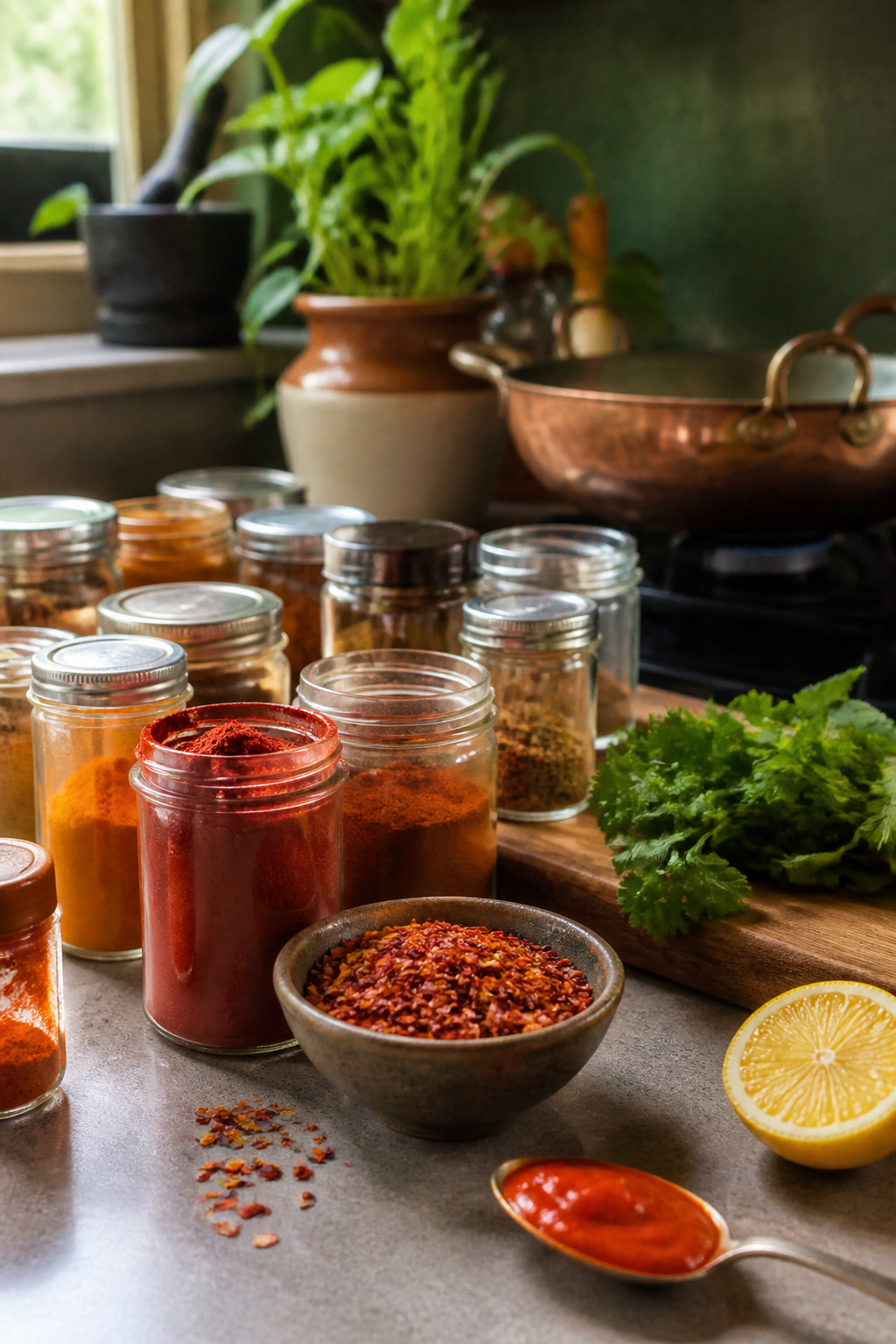
Kashmiri chili powder is what gives butter chicken its color without torching your palate. It’s mild and slightly smoky, a different animal from the cayenne most American pantries hold.
For red color without too much heat, I use Kashmiri chili straight. When someone at the table wants real fire, cayenne does that job instead.
The version of butter chicken most guests encounter at US dinner parties is milder by design than what you’d find in India.
I keep the base sauce moderate, building flavor with the spice blend and fenugreek rather than raw heat, then set out chili flakes and hot sauce so guests calibrate their own bowls.
Omitting fresh chiles entirely still leaves you with a complex sauce; the warmth comes from the garam masala and ginger base, not just capsaicin. One guest’s perfect bowl is another’s disappointment, and this setup saves me from guessing.
Make-Ahead and Storage
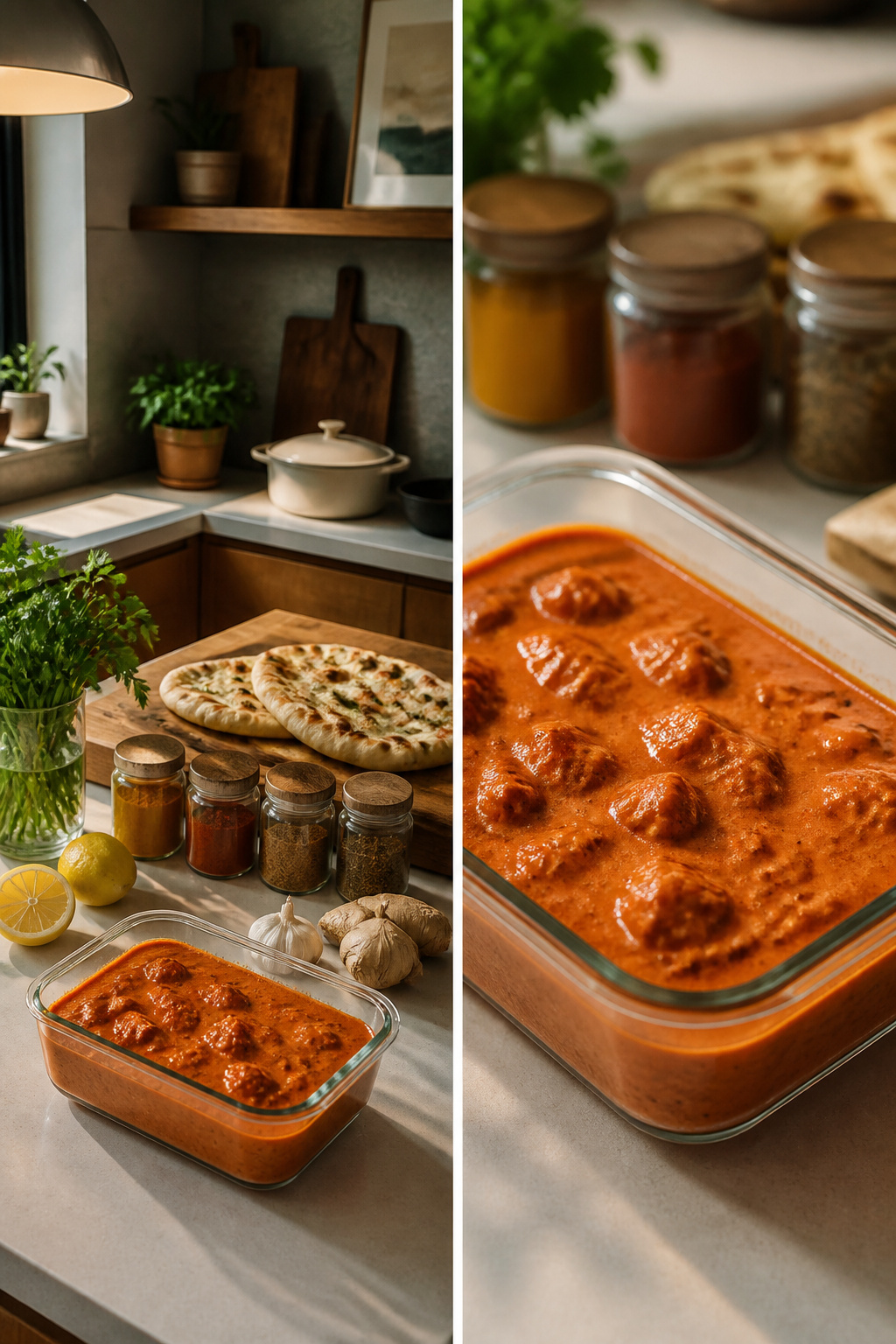
The sauce can be made up to three days ahead and refrigerated, or frozen for two months, which is how I usually handle it when I’m cooking for a crowd.
Marinating the chicken overnight is another easy advance move; the flavor deepens noticeably, and sources consistently note the dish actually improves after a day of rest.
The full butter chicken can be assembled a full day ahead, then reheated gently over low heat with a splash of water or cream to loosen the sauce.
Never use high heat, which breaks the dairy and leaves you with a separated, grainy mess. Leftovers keep three days refrigerated, though I tend to finish them faster than that.
Serving and Pairings

Basmati rice is the classic move, but jasmine rice from any supermarket works just as well if that is what sits in the pantry.
Naan belongs on the plate too, and the store-bought kind crisps up nicely in a dry skillet over medium heat for about thirty seconds a side. No naan on hand?
A crusty loaf torn into pieces does the job; the sauce is thick enough to grab onto anything with texture.
For sides that feel right at an American party without turning the table into a project, plain yogurt thinned with a little milk and salted makes a fast raita if you add diced cucumber.
A simple cucumber salad with rice vinegar and a pinch of sugar cuts the richness.
Papadums from an Indian grocery fry in seconds and look like you planned ahead, or just open a jar of mango chutney and let guests spoon it themselves.
For eight people, the per-guest cost lands around $4.50 if you already own the spices for the butter chicken itself.
Shopping list: two pounds of rice, four pieces of naan, two cucumbers, one pint of yogurt, one jar of chutney, one bag of papadums. Skip what does not match your crowd; the sauce carries the meal either way.
Quick, Slow Cooker, and Cashew Variations

Three ways to change the method or the body of the sauce, depending on what the evening allows.
- The 30-minute weeknight build skips overnight marination and starts with raw chicken tossed in yogurt and spices for just ten minutes while the onion, garlic, and ginger get chopped. The tomato paste and spices cook down in the same skillet to intensify before the coconut milk or cream goes in. I have made this when I needed dinner on the table fast; the trade is a lighter spice penetration and no char, but the sauce still thickens well and the kitchen smells like you spent the afternoon on it.
- The slow cooker route lets the sauce simmer all day and takes the cream only at the end, stirred in after the lid comes off so it does not break. I have not tested this one myself, so I cannot say whether the dairy separates on the hold or how the tomato base darkens over eight hours. If you try it, the finish with fresh butter and kasoori methi still matters.
- The cashew version soaks nuts in hot water, then blends them completely smooth into the tomato base early in the cook. They thicken the sauce and give it a richness that reads as longer cooking than the 40 minutes it actually takes. Andy Cooks builds it this way, and the result is the one I reach for when I want restaurant-style body without reducing cream for hours. Almonds or almond flour substitute if cashews are out, though the flavor shifts; for nut-free, use an extra ¼ to ⅓ cup heavy cream and pull the water back to 1 cup.
Frequently Asked Questions
How do you make butter chicken?
Marinate chicken thighs in yogurt, ginger, garlic, lemon juice, and spices for at least 30 minutes or overnight. Sauté onion, ginger, and garlic in ghee or oil, toast the spices, then add tomatoes and simmer until they break down completely.
Blend the sauce until completely smooth, return it to the pan, add the marinated chicken, and simmer until tender. Finish by stirring in heavy cream or coconut milk, a pinch of sugar to balance the acid, and crushed kasuri methi.
What can I serve with butter chicken?
Basmati rice or naan are the classic pairings. Store-bought naan crisps up nicely in a dry skillet for about 30 seconds per side.
For sides, plain yogurt thinned with milk and salted makes a fast raita with diced cucumber, or a simple cucumber salad with rice vinegar and sugar cuts the richness.
Papadums or mango chutney also work well for an American dinner party without adding much prep.
Can I make butter chicken ahead of time?
Yes, the sauce can be made up to three days ahead and refrigerated, or frozen for two months. Marinate the chicken overnight for deeper flavor.
The full dish can be assembled a day ahead and reheated gently over low heat with a splash of water or cream. Never use high heat, which breaks the dairy and leaves the sauce grainy.
Leftovers keep three days refrigerated.
What’s the secret to really flavorful butter chicken?
The yogurt marinade is where the flavor starts, and overnight rest makes the chicken almost velvety while letting spices fully permeate the meat. Toasting the spices in oil until the pan smells toasted, not raw, builds depth in the sauce.
Kasuri methi, crushed between your palms and stirred in at the end, adds the distinctive butter chicken aroma that separates good versions from great ones.
What are some common mistakes when making butter chicken?
Under-marinating is the most common error; 30 minutes gives only surface flavor, while overnight gives you the deep taste you’re after.
Another is failing to blend the sauce completely smooth before adding the chicken; flecks of tomato skin or onion ruin the restaurant-style texture. Using high heat when reheating breaks the dairy and turns the sauce grainy.
With breasts, overcooking by even a few minutes makes the meat stringy.
Is butter chicken healthy or unhealthy?
For a lighter or dairy-free version, full-fat coconut milk substitutes for heavy cream and reduces saturated fat while adding its own sweetness. Chicken thighs provide more fat than breasts, and the sauce alone is calorie-dense.
The per-guest cost for a full meal lands around $4.50, which reflects hearty portions rather than restraint.