
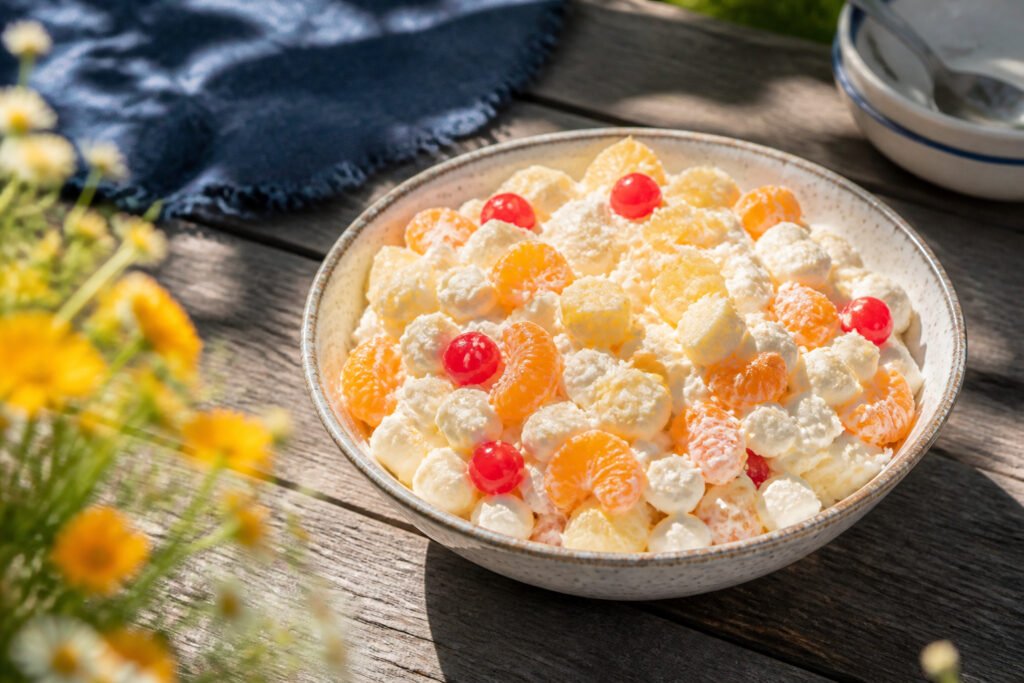
This ambrosia salad is creamy, sweet, and fluffy with softened marshmallows and coconut that absorb the fruit juices overnight. The sour cream base sets it apart from dessert-heavy versions; it reads as fruit first, cream second.
Drain the canned pineapple, mandarin oranges, and cherries thoroughly or the dressing turns watery by day two. Plan for four hours of chill time minimum, though overnight is when the texture actually comes together.
What Ambrosia Salad Is and When to Make It

Ambrosia salad is a creamy fruit salad built from canned fruit, miniature marshmallows, shredded coconut, and a sweetened dressing that sets up soft and fluffy in the refrigerator.
The versions that show up at Southern potlucks and holiday tables, especially Easter, the Fourth of July, and Thanksgiving, usually start with pineapple and mandarin oranges, though some cooks add maraschino cherries, bananas, or grapes and fold in pecans or sour cream alongside the whipped topping.
I make this one for spring and summer gatherings because it needs at least four hours of chill time, and the day-before prep means I’m not wrestling with dessert while guests are walking in the door.
The marshmallows soften and the flavors meld overnight, so the texture is better at hour twenty than at hour four.
That timeline makes it a practical choice for a cookout or a shower where the menu has to be mostly finished before the first car pulls up.
Ingredients

Most of the ambrosia salads I found run on the same short roster of canned fruit, marshmallows and some kind of creamy base. Here is what I use:
- 1 (20 oz) can pineapple tidbits
- 1 (15 oz) can mandarin oranges
- 1 (10 oz) jar maraschino cherries
- 1 cup mini marshmallows
- 1 cup shredded sweetened coconut
- 1/2 cup sour cream
- 1/2 cup chopped pecans (optional)
- 1/4 cup sugar (optional)
- 1 tsp vanilla extract (optional)
The sour cream can be swapped out or stretched with whipped topping if you want something lighter. Cool Whip is the usual pick here, and some versions fold in softened cream cheese for a thicker, tangier base.
I stick with sour cream alone when I want the salad to read as fruit first, cream second. The sugar and vanilla are optional because the canned fruit and marshmallows already carry plenty of sweetness on their own.
Drain the fruit well or the dressing turns watery by day two.
1 (8-ounce) can pineapple tidbits, or pineapple chunks, halved, or 1 cup finely diced fresh pineapple
That line matters because it is the only source that gives you a fresh-fruit fallback in exact volume: 1 cup diced, if you want to skip the can.
Method

- Drain every canned fruit thoroughly. Pineapple tidbits, mandarin oranges, and maraschino cherries all carry enough liquid to turn the bowl watery if you rush this step. I set mine in a colander for a few minutes, then press gently with a paper towel.
- In a large bowl, stir together your creamy base. The combination that works for me is 8 ounces of thawed whipped topping with 8 ounces of sour cream. A tablespoon of reserved pineapple juice helps it smooth out, or skip it if you want a thicker coating.
- Fold in 1 cup of sweetened shredded coconut and about 10 ounces of mini marshmallows. Fruit-flavored ones are fine, white ones are traditional.
- Add the drained fruits and any extras like ½ cup chopped pecans. Use a rubber spatula and fold gently so the mandarin orange segments stay whole and the cherries don’t bleed their color through everything.
- Cover the bowl and refrigerate for at least 4 hours, or overnight. Some recipes call for as little as 1 hour, but the longer rest lets the marshmallows soften and the flavors actually meld instead of just sitting next to each other.
- Serve chilled straight from the refrigerator. A little extra coconut sprinkled on top looks nice if you want it to read as intentional rather than leftover.
Yield and Timing

Prep time runs 15 to 20 minutes, and the bowl goes straight into the refrigerator from there.
Two hours will set the salad enough to serve, but overnight is what I actually plan for; the marshmallows soften into the cream and the coconut has time to absorb the fruit juices instead of just sitting on top of them.
The recipe yields 8 to 10 servings as a side dish. At last Easter’s ham dinner, where the rest of the spread was heavy and the plates were already crowded, I stretched it to 12 without anyone going back for a second scoop.
Chilling time is the only part that cannot be rushed, so I build the rest of my timeline backward from when I want it on the table.
Storage

A covered bowl of ambrosia salad will keep in the refrigerator for up to 3 days, though the marshmallows soften and the whole thing slackens as the fruit releases liquid.
The dressing thins out, the fluff collapses, and what started as a cloud turns into something closer to a creamy fruit cup. It is still edible, just not the same dish.
I do not recommend freezing it. The sour cream base separates when it thaws, and the fruit and marshmallows go oddly mushy.
Some sources suggest a full week in the fridge, but by day four the texture is usually past the point where I would serve it to anyone.
If you need to get ahead, make the salad 1 to 2 days before, or prep the components separately and fold them together the morning of.
Substitutions and Variations

The base you choose changes the whole personality of the dish.
Sour cream gives ambrosia salad a sharp, rich tang that cuts through the sweetness of the fruit and marshmallows, and full-fat sour cream holds up best if you want that balance.
Whipped topping, something like Cool Whip, pushes the salad firmly into dessert territory; it is sweeter and lighter, almost fluffy, which some people prefer for potlucks where the crowd skews toward kids.
Cream cheese is the outlier: an 8-ounce block, softened to room temperature, makes the salad thick and almost cheesecake-like, though you have to work it in gently or the fruit gets smashed.
Fruit is where most home cooks run into trouble. Canned pineapple and mandarin oranges are the reliable standard because the canning process stabilizes them; they do not weep into the base the way fresh fruit will.
If you swap in fresh pineapple, chop it fine and drain it well, then let it sit longer than you think, maybe an hour, so the salad does not turn watery halfway through the party.
Fresh grapes or strawberries are a nice addition, halved so they match the scale of the other pieces, but treat them the same way: dry them thoroughly before they hit the bowl.
Pecans are traditional in the versions I grew up around, though walnuts work if that is what you have. Some cooks skip nuts entirely, which keeps the texture soft all the way through.
Greek yogurt has started showing up as a sour cream replacement, about three-quarters of a cup, and it brings a noticeable tang plus a little protein; plain whole-milk Greek yogurt is the one to reach for, not vanilla, or the sugar stacks up too fast.
Frequently Asked Questions
What is ambrosia salad?
Ambrosia salad is a creamy fruit salad built from canned fruit, miniature marshmallows, shredded coconut, and a sweetened dressing that sets up soft and fluffy in the refrigerator.
The classic Southern version usually starts with pineapple and mandarin oranges, and it shows up most often at Easter, the Fourth of July, and Thanksgiving.
Some cooks add maraschino cherries, bananas, or pecans, and the base can be sour cream, whipped topping, or cream cheese.
How long should ambrosia salad chill?
Ambrosia salad needs at least 4 hours in the refrigerator, but overnight is what actually works best. The marshmallows soften and the flavors meld during a long rest, so the texture at hour 20 is better than at hour 4.
Two hours will set the salad enough to serve if you are pressed, but plan for overnight when you can.
Can I use fresh fruit instead of canned?
Yes, but fresh fruit needs more prep to keep the salad from turning watery. If you swap in fresh pineapple, chop it fine and let it drain for about an hour.
Fresh grapes or strawberries also work if you halve them and dry them thoroughly before folding them in.
Canned fruit is more reliable because the canning process stabilizes it and it will not weep into the base the way fresh fruit can.
How far in advance can I make ambrosia salad?
Make ambrosia salad 1 to 2 days ahead of when you plan to serve it.
It will keep in a covered bowl in the refrigerator for up to 3 days, though by day 4 the texture is usually past the point where you would want to serve it to guests.
If you are using fresh fruit, you can also prep the components separately and fold them together the morning of the event.
Is ambrosia salad healthy?
Ambrosia salad is more of an indulgent treat than a health food. The fruit provides some vitamins, but the marshmallows, sweetened coconut, and creamy base add a lot of sugar and fat.
Some cooks use Greek yogurt in place of sour cream for extra protein, though the overall dish stays firmly in dessert territory.