
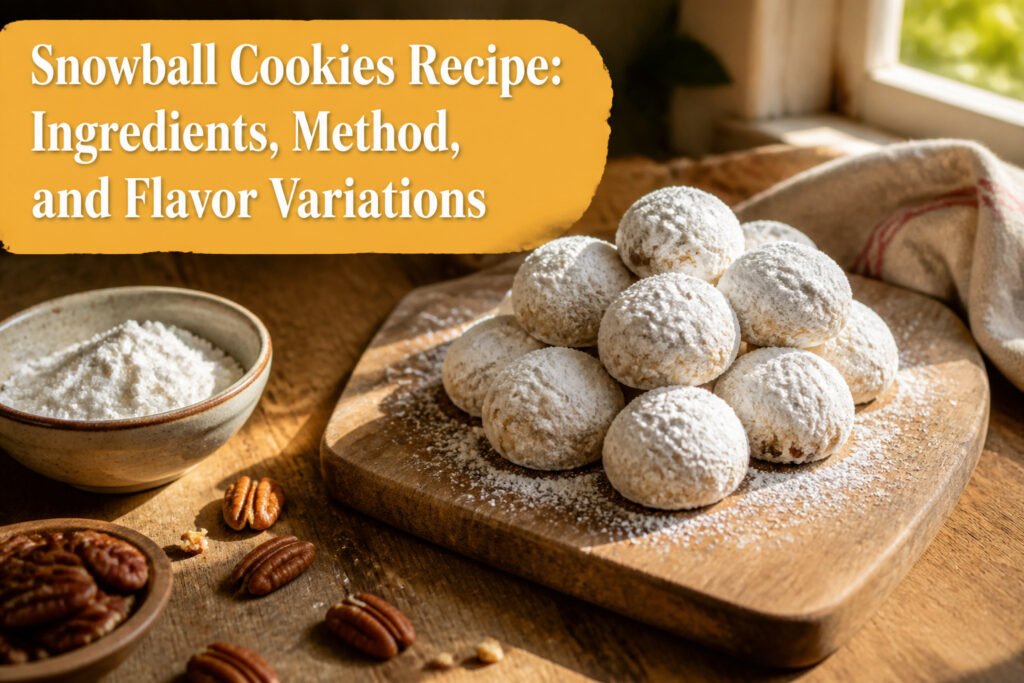
These cookies taste like butter melting through sandy pecan crumbs, finished with a double coat of powdered sugar that clings because you roll them warm.
The one thing that changes them is the butter temperature: too cold and they turn dense, too soft and they flatten in the oven.
The dough looks almost too dry before baking, with no egg to bind it, and that exact shaggy stage is your signal to stop mixing.
What Snowball Cookies Are

These go by more names than almost anything in the cookie box, and not everyone will recognize whichever one you pick. Same cookie, three names, no consensus at the table.
Snowball cookies are butter-heavy shortbread balls rolled in powdered sugar while they’re still warm, and the powdered sugar goes on twice if you want the classic thick white coating that gives them their name.
Owners on Reddit mention the same confusion playing out across generations: one person’s Mexican wedding cookies are another’s pecan butterballs, with Italian in-laws adding "dustballs" to the pile.
The texture stays constant through all the names, a tender, crumbly melt that comes from a simple ratio of 1 cup butter, 1/2 cup powdered sugar, 2 cups flour, and 1 cup finely chopped nuts, usually pecans.
That high butter content and low moisture means they hold up on holiday plates and travel well to cookie swaps without crumbling in transit.
The nuts are non-negotiable for the signature texture, though one Reddit baker notes their family skips pecans entirely and hides half a maraschino cherry inside each ball instead.
Ingredients

The ingredient list for snowball cookies is short enough that you can memorize it after one batch. 1 cup unsalted butter, softened, matters more than the brand; cold butter won’t cream properly and the cookies come out dense instead of sandy.
I use 1/2 cup powdered sugar in the dough and set aside another 1 1/2 cups for rolling the warm cookies. The dry base is 2 cups all-purpose flour and 1/4 teaspoon salt.
For nuts, 1 cup finely chopped pecans is the standard, though walnuts or almonds work if that’s what you have. The last addition is 1 1/2 teaspoons vanilla extract.
- 1 cup unsalted butter, softened
- 1/2 cup powdered sugar
- 2 cups all-purpose flour
- 1/4 teaspoon salt
- 1 cup finely chopped pecans (walnuts or almonds also work)
- 1 1/2 teaspoons vanilla extract
- 1 1/2 cups powdered sugar, for rolling
Method
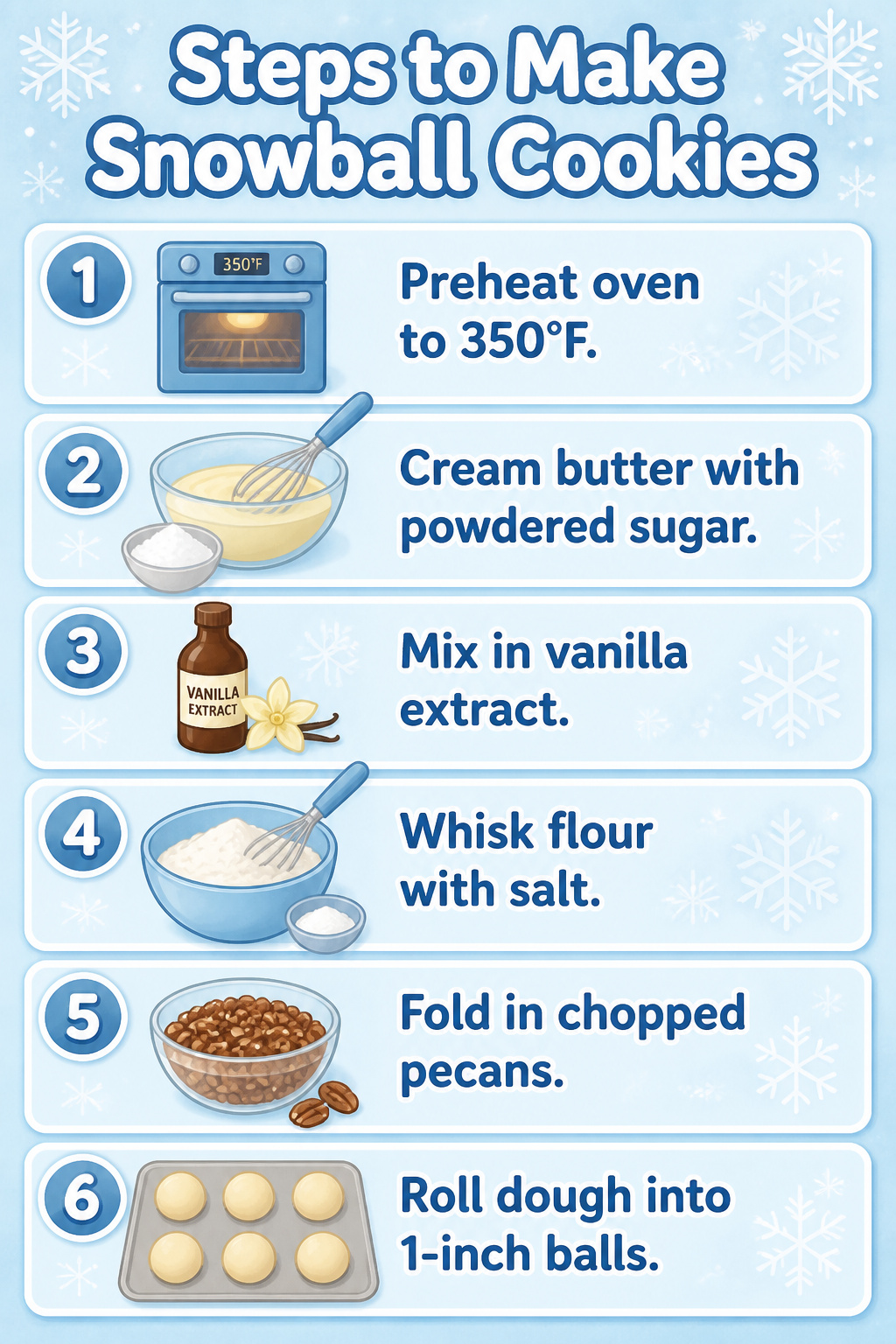
- Preheat the oven to 350°F. No parchment needed; the butter content keeps these from sticking.
- Cream softened butter with 1/2 cup powdered sugar until the mixture turns light, about 3 minutes of beating.
- Beat in 1 teaspoon vanilla. The dough will smell like frosting at this stage, which is exactly right.
- Whisk 2 cups all-purpose flour with 1/4 teaspoon salt, then mix this into the butter mixture gradually. Stop as soon as it holds together; overworking makes the cookies dense.
- Fold in 1 cup finely chopped pecans. I pulse mine in the food processor until the biggest pieces are about the size of lentils; anything larger cracks the surface when you roll.
- Roll the dough into 1-inch balls. A small cookie scoop, about 2 teaspoons, keeps them even.
- Place 1 inch apart on an ungreased baking sheet. They spread very little.
- Bake 12–14 minutes until the bottoms are lightly golden and the tops stay pale. The tops should look almost underdone; they firm up as they cool.
- Roll the warm cookies in powdered sugar. The first coat melts slightly and creates a tacky layer for the second.
- Cool completely, then roll again in the remaining powdered sugar. This second coat stays fluffy and white.
Yield: about 21 cookies.
What Makes Them Work

The dough looks almost too dry before it goes in the oven, and that is exactly right.
With no egg to bind it, the butter and flour stay separate and crumbly until the heat melts the fat through the flour particles.
Creaming cold butter would leave streaks that melt unevenly, so the butter needs to be soft enough to whip into a smooth paste with the sugar, trapping the air that gives the baked cookie its light, sandy break.
The tops should stay pale; browning is your warning that the butter has started to fry rather than just set, and the cookie will turn dry instead of tender.
The bottoms can take a light gold, but anything more and the texture collapses.
The double coating of powdered sugar works because the first roll happens while the cookies are still warm.
The residual heat and moisture make the surface tacky, so the sugar adheres in a thin layer that would never stick to a fully cooled cookie.
After they cool, the second roll buries that sticky base under a fresh, even coat that reads as real snow rather than damp dust.
Nut Variations
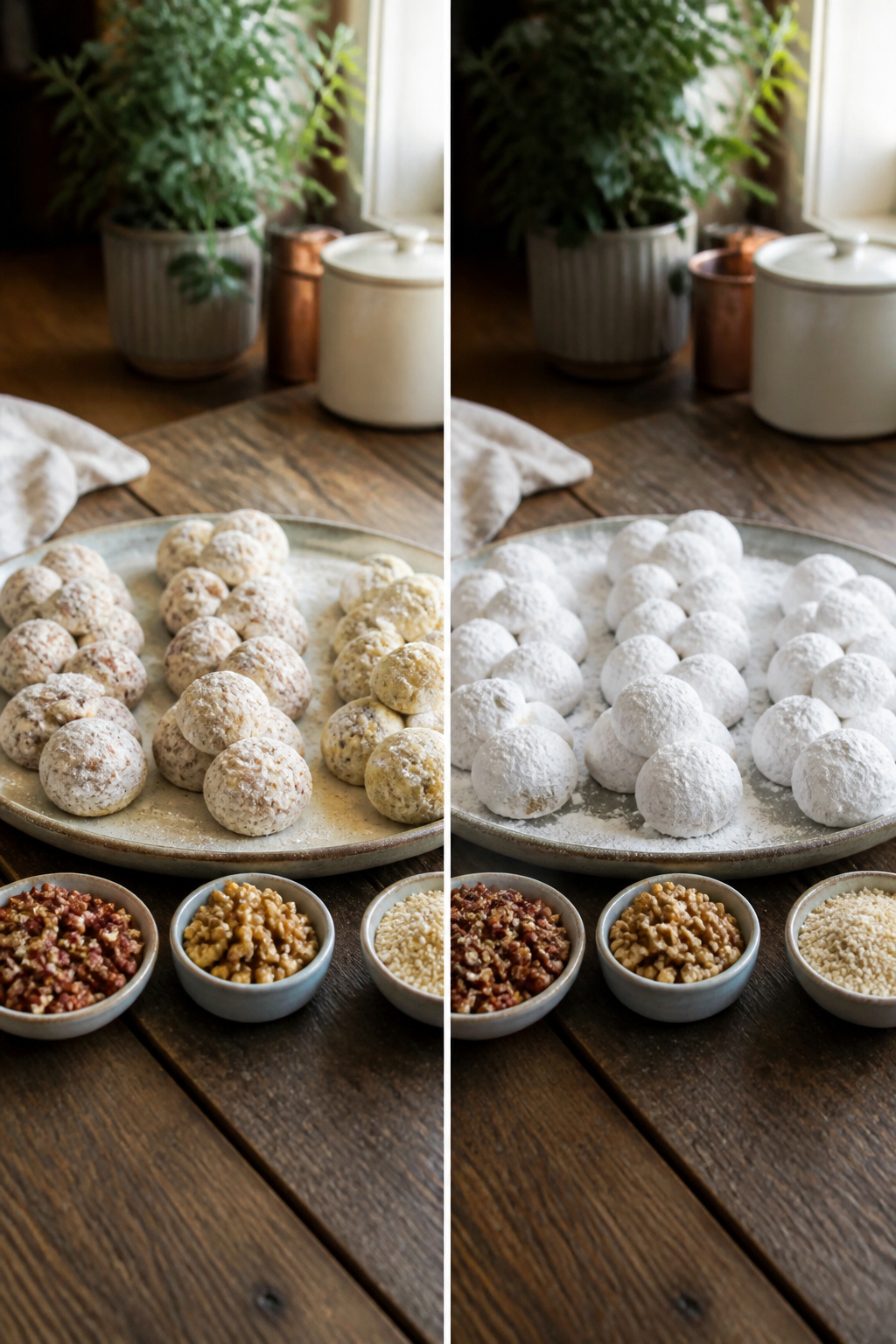
Pecans are the default for snowball cookies, and for good reason: their mild sweetness and soft crunch melt into the powdered sugar coating without fighting it.
Two cups of finely chopped pecans, measured by the same volume the flour uses, gives the classic sandy texture most people expect from a holiday tin.
Walnuts bring a sharper, almost bitter edge that cuts the sugar. I find they work best when the dough already has some depth, maybe a hit of almond extract or a little orange zest.
The texture stays similar, though walnuts can read slightly grittier if the chop is uneven.
Ground almonds change the cookie more dramatically. They make a finer, more uniform crumb, almost like a shortbread that happens to hold together in a ball.
One cup of ground almonds replaces the volume of chopped nuts outright, and the result is less chunky, more delicate.
Some bakers swap in almond flour for half the all-purpose flour too, which pushes the nutty flavor even further without adding bulk.
Any of the three will hold the powdered sugar coating; the choice is whether you want the cookie to whisper or to crunch.
Flavor Variations

Chocolate snowball cookies start with the same base, just swap in 1/3 cup cocoa powder and drop the flour to 1 3/4 cups. I have not baked this version myself, though the math is straightforward enough that I would try it without hesitation.
The cocoa replaces some of the flour’s bulk, so the texture stays sandy rather than turning dense.
Almond extract in place of vanilla is a switch I have made, usually at about 1/4 teaspoon alongside or instead of the vanilla.
It reads as marzipan rather than nut, which works for holiday trays where someone always claims to dislike pecans.
Candy cane snowball cookies exist in two forms: crushed candy canes folded into the dough, or the standard coating mixed with peppermint. The coating route keeps the crunch on the outside where it stays audible.
I have not made either version; peppermint and powdered sugar together tend to read as toothpaste to my palate, so I skip them.
Chocolate caramel snowball cookies hide a Rolo or similar candy in the center. Skip the butter and build them with almond flour and egg whites instead, and they come out naturally gluten-free.
The caramel softens in the oven’s residual heat if you pull them at the right moment.
I have not tested this either; the window between molten and seized caramel feels narrow enough that I would practice on a small batch first.
Storage and Freezing

Baked snowball cookies keep fine in an airtight container at room temperature for up to one week, though the powdered sugar coating softens a little each day. For longer storage, freezing works two ways.
Layer baked cookies with parchment in a freezer-safe container and thaw at room temperature before serving, rolling them in fresh powdered sugar to restore that snowy look.
Or freeze the dough balls solid on a baking sheet first, then bag them and bake straight from frozen with an extra 2 to 3 minutes added to the timer. Both methods keep well for about 3 months.
I prefer freezing the dough. The cookies come out warm and fragrant, and the powdered sugar clings to a fresh-baked surface far better than to a thawed one.
Fixing Common Problems
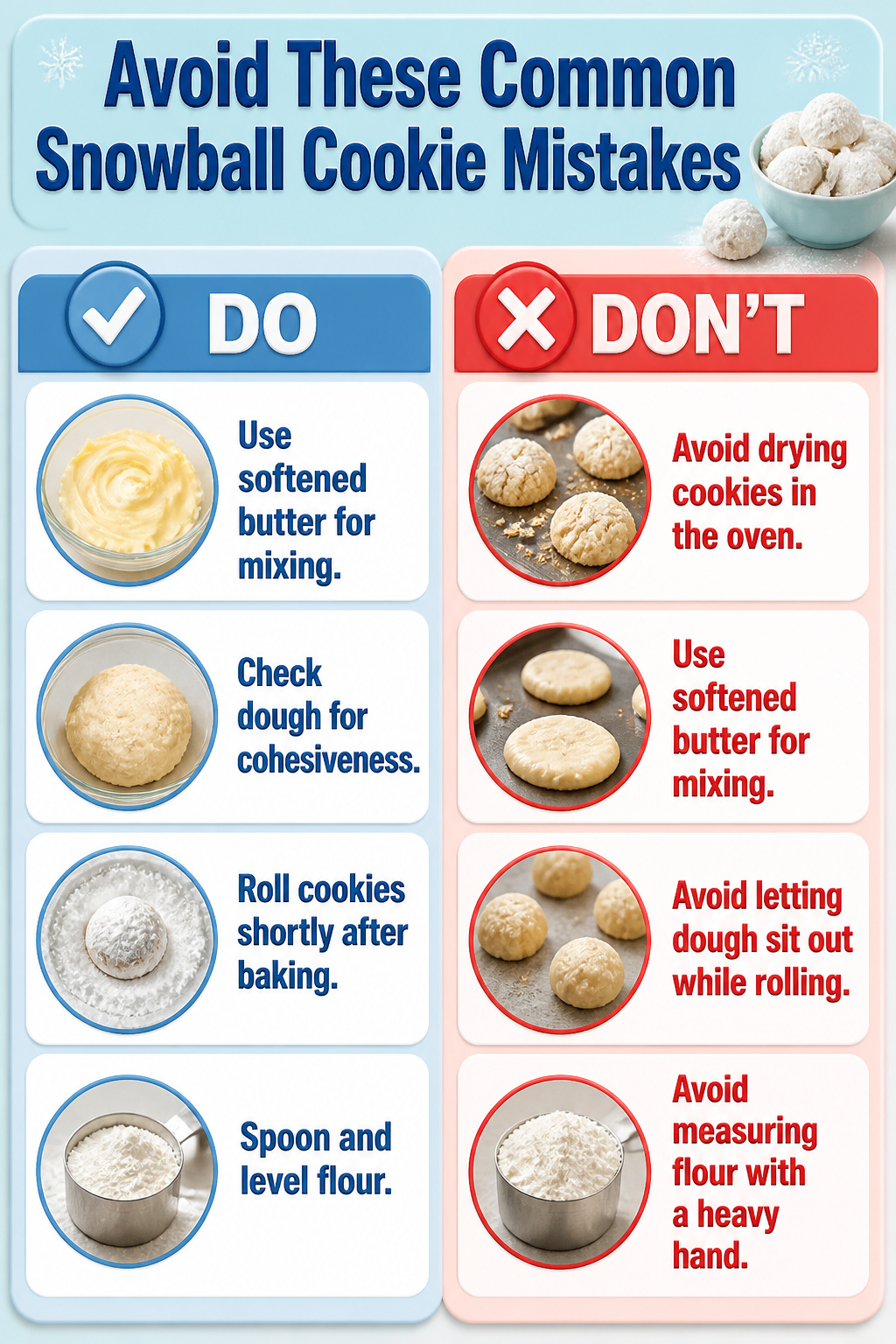
Snowball cookies that crumble in your hand instead of melting on your tongue usually point to one of two mistakes.
The butter was too cold to cream properly, so the dough never fully came together, or the batch spent too long in the oven and dried out.
I watch for the dough to stop looking shaggy and actually form a ball before I stop mixing; that shift from crumbly to cohesive is the signal to move on.
Flat cookies tell the opposite story. Butter that got too soft, or dough that sat out while you rolled, will spread in the oven instead of holding its round shape.
If the balls look greasy or slack going in, pop the tray in the fridge for ten minutes before baking.
Powdered sugar that slides right off instead of clinging means you waited too long. The coating needs the residual heat from the pan to melt slightly and set.
I roll mine at about one minute out, just cool enough to handle, and again once they’re fully cooled if I want a thicker layer.
Dry, stiff dough almost always comes down to flour measured with a heavy hand. Packed flour adds up fast in a recipe that already leans on butter for its structure.
Spoon and level, or the cookies turn closer to shortbread dust than snowballs.
Frequently Asked Questions
What are snowball cookies made of?
The core ingredients are 1 cup softened unsalted butter, 1/2 cup powdered sugar, 2 cups all-purpose flour, 1/4 teaspoon salt, 1 cup finely chopped pecans, and 1 1/2 teaspoons vanilla extract. Another 1 1/2 cups of powdered sugar goes toward rolling the warm cookies.
The nuts can be swapped for walnuts or almonds, and some bakers hide maraschino cherries inside instead.
Why are my snowball cookies crumbly and falling apart?
Overbaking or failing to cream cold butter properly are the usual causes. The butter needs to be soft enough to whip into a smooth paste with the sugar; cold butter leaves streaks that melt unevenly and leave the dough shaggy.
Pull the cookies when the bottoms are lightly golden and the tops still look almost underdone.
Can you freeze snowball cookies?
Yes, either baked or as dough balls. Baked cookies layer with parchment in a freezer container and thaw at room temperature, though you will want a fresh powdered sugar roll after thawing.
Dough balls freeze solid on a sheet first, then bag; bake straight from frozen with 2 to 3 extra minutes. The dough route gives better results, since powdered sugar clings to a fresh-baked surface more evenly.
Are snowball cookies the same as Mexican wedding cookies?
Yes. They are the same cookie under different names, which also include Russian tea cakes, Italian wedding cookies, and butter balls.
The ingredients and sandy, crumbly texture stay identical across all the names.
What’s the secret to tender snowball cookies?
Keep the butter soft before creaming and pull the cookies from the oven before the tops brown.
The dough should look almost too dry going in; the butter melts through the flour in the oven to create the sandy, tender break.
Browning is a warning that the butter has started to fry, and the cookie will turn dry.