

These snickerdoodles stay soft for days with a chew that bends instead of snaps, and the difference is a full 2 tablespoons of cinnamon in the coating, not the usual whisper.
The dough comes together in twenty minutes, no chilling required, though a 45-minute rest in the fridge keeps the sugar crust from sinking.
That rest is the condition that separates a shattery, crackled top from a greasy, flat disk. Warm butter spreads before the structure sets; cold dough holds its shape and the cinnamon-sugar stays where it belongs.
What a Snickerdoodle Is
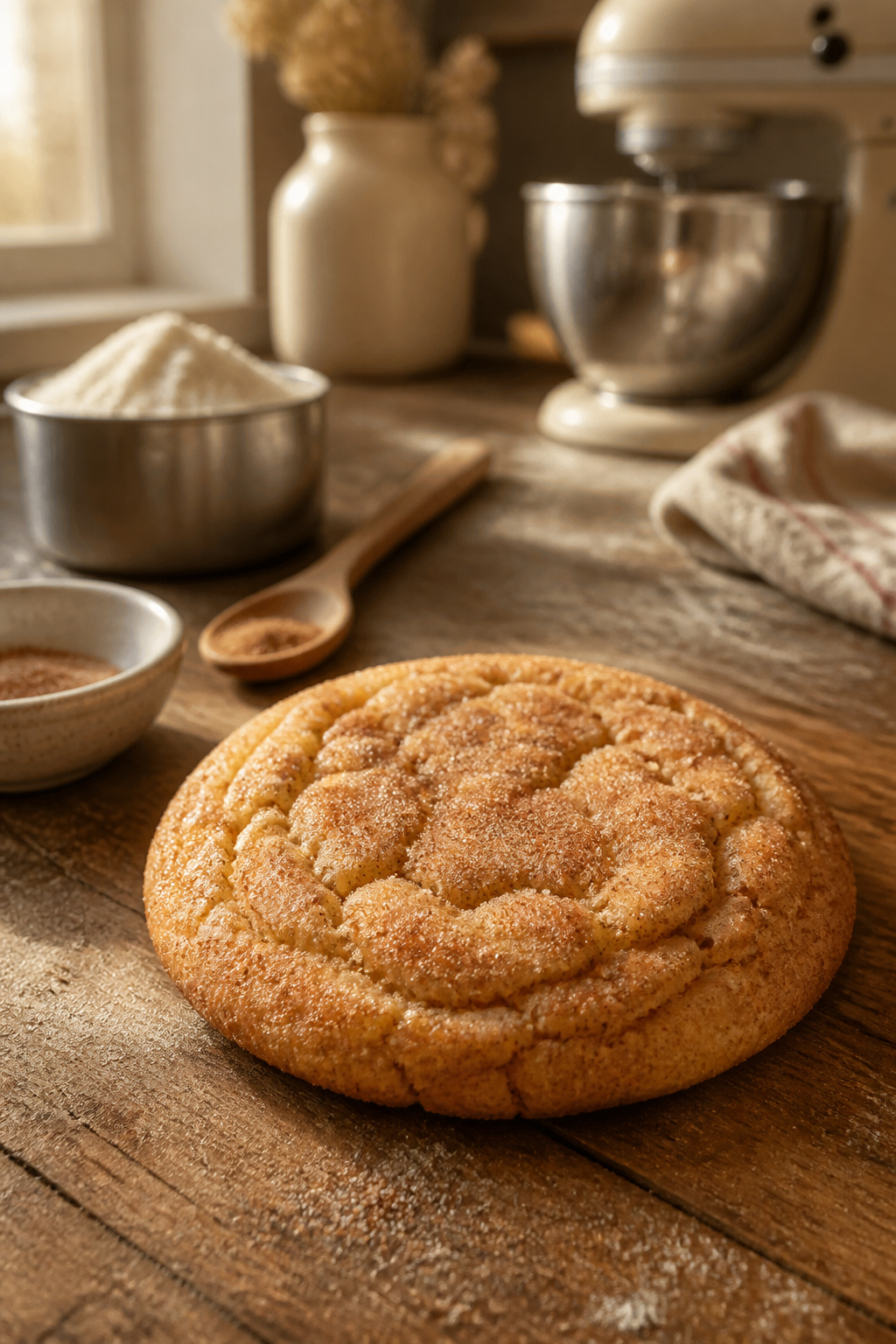
A snickerdoodle is soft and chewy where a sugar cookie goes crisp, and the difference comes down to cream of tartar. That ingredient gives the cookie its signature tang, the slight sour note that separates it from plain cinnamon-sugar territory.
The dough gets rolled twice in cinnamon sugar so the coating is thorough, not sparse, and the acid in the cream of tartar works with baking soda to build the crackly top and tender center.
These cookies land in my rotation when I need something that feels familiar without being plain. Holiday cookie exchanges are the obvious fit, but they work just as well for a weeknight batch or a casual drop-in gathering.
No frosting, no chilling, no special pan: just a bowl, a baking sheet, and the twenty minutes it takes from mixing to oven.
Ingredients
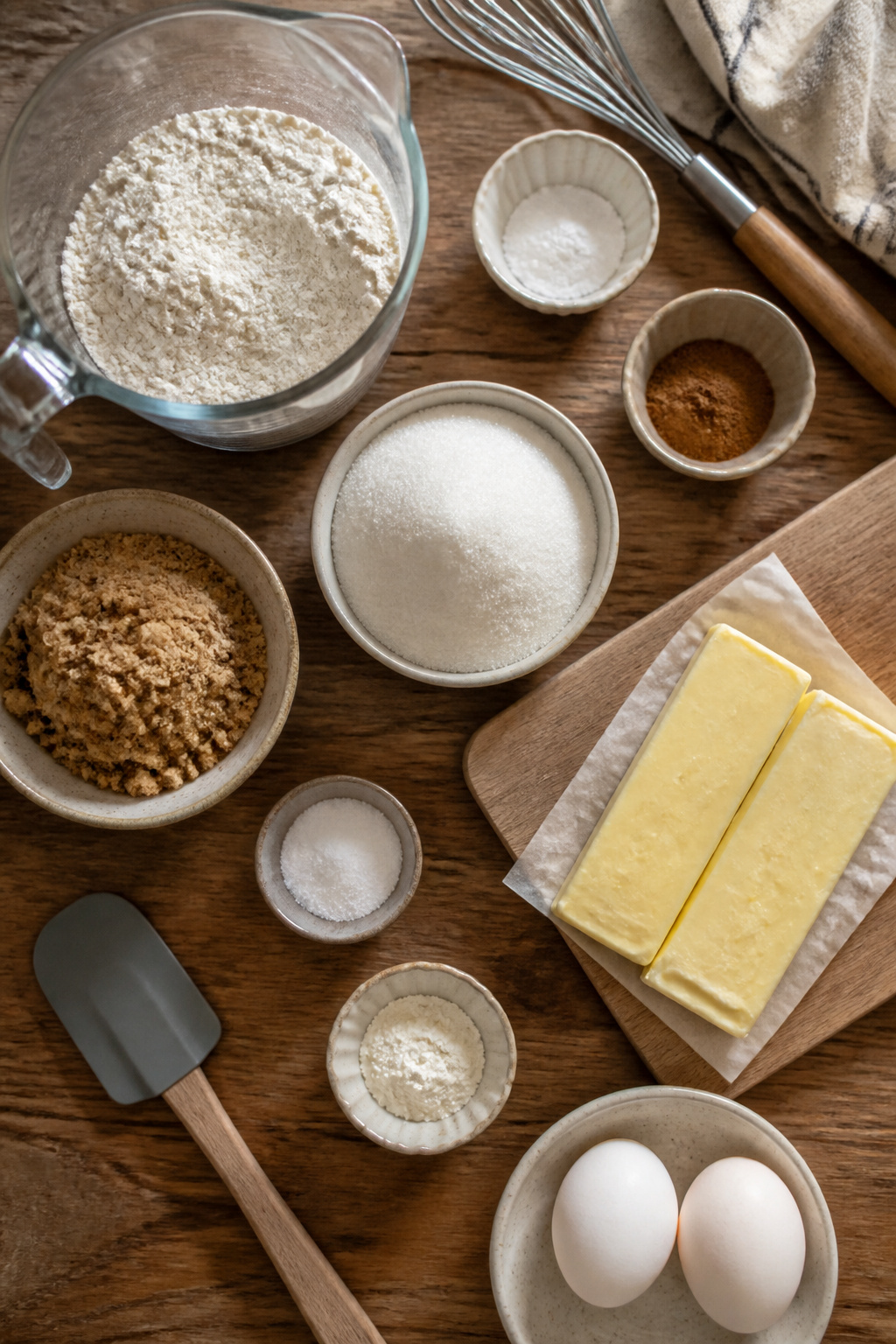
These are the things I set out on the counter before I start.
- 2¾ cups all-purpose flour
- 1½ cups granulated sugar
- 1 cup (2 sticks) unsalted butter, at room temperature
- 2 large eggs, at room temperature
- 2 teaspoons cream of tartar
- 1 teaspoon baking soda
- ½ teaspoon salt
For the coating, most recipes leave you guessing. I use 2 tablespoons cinnamon mixed with ½ cup sugar.
That fills a small cereal bowl and coats every ball without a second batch.
"Mix remaining 1/4 cup sugar and cinnamon. Shape dough into 1-inch balls. Roll in cinnamon sugar mixture to coat."
McCormick’s ratio yields a thin, even dusting. I prefer mine with more cinnamon punch, which is why I doubled it and added sugar to match.
Either way, room temperature butter and eggs matter. Cold butter fights the mixer; cold eggs make a dough that seizes and cracks when you roll it.
Method
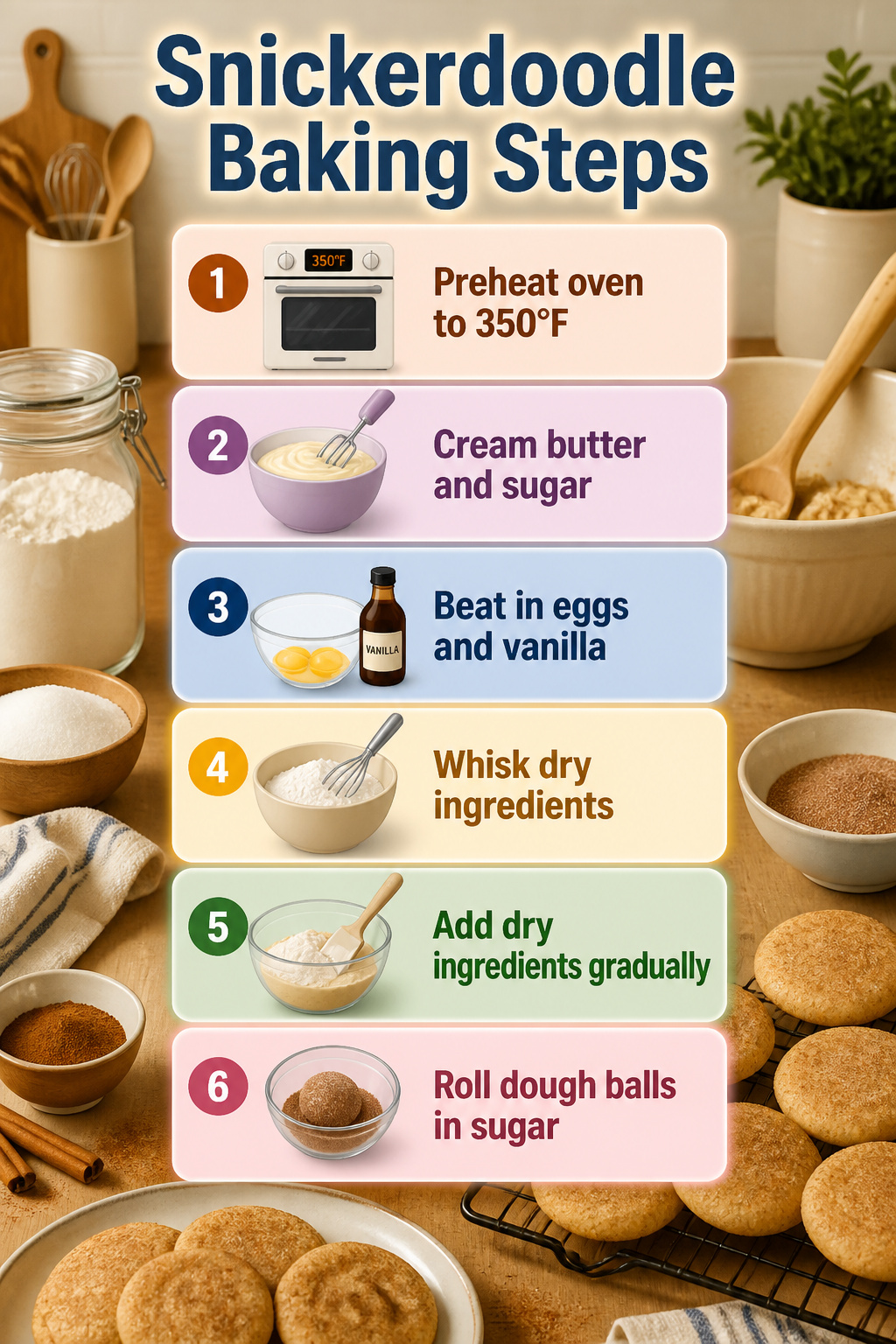
- Preheat the oven to 350°F and line a baking sheet with parchment or a silicone mat.
- Cream the softened butter and 1½ cups sugar for 2–3 minutes until the mixture turns pale and fluffy. This step builds the structure that keeps snickerdoodles soft rather than sandy.
- Beat in the eggs and vanilla until just combined. The batter will look slightly loose at this stage, which is normal.
- Whisk the flour, cream of tartar, baking soda, and salt in a separate bowl. I used to skip this step and dump everything in together; the cookies spread flatter and the salt hit in pockets.
- Add the dry ingredients gradually, mixing until just combined. Overmixing here develops gluten and gives you a tougher cookie.
- Mix the remaining ½ cup sugar with 2 tablespoons cinnamon in a small bowl for rolling.
- Scoop and roll the dough into 1-inch balls, then roll each ball thoroughly in the cinnamon-sugar coating. The warmth of your hands softens the dough just enough for the sugar to adhere evenly.
- Space the balls 2 inches apart on the lined sheet. They spread more than you’d expect from a ball this small.
- Bake 8–10 minutes until the edges look set but the centers still feel soft if you nudge one. They firm up as they cool; pulling them at the first sign of golden edges usually means overbaking.
- Cool on the sheet for 5 minutes, then transfer to a wire rack. The batch yields about 30 cookies, though in my kitchen it tends toward 28 because the first two dough balls never make it to the oven.
Why Cream of Tartar Matters

You can skip cream of tartar and still get cookies that taste fine. Soft, round, cinnamon-sugar coating intact.
But something was missing, and it took me a batch with the real thing to realize what: that faint sour note underneath the sweetness, the slight chew that stays elastic instead of going cakey.
Cream of tartar is the ingredient that makes a snickerdoodle a snickerdoodle, not just a cinnamon sugar cookie with a fancier name.
It works as an acid paired with baking soda, which creates the rise and the crinkled top you want. More importantly, it leaves behind that tang.
Baking powder, which some recipes suggest as a substitute, contains its own acid and base already combined. The cookies will puff and brown, but the flavor flattens out into something generic.
I’ve tried the swap: 2 teaspoons of baking powder in place of the 2 teaspoons cream of tartar and 1 teaspoon baking soda. Edible, even pleasant, but the result belongs in a different category entirely.
If you’re out of cream of tartar and committed to baking now, a few sources suggest 1½ teaspoons white vinegar or lemon juice kept with the original baking soda.
The texture shifts slightly, the flavor isn’t identical, but you keep some of that sour edge. My own pantry rule: the small jar lasts years, and it’s worth keeping around for this single purpose.
The difference between almost-right and actually-right is about $3 and one extra ingredient.
Baking Temperature and Time
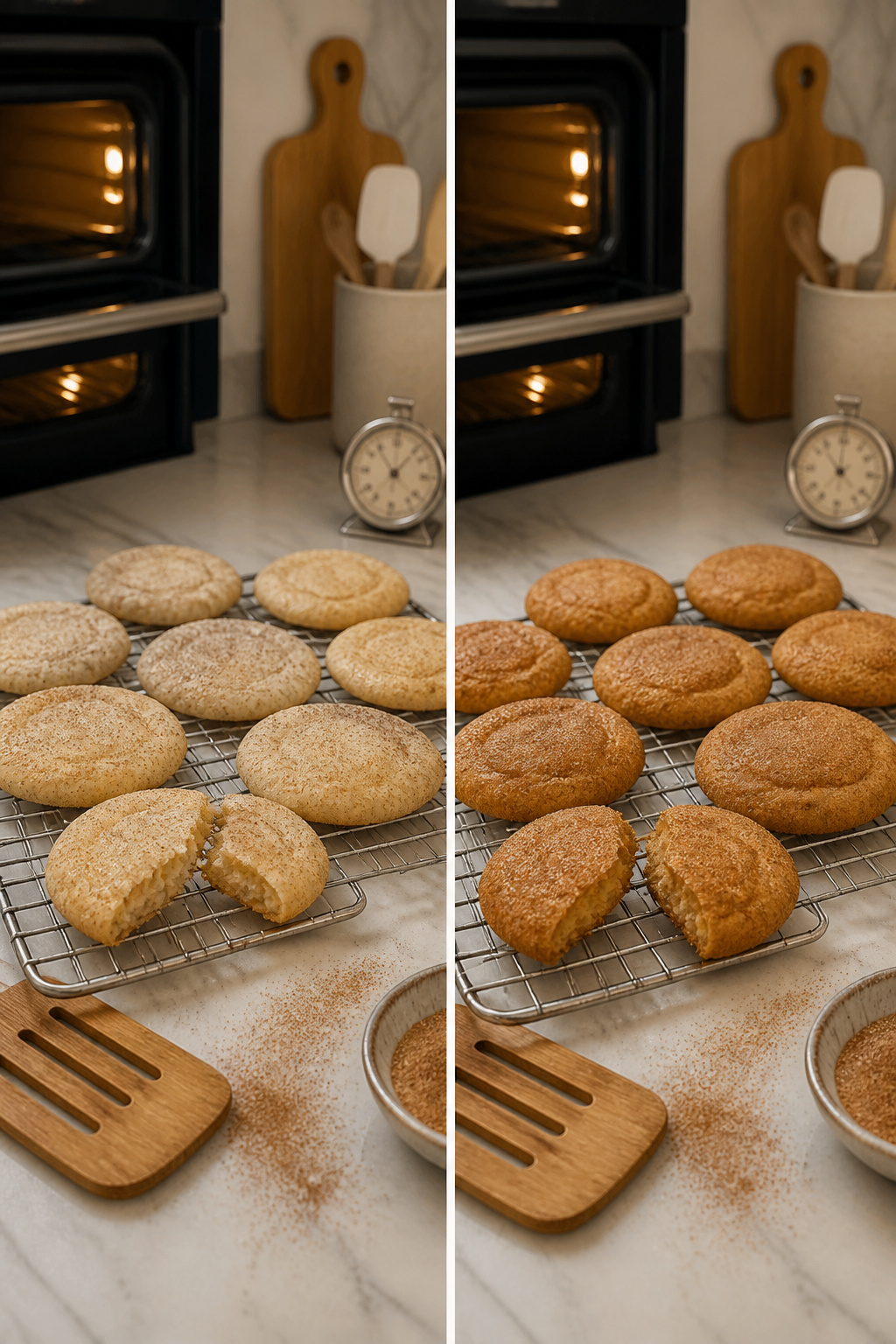
Most recipes land on 350°F, and that lower temperature is worth the extra two minutes. At 350°F the butter melts slowly, giving the cream of tartar and baking soda time to puff the dough before the edges lock into place.
The result is a more even softness from rim to center instead of a hard rim collapsing into an underdone middle.
The 375°F approach, used by some bakers, sets the outside faster and finishes in 8 to 10 minutes. That trade works if you want a crisper edge, but the window between done and overdone shrinks to almost nothing.
Either way, the real test is the same: pull the pan when the edges look set but the centers still seem slightly underbaked.
They will finish on the hot sheet as they cool, firming into that soft, chewy center snickerdoodles are known for. Overbaking is what turns them hard, not a bad recipe.
If the centers look fully dry when you open the oven, you have already gone too far.
Chilling, Shortening, and Texture Choices

The butter-shortening question is where snickerdoodle recipes split. Most ranking versions use a combination, and the vintage-style formula runs heavier on shortening at ¾ cup to ¼ cup butter.
That ratio produces a softer center that stays tender longer, which matters for party prep. An all-butter cookie gives you the richer flavor but firms up by end of day.
I compared both side by side for a group, so the difference was obvious in one sitting. The butter-only batch went onto the platter first and were noticeably stiffer by hour three.
The half-shortening tray held their chew. For a timeline where you’re mixing Thursday and serving Saturday, the shortening blend wins.
Chilling is the other fork. Many recipes call for baking immediately, and the dough works that way.
But a 30–60 minute chill firms the butter or shortening, so the balls hold shape and the cinnamon-sugar coating sticks cleaner.
For party math, chilling actually helps: you can scoop and roll the full batch, park it in the fridge, and bake in shifts so the kitchen never empties.
Unchilled dough spreads more, which gives you thinner, crisper edges if that is the texture you want.
My move now is 45 minutes in the fridge, half butter and half shortening.
The cookies come out thick enough to look generous on a platter, soft enough to survive a car ride to the venue, and the flavor still reads as real butter to anyone who asks.
Storage and Freezing
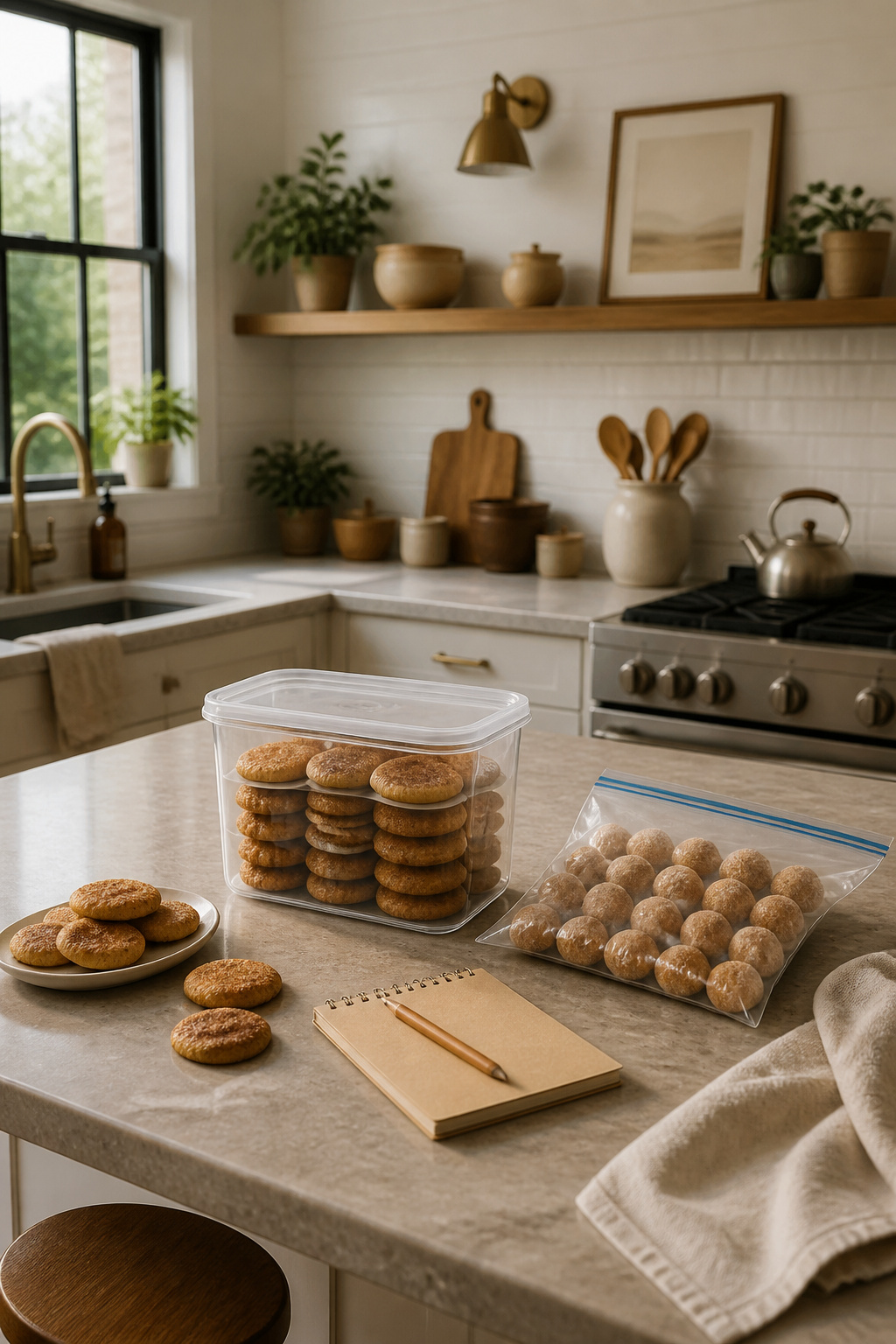
A fully cooled snickerdoodle keeps its soft center for 4 to 5 days in an airtight container at room temperature.
Some bakers push that to a week, but I start noticing the texture flatten around day four and would rather bake a half batch fresh than serve something that tastes like it is hanging on.
For longer storage, baked cookies freeze well up to 3 months. Let them thaw on the counter for about an hour; the cinnamon-sugar coating survives freezing better than I expected, though it loses a little of its sandy crunch.
The real party-planning win is freezing the dough raw. Scoop the dough into balls, roll them in the cinnamon-sugar coating, and freeze on a baking sheet until solid.
Transfer to a freezer bag and they keep up to 3 months. Bake straight from frozen at 350°F, adding a few minutes to the usual time.
For a Saturday afternoon party, that means mixing dough on Tuesday, freezing Wednesday, and pulling the bag Friday night so Saturday morning is just oven work and coffee.
Common Mistakes

Warm butter is the fastest way to flatten a snickerdoodle. When the butter is too soft, the dough spreads before the structure sets, and you end up with thin, greasy disks instead of puffed, crackled rounds.
The butter should barely dent when you press it; if your finger sinks in easily, the dough needs twenty minutes in the fridge before you scoop.
Overmixing does the same damage by beating too much air into the fat and warming it with friction. Once the flour goes in, mix just until the streaks disappear.
Hard cookies come from overbaking, full stop. These should look slightly underdone when you pull them; they firm up on the pan.
If the edges are brown all the way around, the center will bake to a crunch.
A weak cinnamon flavor usually means skimping on the coating. Rolling the dough balls twice fixes this: roll, let them sit a moment, then roll again.
Finer sugar helps too; coarse sugar leaves mostly cinnamon behind.
The coating sinks when the dough is too warm during rolling. Chilled dough holds the sugar on the surface where it belongs, giving you that shattery, crackled crust.
Frequently Asked Questions
What is a snickerdoodle?
A snickerdoodle is a soft, chewy cookie rolled in cinnamon sugar. It uses cream of tartar to build the signature tangy flavor, crackly top, and elastic texture that separates it from a crisp sugar cookie.
Some bakers also use shortening for longer chew, though butter alone works fine for same-day eating.
Why do snickerdoodles have cream of tartar?
Cream of tartar provides the signature tangy, slightly sour flavor unique to snickerdoodles, and it works with baking soda to create the rise and crinkled tops.
Without it, the cookie flattens into a plain cinnamon sugar cookie with no special character. If you need an emergency substitute, try 1½ teaspoons white vinegar or lemon juice with the baking soda instead.
Can I freeze snickerdoodle cookies?
Yes. Baked snickerdoodles freeze up to 3 months; let them thaw at room temperature for about an hour.
The cinnamon sugar coating survives but loses some crunch. For better results, freeze the dough raw, rolled in cinnamon sugar, then bake straight from frozen at 350°F with a few extra minutes added to the timer.
How do I keep snickerdoodles soft?
Pull them from the oven when the edges look set but the centers still feel soft to a light nudge; they firm up as they cool on the pan for 5 minutes.
Store cooled cookies in an airtight container at room temperature for 4 to 5 days. Overbaking is the only real cause of hard snickerdoodles.
Do I need to chill the dough?
No, most snickerdoodle recipes work right away. A 45–60 minute chill does help the dough balls hold shape, makes the cinnamon sugar stick cleaner, and lets you bake in shifts for a crowd.
Unchilled dough spreads slightly more, giving thinner, crisper edges if that is the texture you want.
What’s the secret to perfect snickerdoodles?
Use room temperature butter and eggs, do not overmix once the flour goes in, and pull the pan while the centers still look underbaked.
The coating should be generous; most home batches use too little cinnamon sugar, so roll the balls twice or mix 2 tablespoons cinnamon into ½ cup sugar.
What are some common mistakes to avoid when making snickerdoodles?
Warm butter causes flat, greasy disks; if your finger sinks in easily, chill the dough twenty minutes. Overmixing toughens the cookie and warms the butter by friction.
Overbaking turns them hard, and weak cinnamon flavor comes from skimping on the coating or using coarse sugar that leaves mostly cinnamon behind.
What is the recipe for Old-Fashioned snickerdoodles?
The classic version uses 2¾ cups all-purpose flour, 1½ cups sugar, 1 cup unsalted butter, 2 eggs, 2 teaspoons cream of tartar, 1 teaspoon baking soda, and ½ teaspoon salt.
Roll 1-inch dough balls in a coating of ½ cup sugar mixed with 2 tablespoons cinnamon, then bake at 350°F for 8–10 minutes. Some vintage recipes swap half the butter for shortening to keep the cookies softer longer.