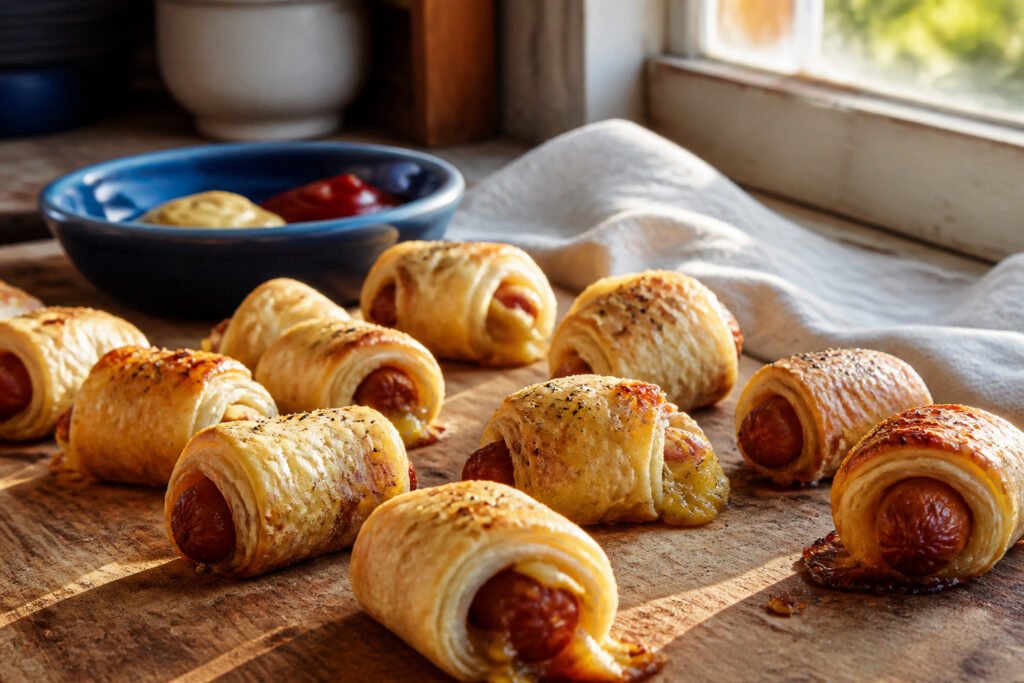
The right dough matters more than the filling. Crescent rolls finish in 12 minutes and seal without fuss, but they turn soggy the moment sauce touches the inside seam.
Puff pastry gives real layers and holds up to cream cheese, though wet fillings will separate those layers before the oven finishes.
Pizza dough needs nearly an hour for a pull-apart loaf, yet it is the only choice if you want cheese and sauce both inside the wrap.
1. Classic Pigs in a Blanket

One 8-ounce can of crescent roll dough and a 24-count package of cocktail sausages is the exact combination that built the reputation. Unroll the dough, separate along the perforations into 8 triangles, then cut each triangle lengthwise into three smaller triangles.
A pizza cutter works faster than a knife and gives cleaner edges. Place one sausage on the wide end of each strip and roll toward the point, tucking the tip underneath so it stays closed on the sheet.
375°F to 400°F for 15 to 20 minutes is the range that matters. The lower end gives you more control if your oven runs hot; the upper end speeds things up when guests are already at the door.
What you’re after is a deep golden color across the top and a dough that sounds hollow when you tap it, not pale and soft.
Some versions call for an egg wash, some skip it. The wash buys you a glossier finish and a little extra crunch, but the butter in the dough already browns fine on its own.
If you do use it, one beaten egg with a half tablespoon of water is plenty for the whole batch.
Arrange them at least an inch apart so the steam escapes instead of steaming the bottoms soggy.
The finished piece should be compact enough to eat in two bites, with the sausage peeking out from both ends and the dough wrapped in overlapping layers rather than a single loose spiral.
2. Everything Bagel Pigs in a Blanket

Puff pastry works better here than crescent dough because the layers stay distinct even with a wet filling underneath.
I spread about two tablespoons of softened cream cheese across each sheet before laying the hot dogs down, leaving a bare half-inch strip along one long edge so the seam has something to grip.
The cream cheese does two jobs: it carries the everything bagel seasoning so the flavor runs through the bite, not just across the top, and its fat content changes how the pastry bakes.
Where plain puff pastry turns shatter-crisp, the cream cheese layer underneath steams slightly and leaves the interior softer, almost like a bagel’s chew.
The trade is that the bottom browns slower, so the last five minutes need to be on the lower oven rack or the tops scorch before the underside sets.
I brush the exposed pastry with egg wash and sprinkle more seasoning on top; the coarse salt and dried garlic pieces toast in the heat and smell like a bakery.
Five hot dogs split into halves or thirds fills one standard sheet of pastry with enough overlap to keep the cheese from weeping out the ends.
Bake until the pastry is deep gold, not pale, because the cream cheese insulates enough that light color means raw dough inside.
3. Cheesy Pigs in a Blanket

Cheddar, mozzarella, and pepper jack all melt well enough for this upgrade, but they behave differently once heat hits them.
Cheddar splits easily if the oven runs hot, so I keep it to a small piece, about a ¼-inch slice, and place it directly against the sausage so the dough insulates it.
Mozzarella stays cleaner, which makes it forgiving if you shred it and scatter a light pinch rather than packing it in.
Pepper jack carries enough moisture that it can grease out the bottom of the roll; slice it thin and blot the surface on a paper towel first.
Watch for the tell where fat starts weeping onto the pan; that’s your cue the cheese-filled rolls are ready.
If you see a sheen before the dough turns golden, pull the tray and let them rest a full two minutes; the cheese sets back up and the pastry finishes crisp without a soggy base.
Shred mozzarella, slice cheddar and jack thin, and do not overfill or the seam bursts open in the oven.
4. Pizza Pigs in a Blanket

Pizza pigs in a blanket sound like a gimmick until you actually try to build one. The first problem is the sauce.
Brush it inside the dough and you get a soggy seam that steams instead of bakes; the dough separates from the dog and you end up with a wet tube and a naked sausage.
I keep the sauce for dipping, which also lets guests choose their own ratio.
Toppings that survive the oven are the dry ones: diced pepperoni, a pinch of dried oregano, maybe a few strands of mozzarella if you blot them first. Fresh basil or wet vegetables will weep and kill the bottom crust.
For the dough itself, crescent rolls work in a pinch but they are butter-based and sweet, which fights the savory profile.
Pizza dough holds structural integrity better, especially if you roll it a touch thinner and cut 1-by-2-inch rectangles, butter the inside, wrap tight, and stand them seam-down in the pan.
Bake at 400° until the color turns golden, about 55 to 60 minutes, and set the pan on a jelly roll pan in case grease seeps.
Let them cool ten minutes before you try to pull one free; the cheese needs that time to set or the whole thing stretches apart.
5. Apricot Sriracha Pigs in a Blanket

Apricot sriracha glaze walks a tightrope between sugar and heat. I start with a 3:1 ratio of preserves to sriracha, which keeps the sweetness forward enough to caramelize without drowning out the pepper.
Whisk them cold; the preserves loosen up faster than you’d think.
Spread the mixture onto the dough triangles before wrapping, about one teaspoon per half-triangle. The sugar in the preserves does two jobs: it flavors the dough and it browns the dough.
That second part means the usual 12–14 minutes at 375 degrees can turn into 10–12 if your oven runs hot, or the edges will scorch while the center stays pale. I check at 10 and rotate the pan.
Reserve whatever glaze is left for dipping. The baked glaze sets into a sticky shell; the leftover sauce stays loose and bright, which is what you want for dragging the hot little crescents through after they come out.
6. Breakfast Pigs in a Blanket
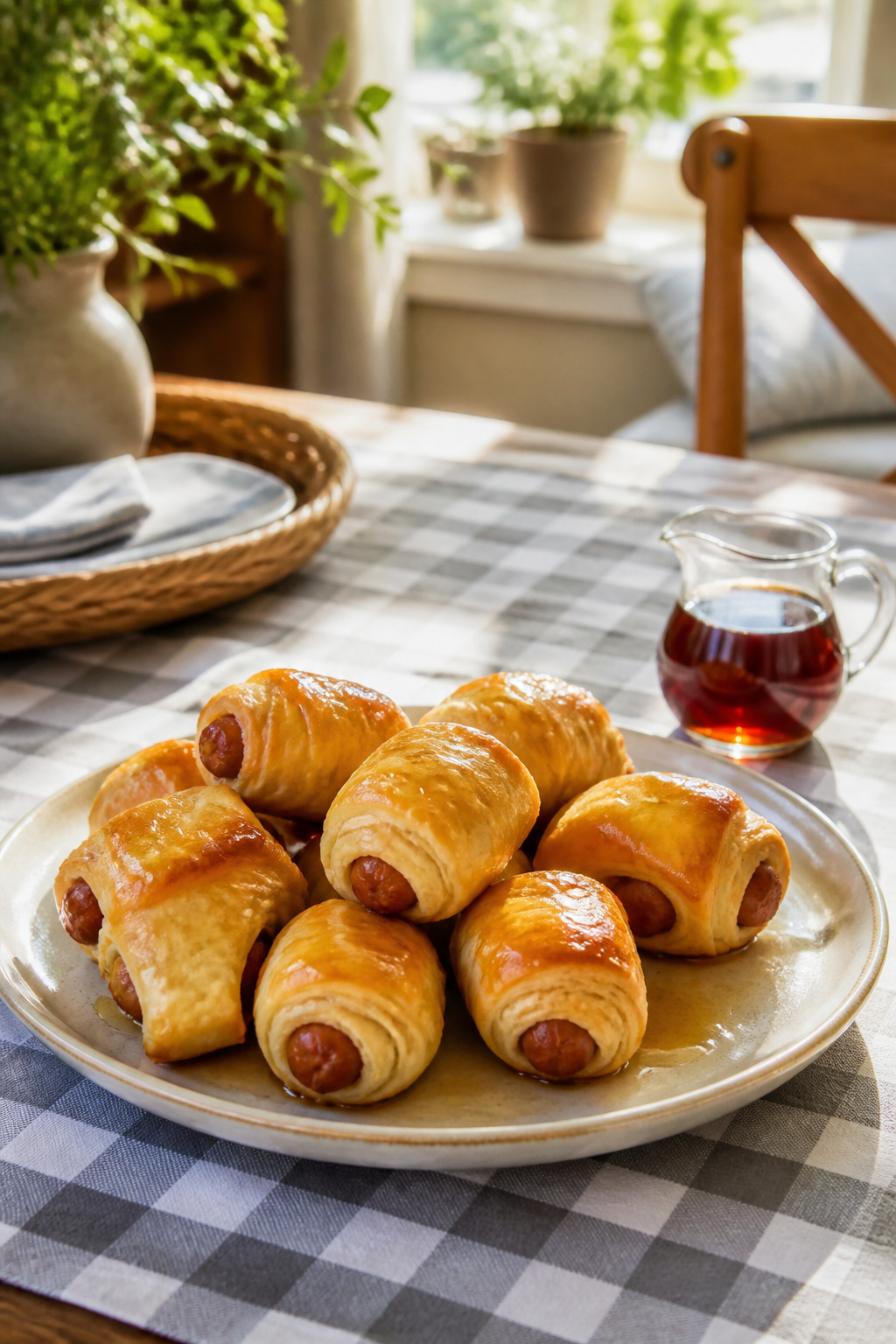
Breakfast sausage links wrapped in dough hit different when you swap the standard crescent roll for something with a little sweetness.
I have seen people fold scrambled eggs right into the blanket and then wonder why the whole thing turns rubbery in the oven. Cook the eggs until they are just barely set, then let them cool completely before assembling.
The residual heat finishes them through the bake, and you avoid that overcooked, crumbly texture that ruins the bite.
Maple syrup is the other place where this version can go sideways. Brush it on before baking and the sugar scorches before the dough turns golden; pour it on after and you have a sticky mess that soaks the bottom.
The move that actually works is working a spoonful into the dough itself, or keeping a small pitcher on the side for dipping so everyone controls their own sweetness.
If you do want a glaze, wait until the last 2 minutes of bake time, brush lightly, and pull them before it darkens past amber.
7. Pull-Apart Pigs in a Blanket
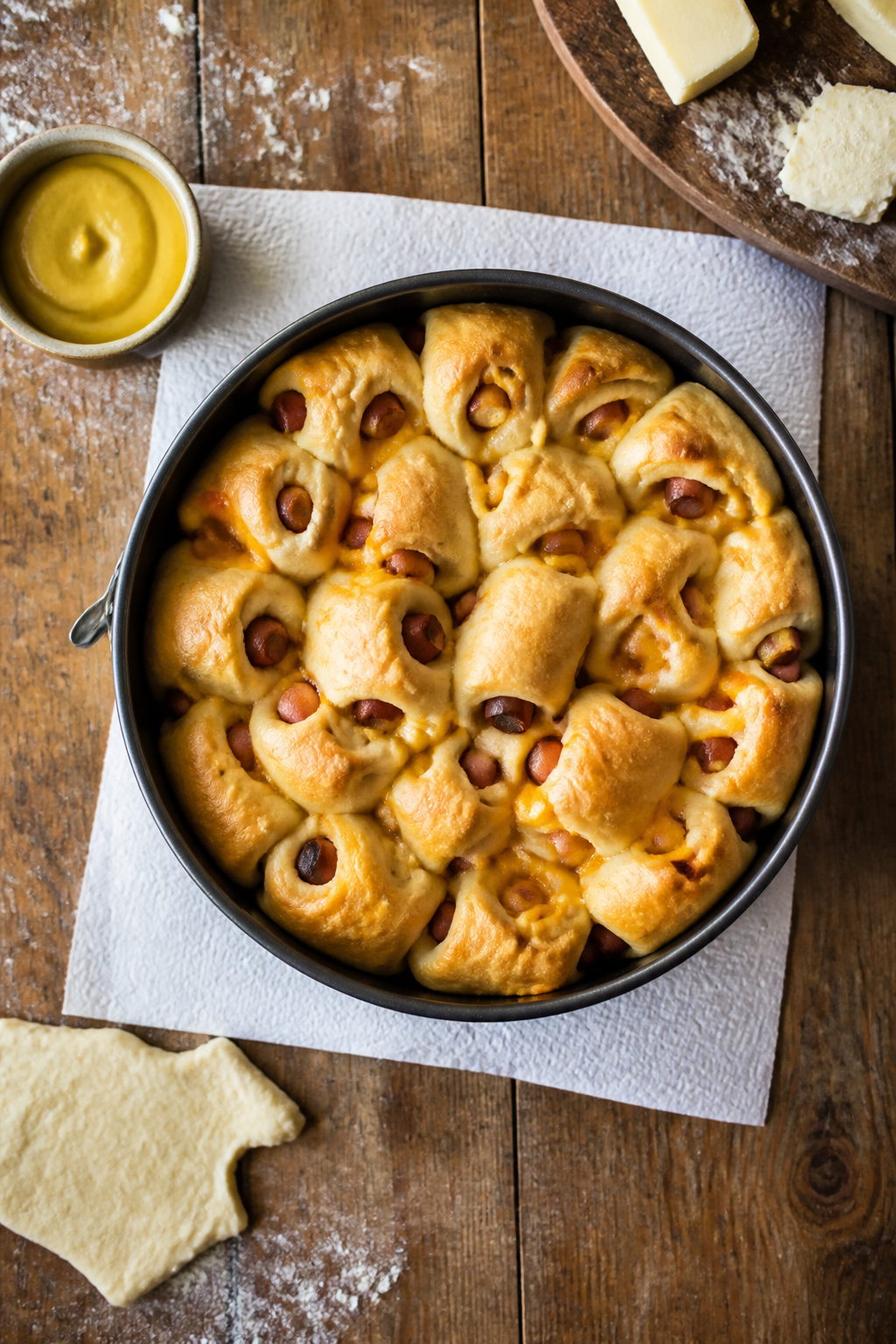
Pizza dough turns this into a shareable centerpiece instead of a tray of rolled-up snacks. I use one tube of Pillsbury pizza dough, unrolled and stretched just slightly with a rolling pin, then cut into 1-by-2-inch rectangles.
Each piece gets brushed with melted butter, a cocktail hot dog laid on top, and the dough wrapped around with the seam pressed shut.
Standing them upright in a greased 8-inch springform pan lets the pieces rise together into a loaf that pulls apart cleanly. The upright arrangement matters: packed snug enough to support each other, loose enough that no two seams fuse.
Brush the tops with the remaining butter before the oven.
Bake at 400°F for 55 to 60 minutes, which is nearly double the time for loose pigs in a blanket because the center needs that long to cook through.
The last five minutes, cover the pan loosely with foil to stop the top from over-browning before the middle is done. I set the springform on a jelly roll pan to catch any grease that seeps out the side.
Cool for ten minutes, then release the pan sides. The ring lifts away while the base stays put, and the whole loaf transfers to a board.
A paper towel blotting the bottom takes care of any collected grease. Serve with mustard.
8. Paleo Pigs in a Blanket

The dough here is almost like real dough, and by real dough I mean the gluten-filled stuff. 3/4 cup almond flour and 1/4 cup arrowroot powder form the base, with 1/2 cup canned coconut milk bringing it together.
The psyllium husk powder does the actual binding, and you need that half cup of boiling water to activate it.
Without the gluten, the texture turns out softer and a little more fragile than wheat dough, so rolling it between oiled palms and flattening it with a greased glass takes patience.
The coconut milk does leave a faint flavor behind, though it reads more as richness than tropical. Someone strictly avoiding coconut might notice; most guests will not.
The real challenge is the wrap. Cutting the flattened rectangle into triangles, then rolling each around a halved hot dog, keeps the dough from tearing at the ends.
Brush melted butter at the ten-minute mark, bake to 25 minutes total, and they hold together well enough for a party tray.
Applegate Cocktail Pork Franks work best here, but their Grass-fed Hot Dogs cut in half substitute fine when the franks are out of stock at Whole Foods.
Dough Options Compared
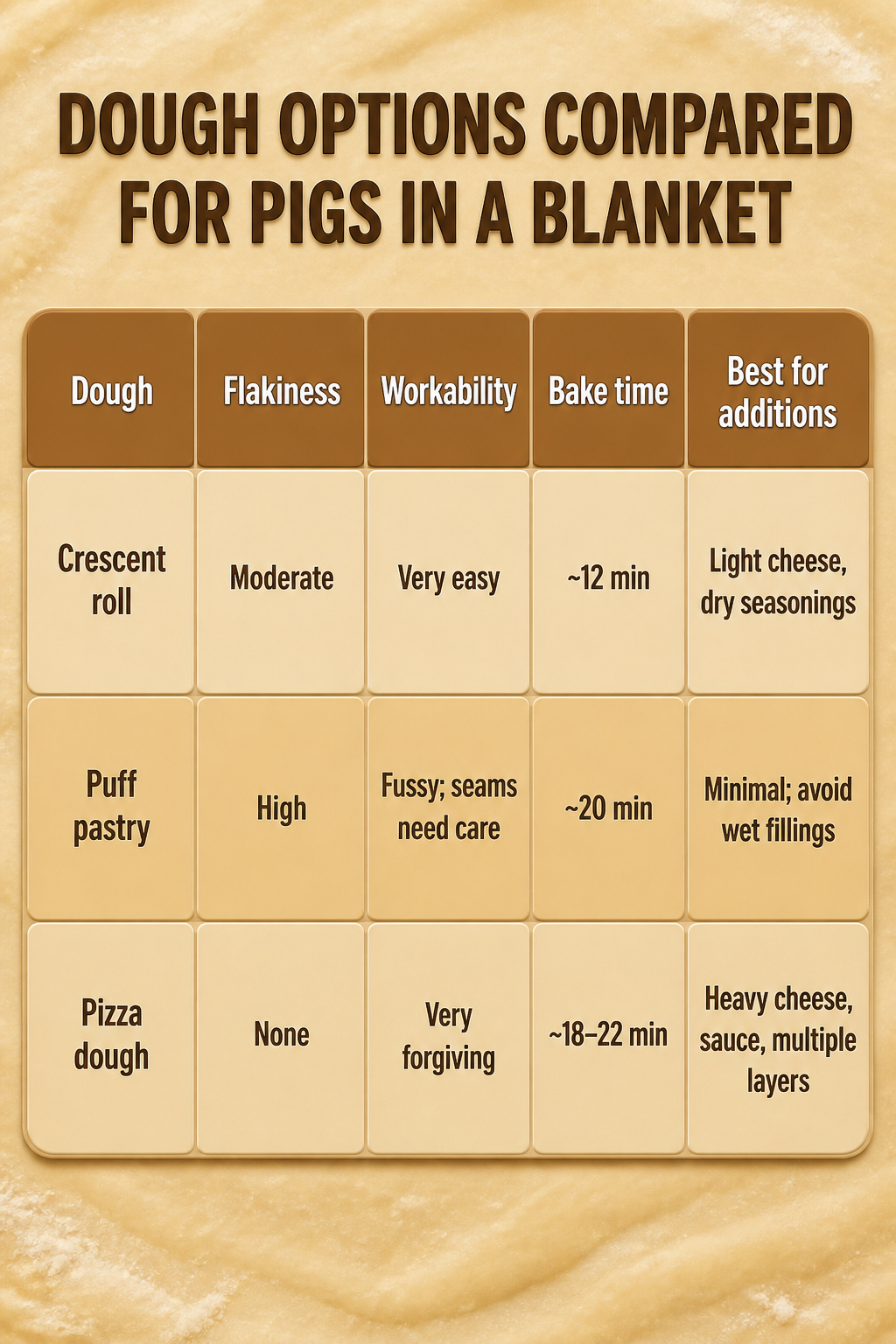
Crescent roll dough is the default for a reason: it bakes in about 12 minutes, wraps cleanly around standard cocktail wieners, and the seam stays shut without much fuss.
Puff pastry takes closer to 20 minutes and delivers real flakiness, but the layers separate if you overload them with sauce or wet fillings; cheese works fine if you keep it light and tuck it tight.
Pizza dough is the most forgiving for stuffing, extra cheese, or even a spoonful of sauce inside, though it bakes the longest and gives you bread, not pastry, around the sausage.
| Dough | Flakiness | Workability | Bake time | Best for additions |
|---|---|---|---|---|
| Crescent roll | Moderate | Very easy | ~12 min | Light cheese, dry seasonings |
| Puff pastry | High | Fussy; seams need care | ~20 min | Minimal; avoid wet fillings |
| Pizza dough | None | Very forgiving | ~18–22 min | Heavy cheese, sauce, multiple layers |
Puff pastry is the only choice if you want real layers, but I skip it for anything sauced.
Pizza dough turns the whole thing into a mini calzone, which is its own category of appetizer and needs the longer bake to cook through without a doughy bite.
Crescent rolls split the difference and stay my pick when I am making more than one variation and need them all out of the oven at the same time.
Sausage Options and Sizes

Cocktail sausages are the default for a reason. Most packages hold 24 to a 12-ounce bag, and one 8-count can of crescent dough cuts neatly into 24 triangles, so the math works without leftovers.
The dough wraps once around with just enough overlap to seal, and 14 to 17 minutes at 375°F bakes them through without drying the meat.
Hot dogs are the backup move when cocktail sausages sell out. A standard frank needs cutting into thirds, or roughly 1½-inch pieces, to match that same dough-to-meat balance.
The seam stays tighter, and the bake time stays the same since the diameter barely changes. I have done this mid-prep when the store was out, and the plate emptied anyway.
Breakfast sausage shifts the whole ratio. The links are thicker and longer, so crescent dough gets skimpy and puff pastry becomes the better call.
That swap pushes bake time to 20 to 25 minutes at the same 375°F, and the flakier wrap holds up to the grease.
Pizza dough works too for a chewier pull-apart version, though that recipe stands the links upright in a springform pan and needs a full 55 to 60 minutes at 400°F to cook through.
Size is not just about portioning; it dictates the dough choice and the timer both.
Baking Temperatures and Times

Most recipes land in the 375°F to 400°F window, with 15 to 20 minutes as the standard bake time for individual rolls.
The pull-apart version in a springform pan needs the full 55 to 60 minutes at 400°F to cook through without a raw dough center.
A lower temperature matters when cheese is involved.
At 400°F, cheese can weep and burn before the pastry turns golden; dropping to 375°F gives the fat in the dough time to render evenly and keeps mozzarella or cheddar where it belongs.
Done means golden brown on top and no soft spots underneath. If the tops color too fast in the last few minutes, a loose sheet of foil buys you time without steaming the crust.
I rotate the pan once, about halfway through, because my oven runs hotter in back right corner. Yours may not need it, but checking at the 10-minute mark tells you whether your hot spots matter.
Egg wash or melted butter both work for sheen; the egg gives a harder, glossier finish, while butter stays softer and tastes more like the crescent rolls most of us grew up on.
Make-Ahead and Storage

Assembled pigs in a blanket hold in the refrigerator for up to 24 hours before baking. Cover the tray tightly with plastic wrap, but wait to brush on the egg wash until right before they go into the oven.
The dough softens noticeably after a night wrapped in the fridge, so the crust will not puff as crisply as same-day assembly.
Freezing buys more time and, in my read, better texture. Arrange the unbaked rolls on a parchment-lined tray, freeze until solid, then transfer to a freezer bag.
Bake straight from frozen at the usual temperature and add a few extra minutes to the timer. Thawing first is not necessary and actually risks the dough turning soggy where it meets the sausage.
Leftover baked pigs in a blanket keep for up to 4 days refrigerated. Reheat in a 350°F oven or air fryer to bring the crust back.
The microwave works if you are in a hurry, but the dough goes soft instead of crisp, so the oven is worth the wait for anything you are serving to guests.
Frequently Asked Questions
How do you make pigs in a blanket?
Wrap cocktail sausages in dough triangles and roll them up tight, then bake at 375°F to 400°F for 15 to 20 minutes until deep golden. The dough should sound hollow when you tap it, and the sausage peeks out from both ends.
What can I dip pigs in a blanket in?
Mustard, ketchup, BBQ sauce, and honey mustard are the common choices. Some recipes also mix honey into mustard for a quick dipping sauce.
For the apricot sriracha version, reserve extra glaze on the side for dragging the hot crescents through after baking.
Can you make pigs in a blanket ahead of time?
Yes. Assemble them and refrigerate for up to 24 hours, but wait to brush on egg wash until right before baking.
For even better texture, freeze the unbaked rolls solid on a tray, then transfer to a bag and bake straight from frozen with a few extra minutes on the timer.
What do Americans call pigs in blankets?
In the United States, the term refers to cocktail sausages or hot dogs wrapped in dough and baked, not the British bacon-wrapped version. Crescent roll dough is the most common wrapper in American recipes.
Do I cook the hotdogs before making pigs in a blanket?
No precooking needed for cocktail sausages or standard hot dogs. The oven time fully cooks them through.
For breakfast versions with scrambled eggs, cook the eggs until just barely set and let them cool completely before assembling, since residual heat finishes them during the bake.