
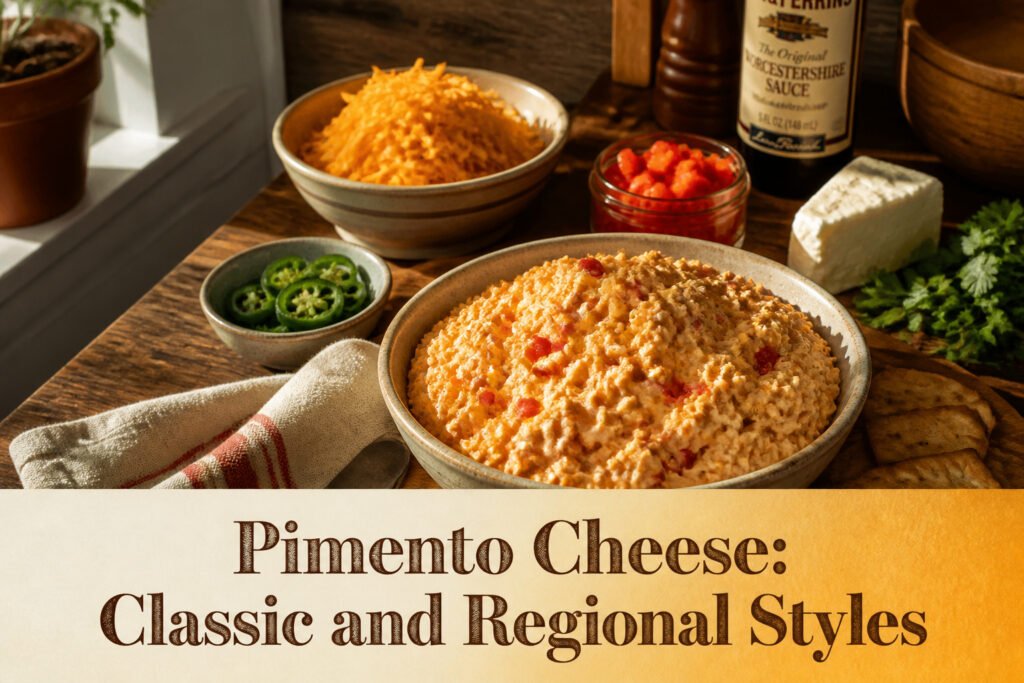
Pimento cheese is a cold spread of sharp cheddar, mayonnaise, and diced jarred pimentos that Southerners have claimed so thoroughly it is called the pâté of the South, even though its origins trace back to industrial food manufacturing in late-1800s New York City.
The standard ratio is one pound of hand-grated cheese to half a cup of mayo to four ounces of drained pimentos, and the spread falls apart if you use bagged pre-shredded cheese coated in cellulose.
What separates a classic batch from regional styles is what gets added after those three ingredients meet: cream cheese for stiffness, Worcestershire for umami depth, fresh jalapeños for vegetal heat, or smoked cheddar for something that tastes like it sat near a fire pit.
Classic Pimento Cheese
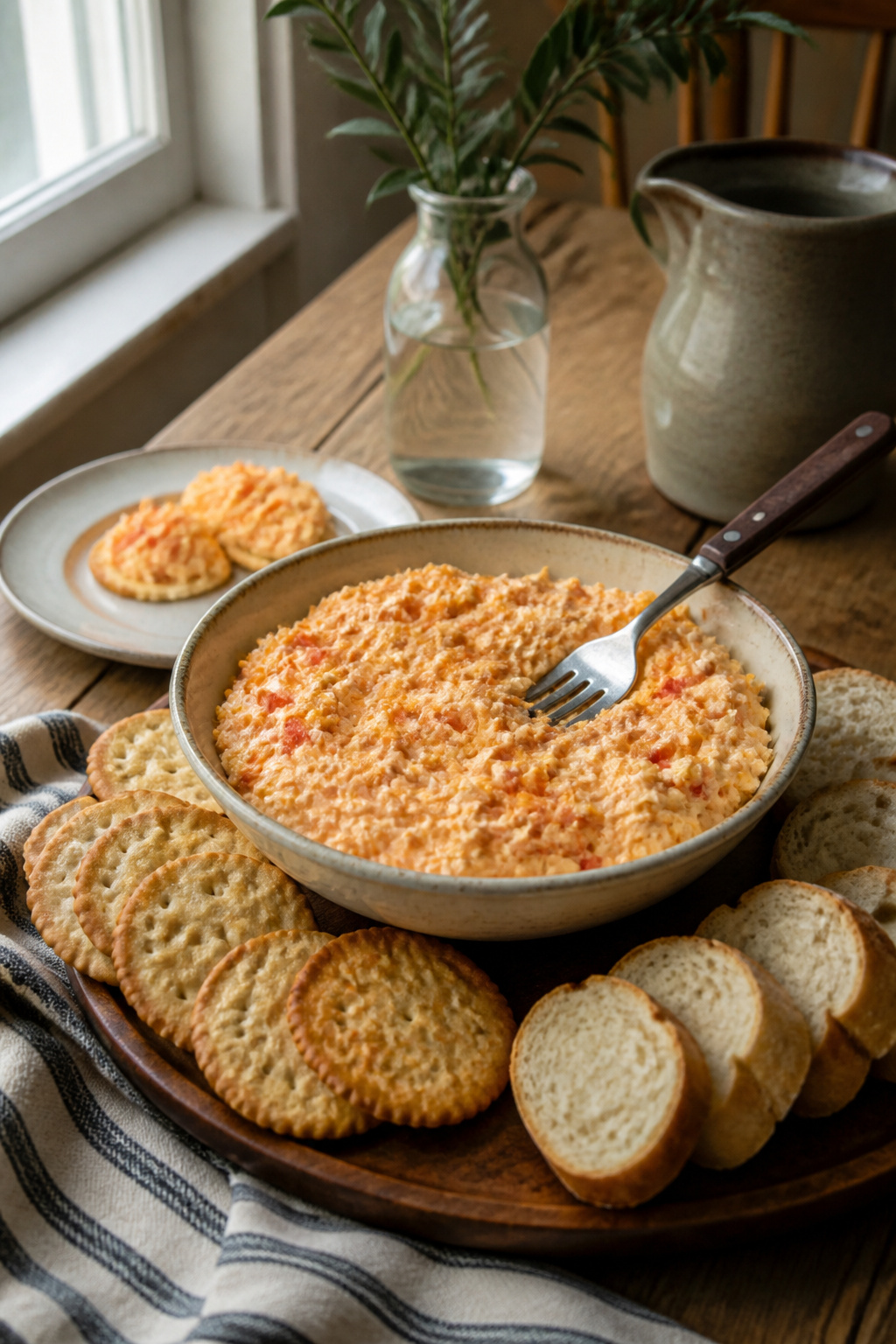
Sharp cheddar is the backbone of any classic pimento cheese worth making. The standard ratio is 1 lb cheese to ½ cup mayonnaise to 4 oz diced pimentos, and that balance is where the magic lives.
Pre-shredded bags from the dairy aisle are coated with cellulose to stop clumping, which also stops the cheese from binding properly with the mayo.
Hand-grating on a box grater takes maybe three extra minutes and yields a spread that actually holds together instead of separating into oily shreds.
Mayonnaise matters too. Duke’s is the Southern standard for a reason: less sugar, more tang, and it lets the cheese speak instead of dressing it up.
Jarred pimentos bring mild sweetness and those signature red flecks; drain them well or the mixture goes slack.
Some cooks add cream cheese for body, onion for bite, or garlic and cayenne for heat, but the three-ingredient base is honest enough to stand alone. Let it rest in the refrigerator for several hours before serving.
The flavors need time to meld, and warm pimento cheese on a cracker is a disappointment you can avoid with patience.
Pimento Cheese with Cream Cheese
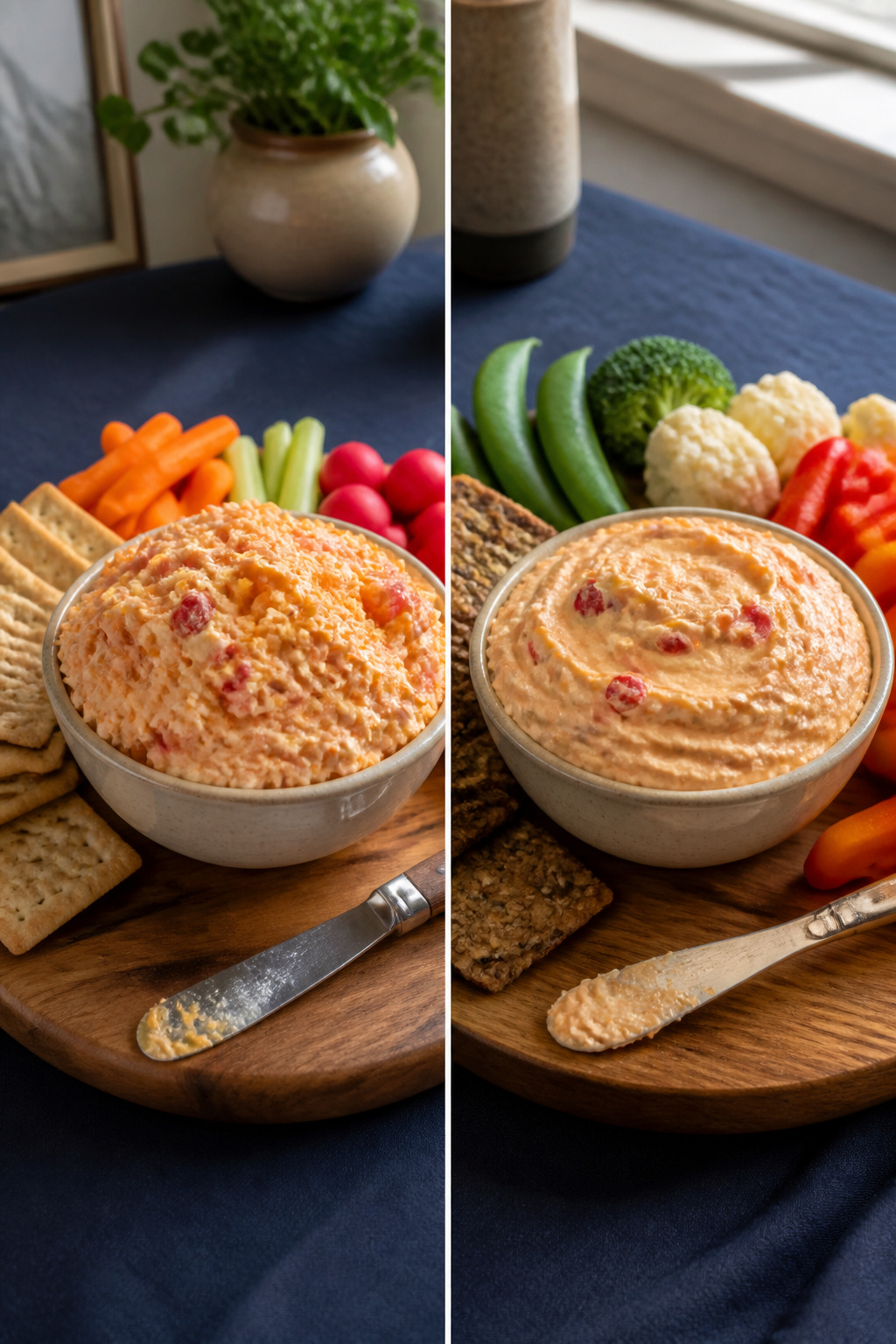
Adding cream cheese to pimento cheese changes the texture in a way that some people love and others avoid.
The softened 4-ounce block binds the shredded cheddar into a stiffer, more spreadable mixture that holds its shape on a cracker instead of slumping.
Rosalynn Carter’s version leaned into this with grated onion for bite, and that combination works well when you need a cheese that can sit out on a buffet board without weeping.
Cream cheese versions sacrifice flavor for ease. Cream cheese dilutes the sharp cheddar tang that defines the classic style, and it thins the texture rather than keeping it fluffy.
The Kitchn puts the choice plainly:
Traditional Southern pimento cheese has no cream cheese in it — and I prefer it that way. While the mayo amps up the cheesy cheddar flavor, cream cheese dilutes it.
For sandwiches or a stuffed celery situation, the cream cheese style wins. For eating straight off a spoon with a cold beer, the classic mayo-only version keeps more of what you’re there for.
Half the mayo swapped for room-temperature cream cheese is the usual compromise if you want some spreadability without going full block-party texture.
Spicy Pimento Cheese
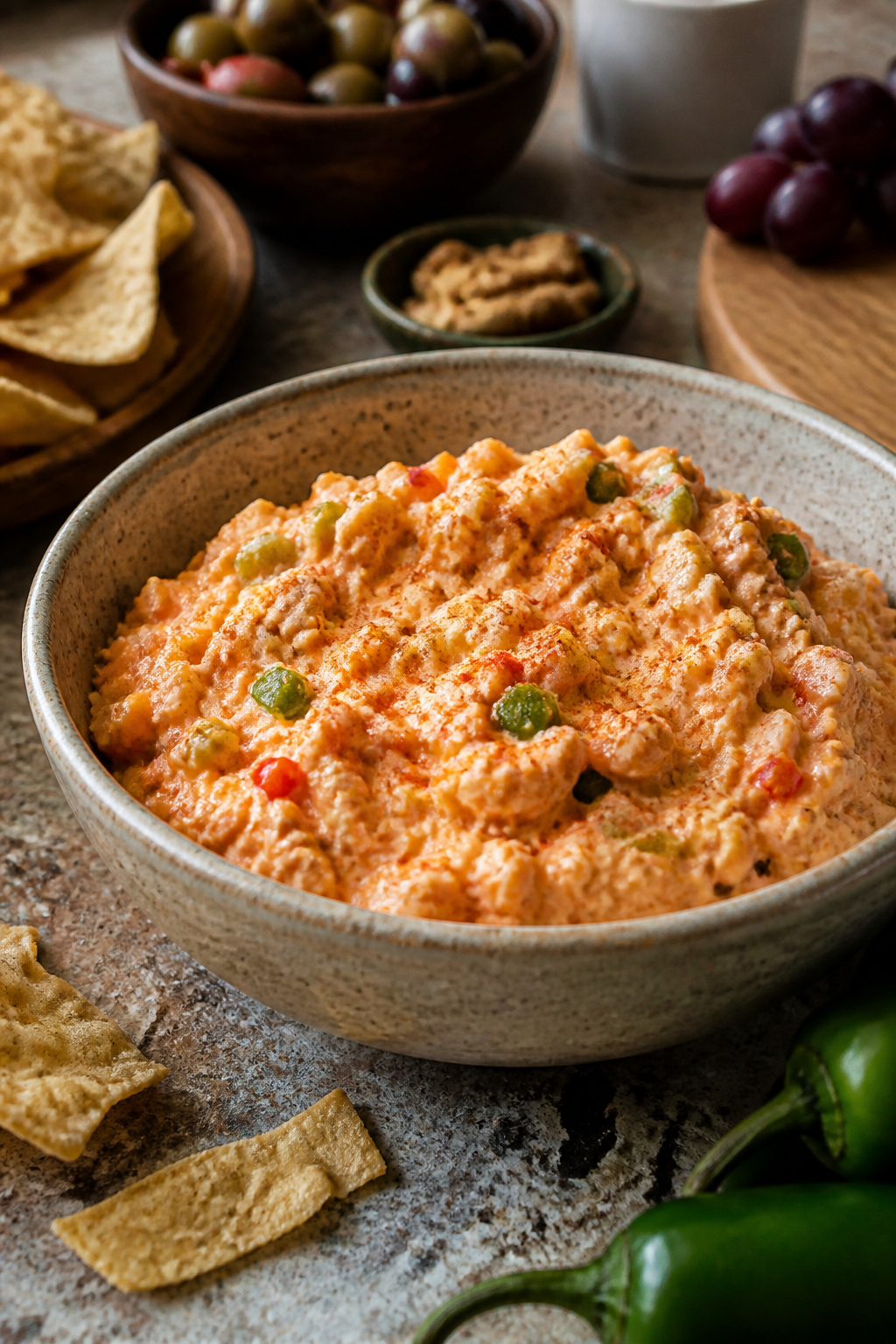
Heat in pimento cheese works because fat carries flavor but also mutes it; a sharp pepper cuts straight through the mayonnaise and cheddar so the bite registers instead of sinking.
Fresh jalapeños bring a green, vegetal heat that brightens the dip, especially when you leave the seeds in and dice them fine enough that no one gets a single chunk.
Pickled jalapeños or a few dashes of Louisiana-style hot sauce do something different: the vinegar lifts the whole spread, same way dill pickles or a shot of Worcestershire might, but with capsaicin behind it.
Cayenne is the quiet option. It disappears into the color and only shows up after a spoonful or two, which is useful if you’re feeding people who claim they want "a little kick" but reach for water after mild salsa.
I tend toward pickled peppers for parties and fresh ones for a batch I’m keeping at home, since the pickled kind holds its crunch through a day or two in the fridge while fresh jalapeños soften and bleed.
Either way, stir them in after the base is mixed so you can taste and adjust; a pepper that ate mild at the store can still torch a whole bowl.
Pimento Cheese with Worcestershire
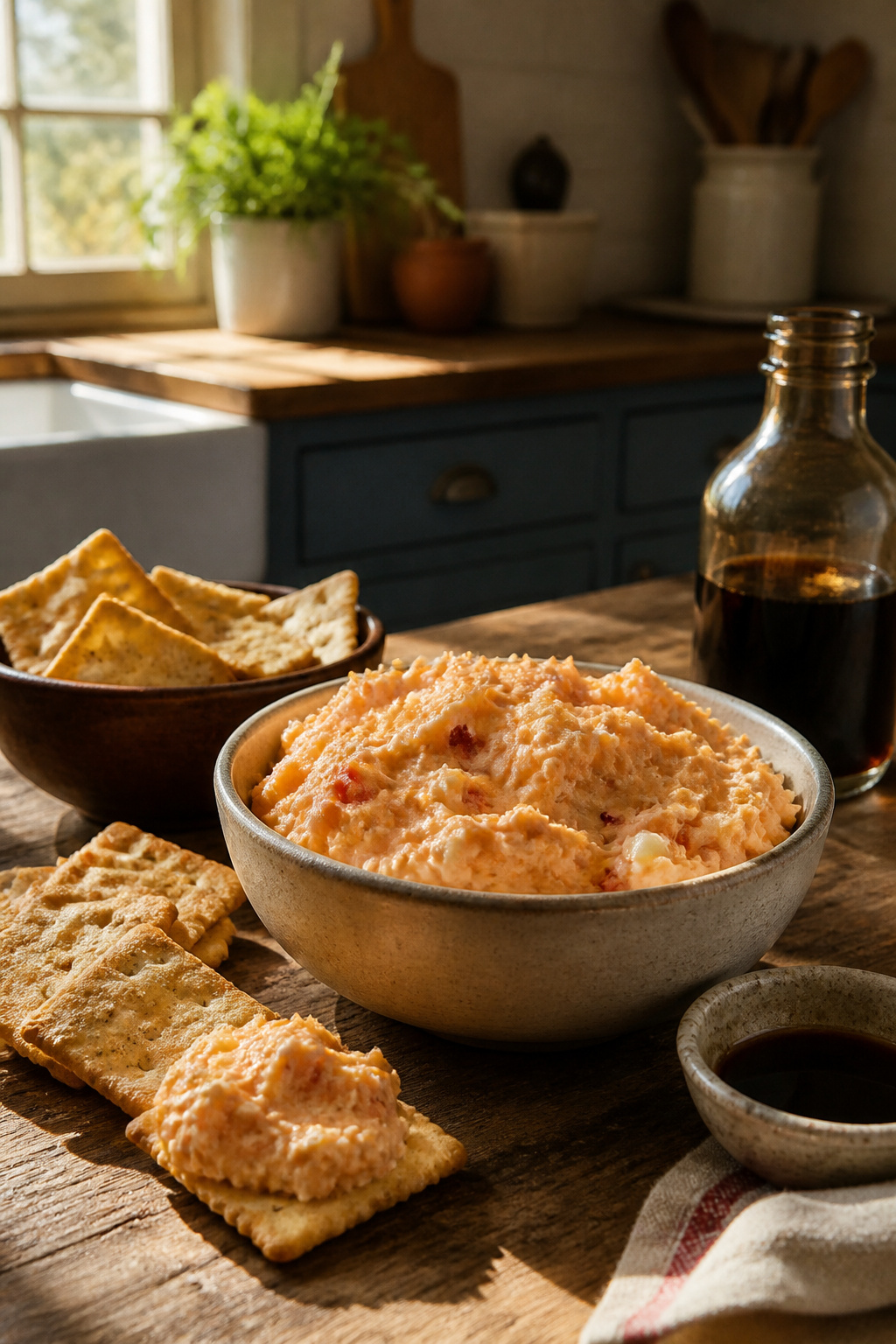
Worcestershire sauce works in pimento cheese the way anchovy works in Caesar dressing: you notice something fuller in the background, not the ingredient itself. A few dashes deepen the cheddar without steering the spread toward brown or savory territory.
Garlic powder and dry mustard do similar quiet work, adding a faint heat and complexity that keeps the palate from landing on pure salt and fat.
Some cooks grate in raw Vidalia onion or shallot for the same reason, though that pushes closer to a flavor change than Worcestershire does.
Soy sauce stands in for Worcestershire if the bottle is empty, and the swap keeps that umami depth without adding sweetness.
Cayenne or Louisiana-style hot sauce layers on actual heat, which is a different choice entirely: heat announces itself, while Worcestershire stays tucked behind the cheese.
Cream cheese is the outlier here, thickening the texture more than the taste, and sources split hard on whether that counts as deepening the flavor or diluting it.
I land with the camp that prefers the spread spoonable from the fridge, not stiff, so Worcestershire wins over cream cheese for my batch.
Smoked and Regional Variations
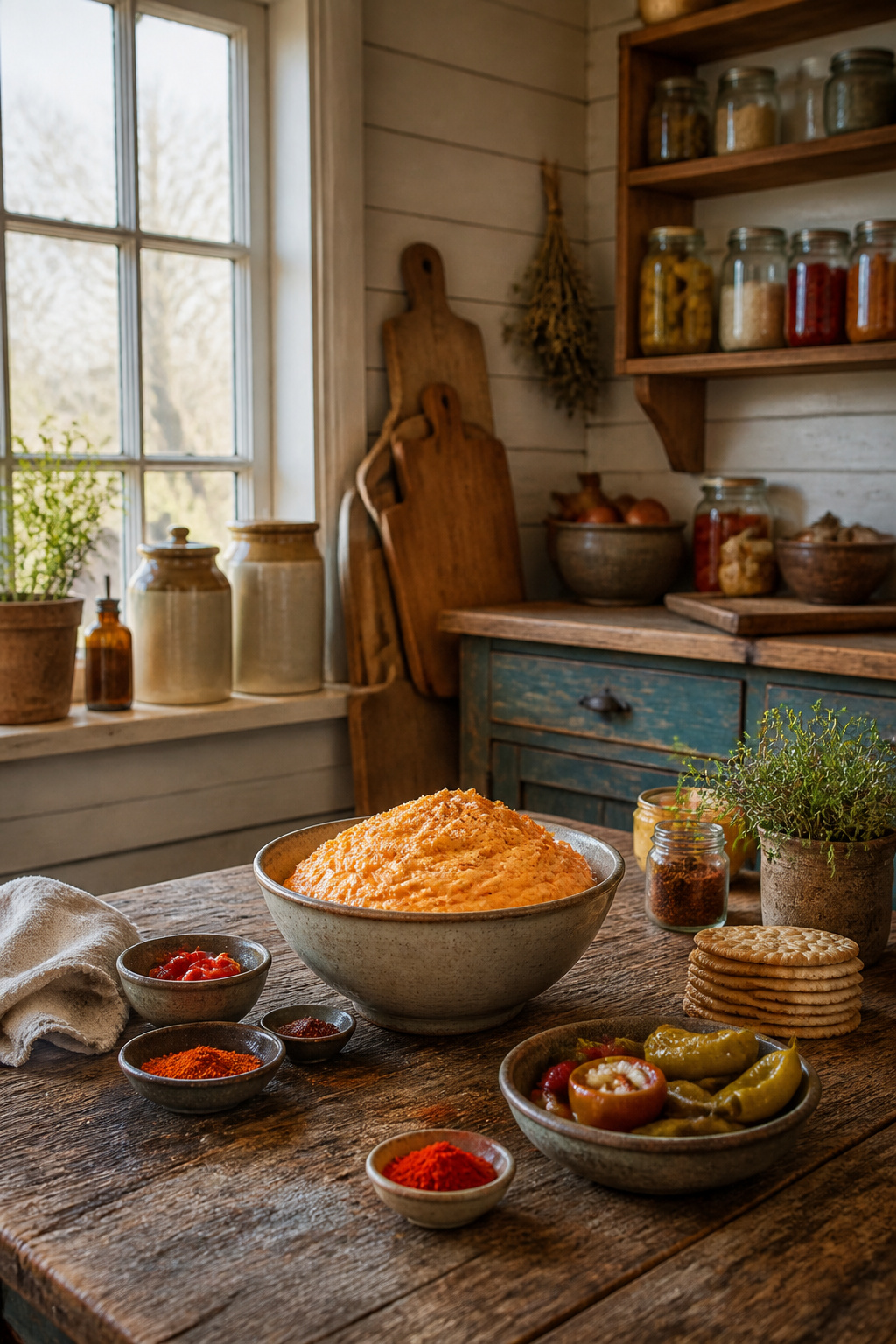
Smoked cheddar changes the whole conversation. I swap in half the usual sharp cheddar for smoked cheddar or a young Gouda, and the spread suddenly tastes like something that spent time near a fire pit, not just a deli counter.
Smoked paprika at a quarter teaspoon pushes that same direction without requiring a special cheese run. The cream cheese base from some versions helps carry heavier flavors like this; it gives you more room to build before the fat separates.
Regional additions run toward heat and tang, not just smoke. Horseradish, Louisiana-style hot sauce, cayenne, and chopped pickled jalapeños all show up in family recipes that move the profile away from mild.
Some cooks add Worcestershire or dill pickle for sour depth, others stir in scallions or fresh dill at the end for brightness against the fat.
Bacon is a newer addition that works the same angle as smoked cheese, though I think you choose one or the other; both together reads like a sports bar dip.
Jarred peppers beyond pimentos let you shift the character without touching the cheese blend at all. Piquillos, roasted reds, or pickled peppadews each bring a different sweetness and heat level.
Pimento cheese has a loose enough structure that local taste ends up defining it more than any canonical recipe.
What reads as standard in one kitchen tastes like a specific regional variant in another, and that is the useful thing to know going in.
What Pimento Cheese Needs
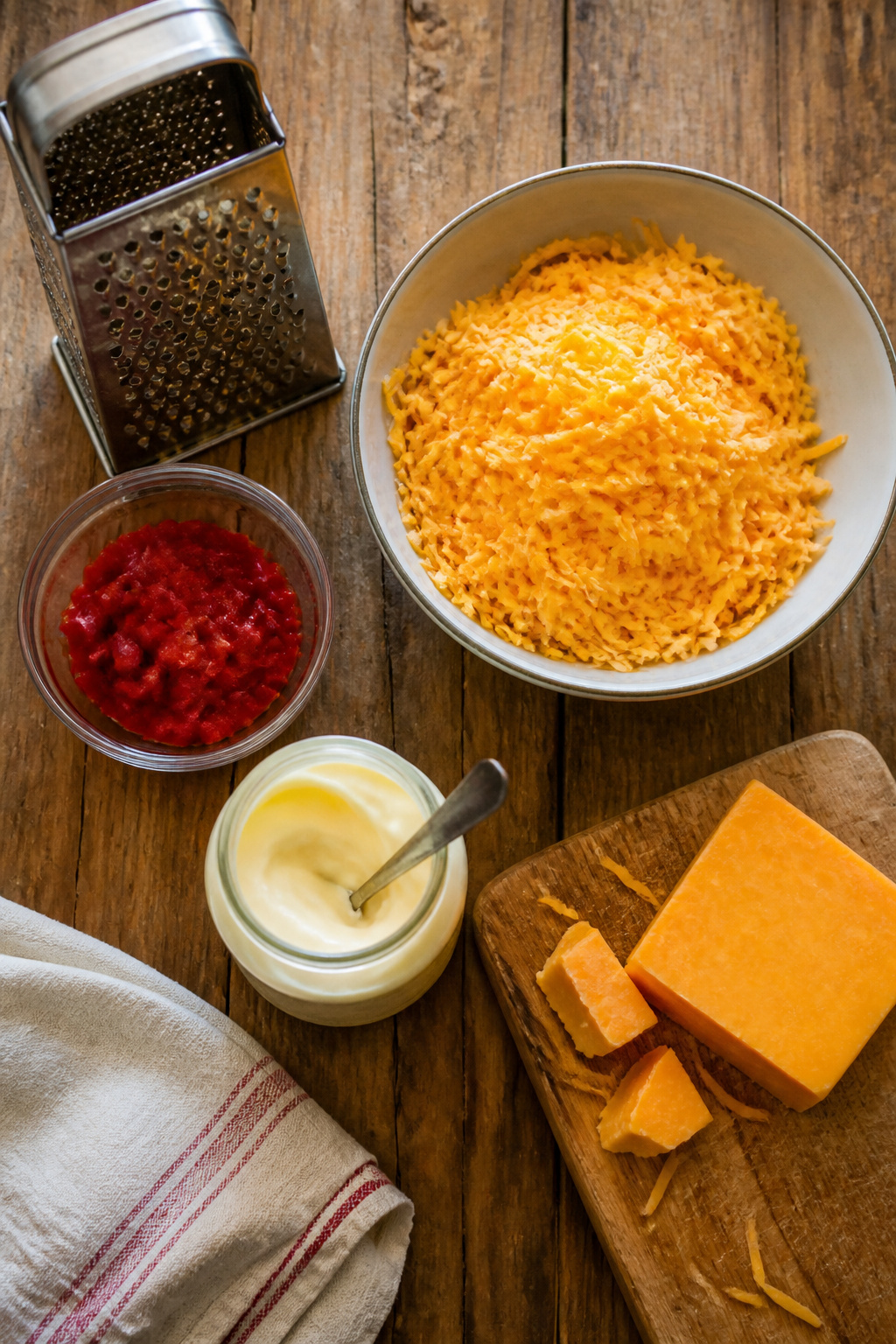
Sharp cheddar, mayonnaise, and pimentos form the base every version agrees on. The rest is where recipes split.
- Grate the cheese yourself. Bagged shredded cheese is coated with cellulose to stop clumping, and that same coating stops it from mixing into the creamy paste you are after. A box grater takes an extra minute and the texture is noticeably smoother.
- Sharp cheddar is the standard starting point. Mild works if you prefer less bite, but sharp gives the spread its backbone.
- Jarred pimentos are what most of us reach for; they are already roasted, peeled, and diced to the right size. Drain them or the mix turns watery.
- Mayonnaise binds it all. Duke’s is the brand that comes up most often for this dish, though any full-fat mayo will do the job. Low-fat versions make a thinner, less stable spread.
- Beyond the core three, the field opens up. Cream cheese, grated onion, garlic powder, black pepper, cayenne, even Worcestershire or hot sauce all have their advocates. Start with the basic ratio of roughly 1 pound cheese to ½ cup mayo to one 4-ounce jar of pimentos, then build from there.
How I Serve It
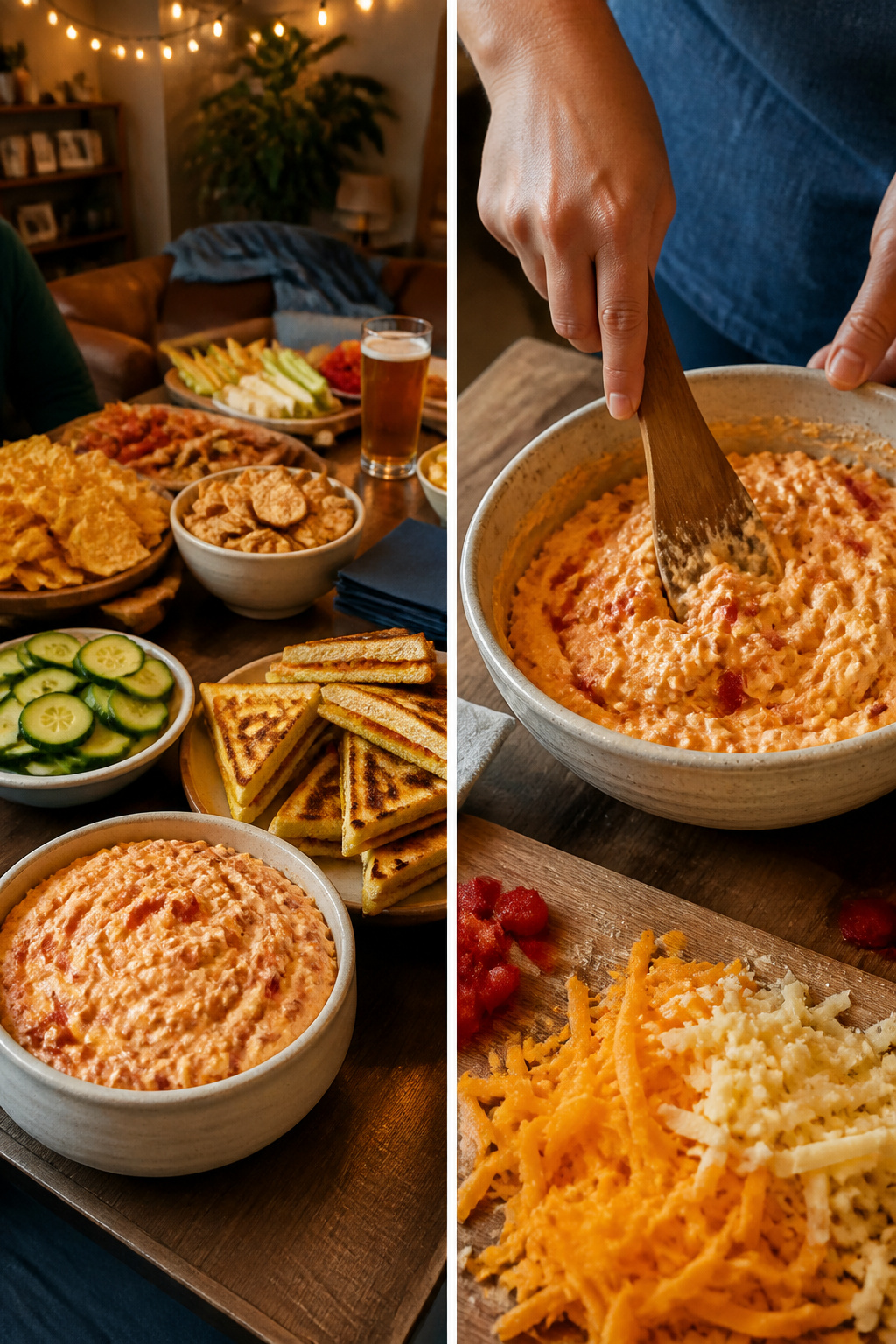
The way a spread lands on a table matters more than the recipe itself. For a quiet afternoon, crackers and celery sticks keep things simple; the crunch against the sharp cheddar base is the point, not the presentation.
That same mixture works on a game-day charcuterie board, though there it sits beside tortilla chips or plantain chips as something guests can assemble themselves between plays.
Sandwiches are where pimento cheese becomes a meal.
A cold sandwich is the classic move, but pressed in a cast-iron skillet into a grilled cheese is where the mayonnaise in the spread crisps the bread and the pimentos soften into something almost sweet.
Deviled eggs are a more deliberate choice: fold the cheese into the mashed yolks and the filling becomes richer, more cohesive, less likely to slump on the plate.
For a cocktail party, trim the crusts, cut the sandwiches into triangles or roll them into pinwheels. The shape signals the occasion before anyone takes a bite.
Why the South Claims It

The South claimed pimento cheese so thoroughly that calling it the pâté of the South sounds like plain description, not branding.
That claim shows up in family recipes passed down through generations, in the Masters Tournament sandwich sold for $1.50, in Rosalynn Carter handing them out to grandchildren on a plane.
The spread carries nostalgia the way few foods do; it is tied to place and memory in a way that makes it feel like it must have risen from Southern soil itself.
The actual origin is murkier.
Some sources trace pimento cheese back to New York City in the late 1800s, born from industrial food manufacturing: newly mass-produced cream cheese, canned imported Spanish peppers, and the home economics movement that favored orderly, preserved ingredients.
The spread started as a practical convenience, not a tradition.
That Northern pedigree does not much weaken the Southern claim. Industrial origin or not, the region adopted pimento cheese, shaped it, and held onto it through the decades when other processed foods came and went.
The Masters sandwich has been a concession since the 1940s, and when Augusta National switched suppliers in 2013, the changed taste caused enough complaint to make news.
The South may not have invented pimento cheese, but it is the place that decided to keep it.
Frequently Asked Questions
What is pimento cheese?
Pimento cheese is a spread made primarily of sharp cheddar cheese, mayonnaise, and diced pimentos.
The basic version mixes these three into a chunky paste, though regional and family recipes add everything from cream cheese and hot sauce to Worcestershire and garlic.
It is most closely associated with Southern cuisine in the United States, though its origins trace back to the late 1800s in New York City.
What can I serve with pimento cheese?
Pimento cheese works with crackers, celery sticks, and raw vegetables for simple snacking.
It also makes an excellent sandwich filling, especially pressed into a grilled cheese in a cast-iron skillet, or folded into deviled egg filling for a richer yolk mixture.
For parties, trim crusts and cut sandwiches into triangles or roll them into pinwheels.
What is the secret to good pimento cheese?
Hand-grating the cheese yourself is the single most important step. Pre-shredded bags are coated with cellulose to prevent clumping, and that same coating stops the cheese from binding properly with the mayo.
Using a full-fat mayonnaise like Duke’s and letting the spread rest refrigerated for several hours before serving also make a noticeable difference.
Are pimentos just red bell peppers?
Pimentos are a specific variety of mild, sweet chili pepper, not exactly the same as the red bell peppers commonly sold in produce sections.
The jarred pimentos called for in pimento cheese are already roasted, peeled, and diced, with a milder and sweeter flavor than most bell peppers. You can substitute roasted red peppers in a pinch, but the taste will shift slightly.
Is pimento cheese healthy or unhealthy?
Pimento cheese is a high-fat, calorie-dense spread built from cheese and mayonnaise, so it sits firmly in the indulgence category rather than any health food regimen.
If you are watching your intake, the classic version with sharp cheddar and full-fat mayo is the traditional preparation, not a lighter alternative.