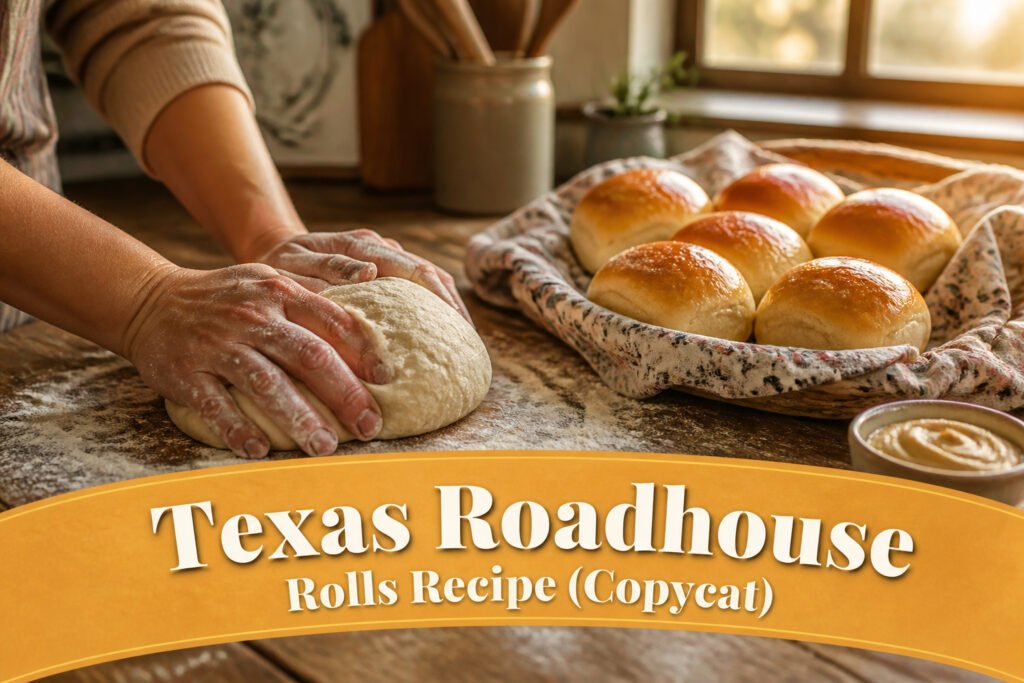
These rolls come out soft and slightly sweet with a light, pillowy crumb that tears easily, and the cinnamon honey butter you whip up while they bake is what makes this copycat version taste like the restaurant itself.
The whole process takes about 2 hours from mixing to serving, though the hands-on time is closer to 20 minutes.
Where most copycat recipes go wrong is treating the flour as a fixed amount instead of a range: start with 3 1/2 cups and only add more if the dough stays too sticky to handle, because over-flouring is what turns these into dense dinner rolls instead of the airy rounds you’re after.
Ingredients

The ingredient list for these rolls is short, and most of it is probably already in your kitchen.
1 packet (2 1/4 teaspoons) active dry yeast is what I reach for, though instant yeast works if you want to skip the proofing step and mix it straight into the dry ingredients.
You’ll need 1 cup whole milk warmed to 105–110°F; whole milk matters here, not skim, because the fat carries the flavor.
- 4 tablespoons unsalted butter, plus more for brushing the hot rolls straight out of the oven
- 1/2 cup granulated sugar
- 3 1/2 to 4 cups all-purpose flour
- 2 large eggs at room temperature
- 1 teaspoon salt
The flour range is the part you watch. Start with 3 1/2 cups and add the last half cup only if the dough stays too sticky to handle.
Some days my kitchen needs the full 4 cups; other days, 3 1/2 cups is plenty and the rolls come out lighter for it.
How to Make the Rolls

- Activate the yeast in warm water with a teaspoon of sugar. Let it sit 5–10 minutes until foamy; covering the bowl with a towel helps it along.
- While that proofs, warm the milk and butter together, then let it cool to room temperature so it does not kill the yeast.
- Mix the dough. Pour the yeast mixture into a stand mixer bowl with the dough hook, or use a large bowl and a wooden spoon if working by hand. Add the cooled milk mixture, eggs, salt, remaining sugar, and about half the flour. Beat on medium-low or stir until it comes together, then add more flour a quarter-cup at a time until the dough pulls away from the sides and feels slightly sticky but workable.
- Transfer to a lightly oiled bowl, cover with a towel, and let rise in a warm spot until doubled, 45–90 minutes. The oven’s proof setting at 90°F speeds this up.
- Roll the dough on a floured surface to a ½-inch-thick rectangle, roughly 10×8 to 16×8 inches depending on how many rolls you want. Fold in half lengthwise if you like taller rolls, then cut into 12–24 squares with a knife or pizza cutter.
- Arrange on parchment-lined baking sheets with space between them. Cover and let rise again until puffy, 30–60 minutes.
- Bake at 350°F for 12–20 minutes; the tops should turn light golden brown. Sources split on timing here, so start checking at 12 minutes and pull when the color looks right.
- Brush with melted butter the moment they come out. Serve warm.
Cinnamon Honey Butter

The cinnamon honey butter is what turns a good dinner roll into the Texas Roadhouse experience everyone recognizes.
I whip one stick of softened butter with 1/4 cup honey and 1 teaspoon cinnamon until the mixture goes pale and fluffy, which takes about a minute with a hand mixer.
The powdered sugar goes in to taste; some days I want just a tablespoon for a barely-sweet finish, other times I push closer to 1/4 cup for that thick, frosting-like spread the restaurant serves.
Serve it while the butter is still soft and the rolls are warm; cold butter on a hot roll is a letdown, and room-temperature rolls lose the contrast that makes the combination work.
If you make it ahead, it keeps covered in the refrigerator for up to five days, but let it sit out until it spreads easily before you set it on the table.
Rising Tips

Yeast that sits past its expiration date will not revive, no matter how warm the water gets. I keep unopened jars in the refrigerator and move opened ones to the freezer, letting them come to room temperature before I start.
If the mixture does not foam, the rolls will not rise, and the only move is to begin again with fresh yeast.
The water for activating should feel slightly warm on your wrist, around 98–105°F. Hotter than that kills the yeast outright; colder just makes it sluggish.
A draft-free spot at about 75–80°F works best, though in a cold kitchen the oven with just the light on, or a turned-off oven that held a pan of hot water for ten minutes, creates enough warmth without the hot spots that can ruin a batch on a radiator or sunny windowsill.
Cover the bowl with a damp cloth or oiled plastic, not a dry towel that lets the surface crust.
The dough has truly doubled when pressing a finger in leaves a dent that stays; merely expanded dough springs back and needs more time.
Storage

Leftover rolls keep best in an airtight container at room temperature for up to 3 days.
I skip the refrigerator entirely for this kind of enriched dough; the cold air hardens the crumb and the butter in the dough firms up, so the texture turns stiff faster than it would on the counter.
Freezing works better than refrigerating if you need a longer window. Cool the baked rolls completely, wrap them tightly, and store in a freezer-safe bag or container for up to 3 months.
Seal them well and they stay soft; any gap in the wrapping dries the exposed surface and lets freezer odors in.
To reheat, you have two workable paths. For frozen rolls, wrap them in foil and bake at 300°F for 15 to 20 minutes.
For room-temperature or thawed rolls, a 350°F oven for 4 to 8 minutes does it, or the microwave at 20 seconds if speed matters more than crust.
The oven always wins on texture, but the gap is smaller with these soft, butter-heavy rolls than it would be with a leaner bread.
Leave them uncovered and the interior goes stale within a day, the exterior turns leathery, and any honey butter residue on the surface attracts the exact wrong kind of kitchen attention.
Make-Ahead Options

The dough can be made through its first rise, then covered tightly and refrigerated overnight. The next day, let it come to room temperature before shaping and proceeding.
Shaped rolls also hold well. Arrange them on a baking sheet, cover, and refrigerate for up to 15 hours.
They will need roughly an hour at room temperature for the second rise before baking.
For longer storage, flash freeze unbaked shaped rolls on the baking sheet before the second rise. Once solid, transfer them to a freezer bag.
To bake later, place the frozen rolls on a lightly greased, covered baking sheet and let them rise for 4 to 5 hours, then bake as usual.
Yeast and Flour Choices

Active dry yeast needs a wake-up step: dissolve it in warm water with a little sugar and wait until it foams, usually five to ten minutes. Instant yeast skips that entirely; you mix it straight into the flour.
The two swap one-to-one, though active dry will rise about fifteen to twenty minutes slower, so plan the first proof accordingly.
Bread flour carries more protein than all-purpose, which builds stronger gluten and a chewier crumb. All-purpose alone gives a softer, more tender roll.
For the texture that sits between fluffy and structured, a blend works best.
| Active Dry Yeast | Instant Yeast | All-Purpose Flour | Bread Flour | |
|---|---|---|---|---|
| Prep step | Must activate in warm water first | Mix directly into dry ingredients | n/a | n/a |
| Rise time | Standard | 15–20 min faster | n/a | n/a |
| Protein content | n/a | n/a | Lower | Higher |
| Texture result | n/a | n/a | Softer, more tender | Chewier, more structure |
I keep instant yeast on hand because it removes a variable I can forget to check.
For flour, a 50-50 mix of all-purpose and bread flour hits the middle ground these rolls need: enough chew to feel like restaurant bread, enough softness to pull apart warm.
Bread Machine Method
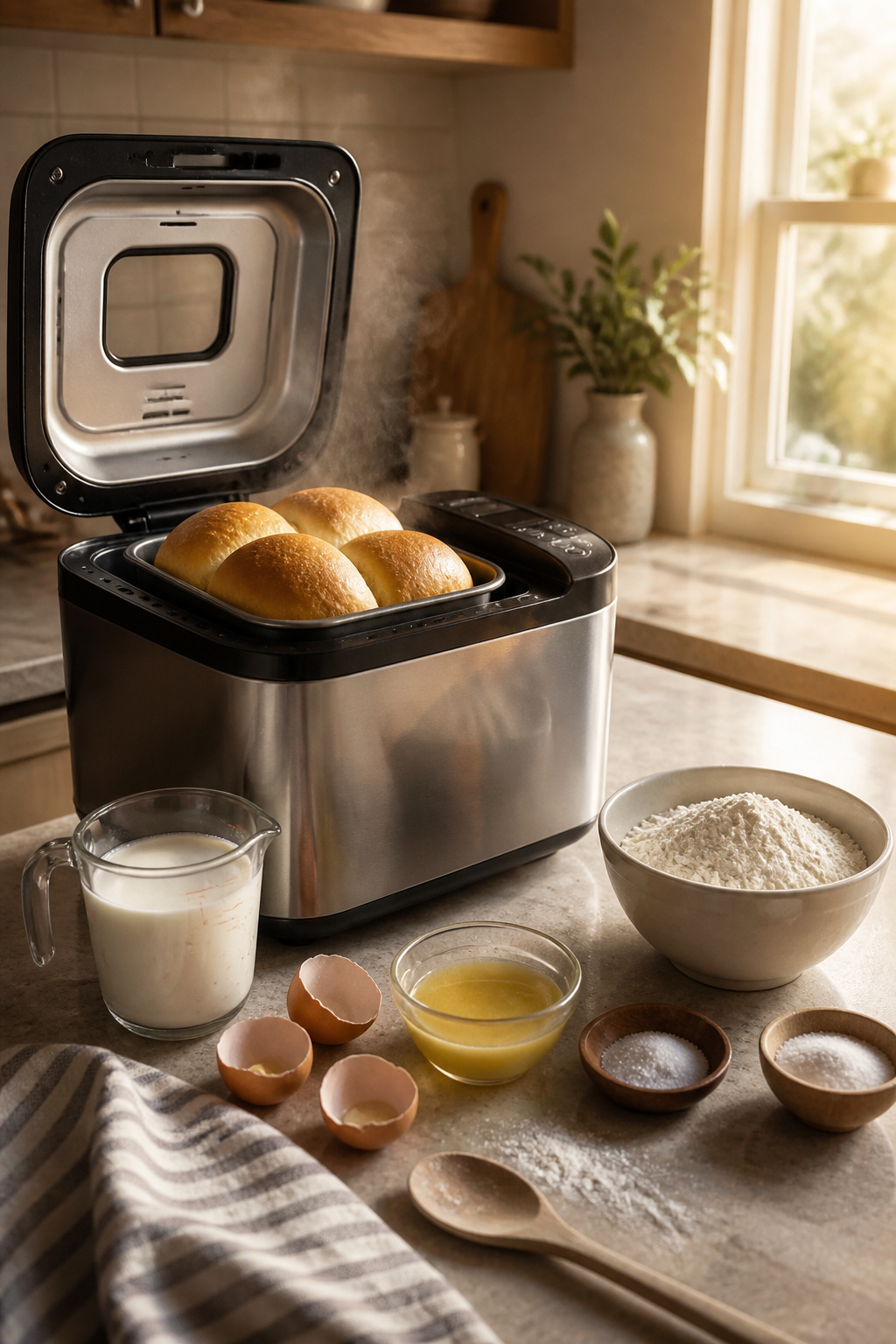
A bread machine takes most of the labor out of these rolls without sacrificing the texture that makes them worth the effort.
Load the pan wet-to-dry: liquids go in first, then the dry ingredients, with yeast last and kept clear of any liquid until the cycle starts.
I add the lukewarm milk, melted butter, beaten egg, and honey, then pile in the flour, sugar, and salt, making a small well in the top of the flour for the yeast.
Run the dough cycle only. The machine handles the mixing, kneading, and first rise, but baking inside produces a crust that’s too thick and a shape that’s nothing like the pillowy rounds from the restaurant.
Once the cycle finishes, turn the dough out onto a floured surface, shape it into rolls, and let them rise a second time on greased baking sheets until they’ve doubled, about 30 to 40 minutes.
Then bake at 350°F for 12 to 15 minutes and brush with the remaining tablespoon of butter while they’re still warm.
This method works on any standard bread machine with a dedicated dough setting. The capacity matters less than the cycle itself, since you’re not baking the finished loaf inside.
Frequently Asked Questions
Can I use a bread machine?
Yes. Run the dough cycle only, loading wet ingredients first, then dry, with yeast last and kept away from liquid until the cycle starts.
Turn the finished dough out, shape into rolls, let them rise a second time, and bake at 350°F for 12 to 15 minutes.
How do I store leftover rolls?
Keep them in an airtight container at room temperature for up to 3 days. Skip the refrigerator; the cold hardens the crumb and firms the butter in the dough, so the rolls turn stiff faster than they would on the counter.
Can I freeze the rolls?
Yes. Cool completely, wrap tightly, and store in a freezer-safe bag or container for up to 3 months.
Seal them well; any gap dries the surface and lets in freezer odors. Reheat frozen rolls wrapped in foil at 300°F for 15 to 20 minutes.
What can I serve with Texas Roadhouse rolls?
They work beside soups, grilled meats, and holiday meals. The cinnamon honey butter is traditional, but the rolls also suit any dinner where soft, warm bread fits the plate.
What is the secret ingredient in Texas Roadhouse rolls?
There is not one secret ingredient. The softness comes from the combination of whole milk, butter, and patience with the rise times.
Letting the dough double fully, twice, builds the airy, squishy crumb that defines the restaurant version.
What makes Texas Roadhouse rolls so good?
Fat and time. Whole milk carries flavor the skim cannot, butter enriches the crumb, and two full rises let the yeast develop both lift and taste.
The warm brush of butter right out of the oven seals the crust and adds the last layer of richness.
What are the ingredients in Copycat Texas Roadhouse rolls?
Active dry yeast, whole milk warmed to 105–110°F, unsalted butter, granulated sugar, all-purpose flour, eggs, and salt. The cinnamon honey butter calls for softened butter, honey, cinnamon, and powdered sugar to taste.