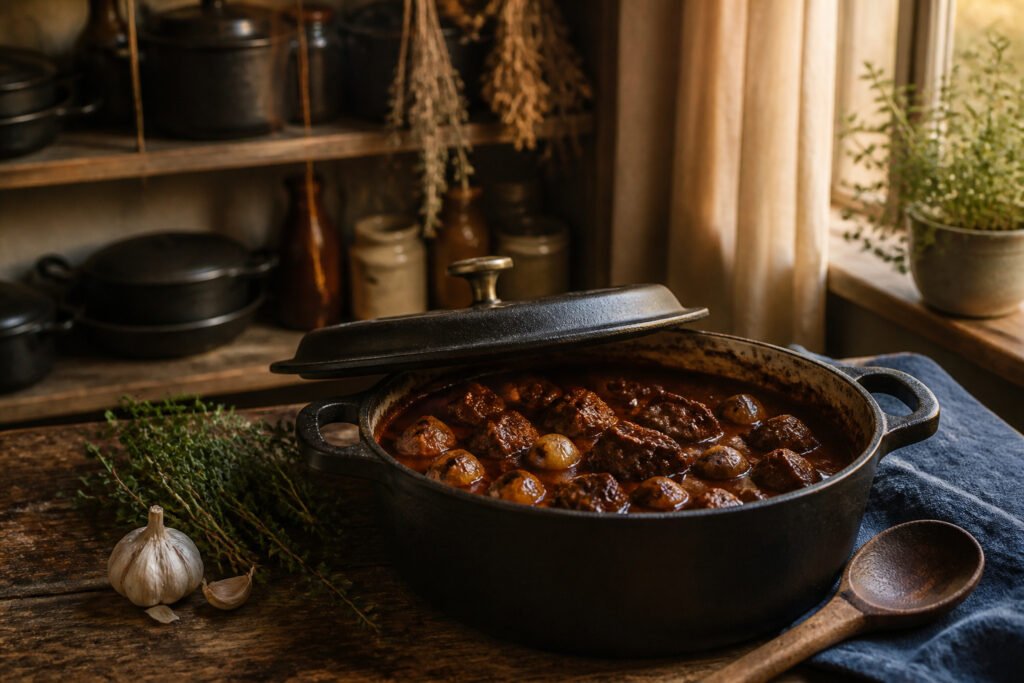
The finished stew tastes of red wine reduced to velvet, beef that collapses at the pressure of a spoon, and the faint smoke of bacon cooked low until the fat turns to flavor.
What separates this version from standard beef stew is the separate sauté of mushrooms and pearl onions, added only after the long braise finishes so they keep their edges.
That 2½ to 3 hour window is the condition that makes this dish worth planning around, and the reason it rewards hosts who start a day ahead.
A whole bottle of dry red goes into the pot, and the cut that handles that long bath best is chuck roast with its fat ribbons melting into tenderness.
What Beef Bourguignon Is and When to Make It
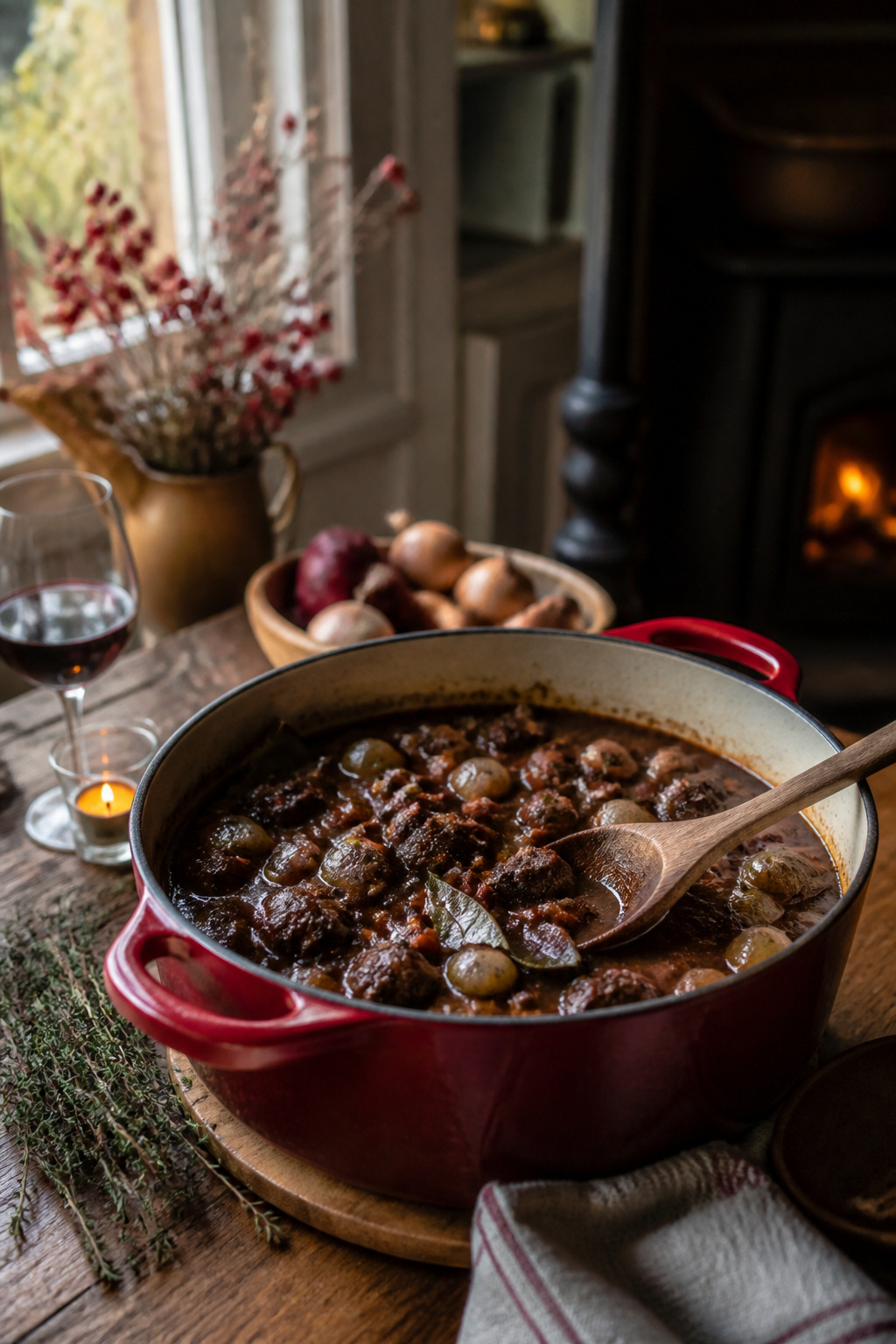
Beef bourguignon is a classic French stew of beef braised in red wine with vegetables and herbs, its name pointing straight to the Burgundy region of eastern France where it began.
Originally a practical peasant meal, the dish was built to tenderize tough, cheap cuts through a very long, slow braise.
Over time it shifted from farmhouse necessity to restaurant staple, distinguished from everyday beef stew by its specific garnishes: smoky bacon, whole pearl onions, and sautéed mushrooms.
The 2½ to 3 hours of braising time is what makes this dish matter for hosts.
That window is not dead time; it is when the meat softens and the sauce reduces to something velvety, which means the work happens while guests are elsewhere.
Weekend dinner parties and cold-weather gatherings suit it best, and like its sister dish coq au vin, it is best made a day or two ahead.
The long cook is a feature, not a bug, for anyone who wants the main course finished before anyone arrives.
Use a good wine here, something simple but drinkable. It makes all the difference in the finished dish.
What this means in practice: the bottle does not need to be expensive, but it should be one you would pour into a glass. A thin, harsh wine cooks down thin and harsh.
Ingredients
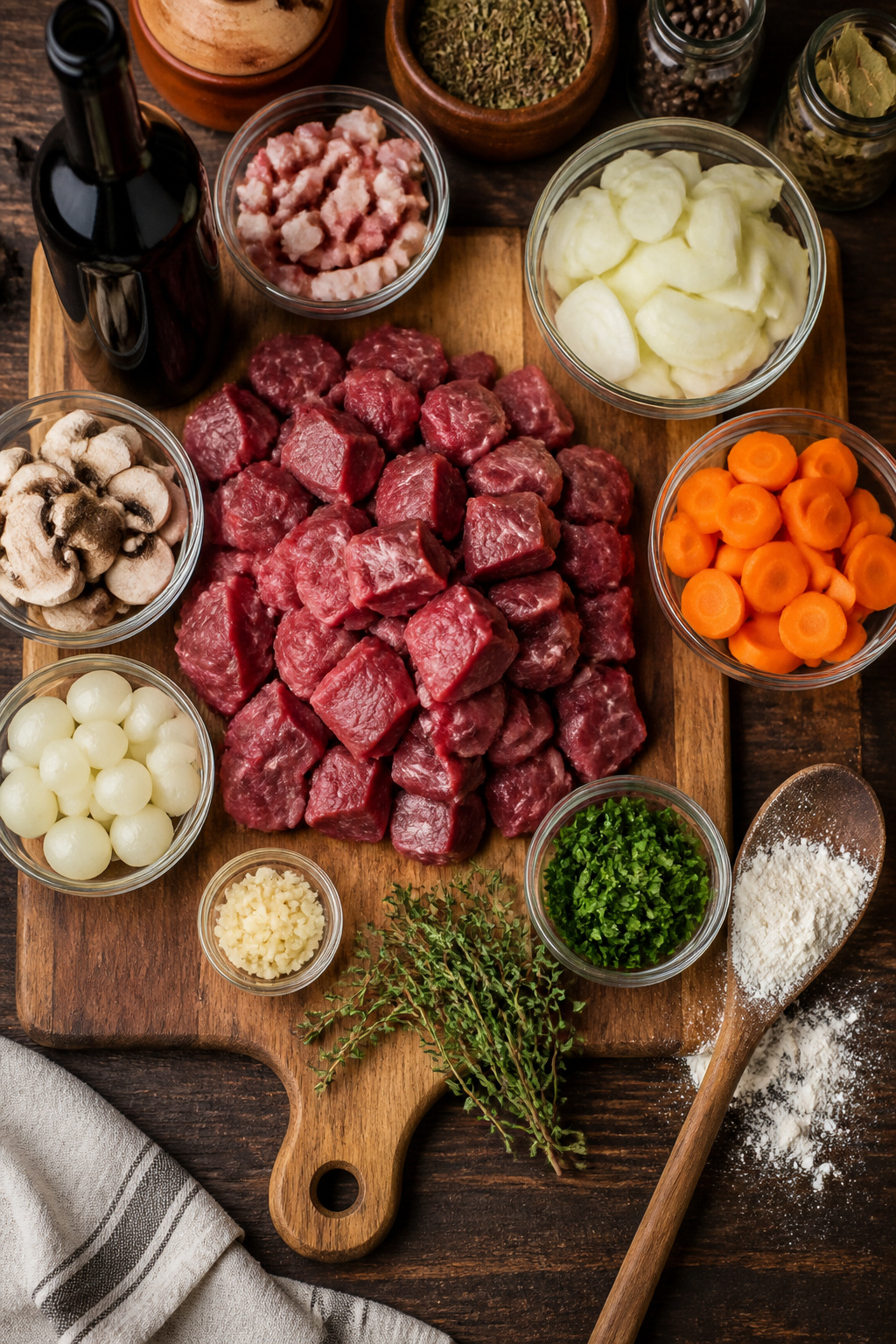
The ingredient list for beef bourguignon looks long, but most of it is standard pantry work. 3 pounds beef chuck, cut into 2-inch cubes and patted dry, is the foundation.
Lardons are traditional, though 5 to 6 ounces of diced bacon works fine and is what I usually find first.
The wine matters more than the cut: one 750 ml bottle of dry red, with Pinot Noir, Merlot, Chianti or actual Burgundy all acceptable. Beef stock fills in where the wine does not.
For the aromatics and thickening:
- 2 tablespoons all-purpose flour
- 1 teaspoon tomato paste
- 1 large bay leaf
- 1 sprig fresh thyme
- 1 large yellow onion, chopped
- 1 large carrot, sliced
- 2 garlic cloves, minced
The finishing vegetables come separately:
- 8 ounces pearl onions, peeled
- 8 ounces mushrooms, halved or quartered if large
- Salt and pepper throughout
A non-alcoholic version is possible but the flavor shifts. Use high-quality beef bone broth in the same volume, add 2 tablespoons red wine vinegar for acidity, and ¼ cup unsweetened cranberry juice for color and fruit notes.
The meat will not tenderize quite the same way, and the sauce lacks the depth wine provides after a long reduction.
Method
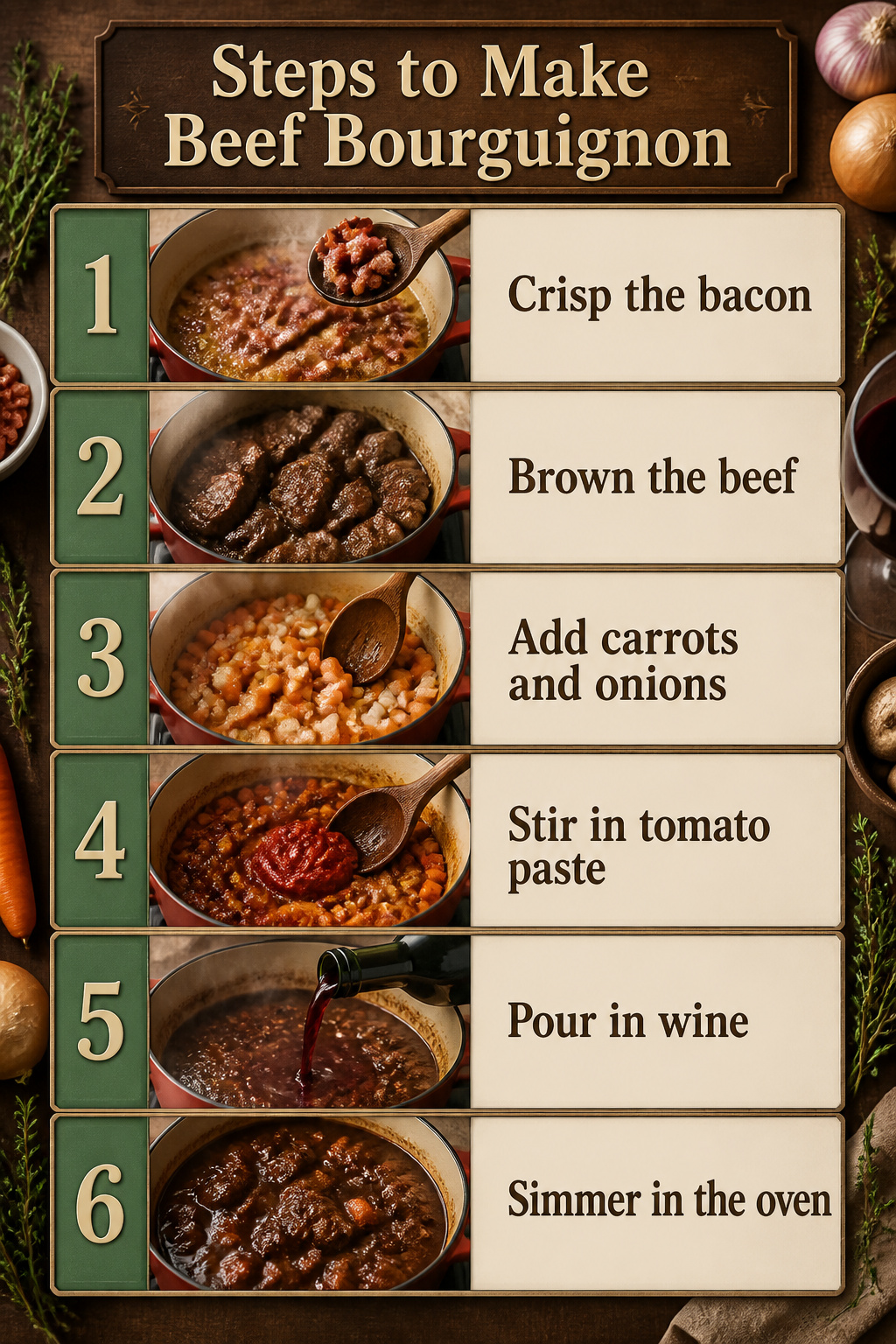
- Heat your Dutch oven over medium heat and crisp the bacon until the fat renders, about 3 minutes. A slotted spoon lifts the pieces out to a waiting plate, and the rendered fat stays put.
- Pat the beef dry with paper towels, season with salt and pepper, then brown in batches in that bacon fat. Crowding the pot steams instead of sears, so patience here pays off later.
- Drop the diced carrots and onions into the same pot. Three to five minutes softens them; add minced garlic for the last minute so it doesn’t turn bitter.
- Stir in tomato paste and cook until it deepens to a darker red, about 3–4 minutes, then sprinkle flour over everything and cook 2–5 minutes more to lose the raw taste.
- Pour in the wine and scrape the fond from the bottom with a wooden spoon. Those stuck bits are where the flavor lives.
- Return the beef and bacon to the pot. Add stock to barely cover, then tuck in bay leaves and thyme. Bring to a gentle simmer on the stovetop before the oven takes over.
- Cover and transfer to a 325°F–350°F oven for 2 to 3 hours. The meat is done when it falls apart under light pressure.
- While the pot works, brown mushrooms and pearl onions separately in butter and oil over medium-high heat, about 10 minutes, so they develop their own color instead of boiling in stew liquid.
- Fold the mushroom-onion mixture into the finished stew, adjust seasoning, and serve.
Slow cooker: Complete steps 1–6 on the stovetop, then transfer to a slow cooker and cook 8 hours on low. Finish with step 8.
Pressure cooker: Follow steps 1–6, then cook 35–40 minutes at high pressure with a natural release. Steps 8–9 stay the same.
Yield, Storage and Make-Ahead
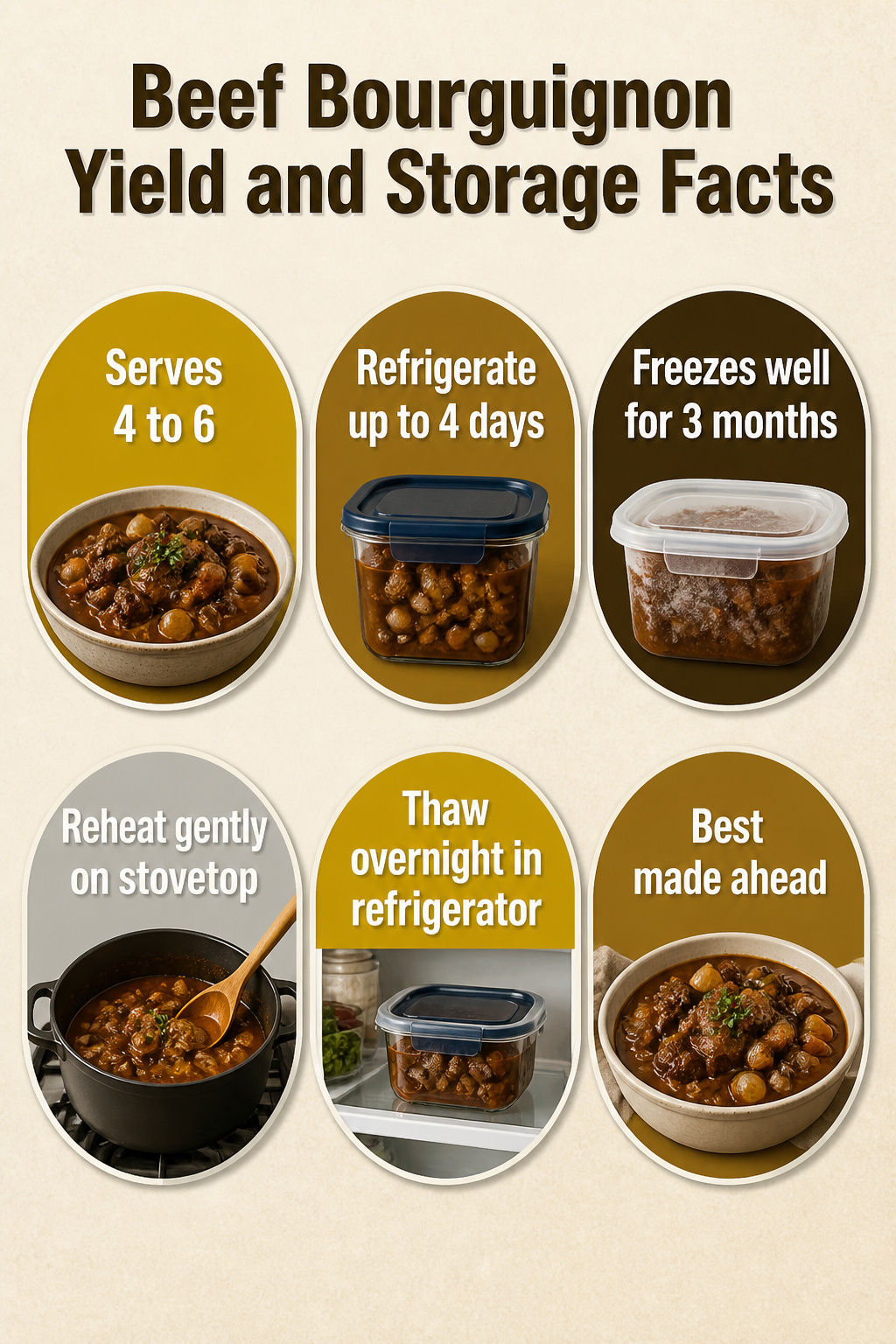
A finished pot of beef bourguignon feeds 4 to 6 people, though in practice the number drops if your crowd is heavy on the protein or you are counting on leftovers.
The stew keeps in the refrigerator for up to 4 days, and the flavor genuinely improves after a night of rest.
I have reheated it straight from cold more than once, and the gentlest path is a covered pot over low to medium-low heat, stirring now and then, with a small splash of beef broth or water if the sauce has tightened up too much.
A hard boil is the mistake that turns tender beef to shreds, so patience here pays off.
For longer storage, beef bourguignon freezes well for up to 3 months. Let it cool completely first, then leave a little headroom in the container for expansion.
Thaw it overnight in the refrigerator and reheat on the stovetop the same way. The dish is ideal for making ahead, and I would argue it is better that way.
Wine and Beef Choices
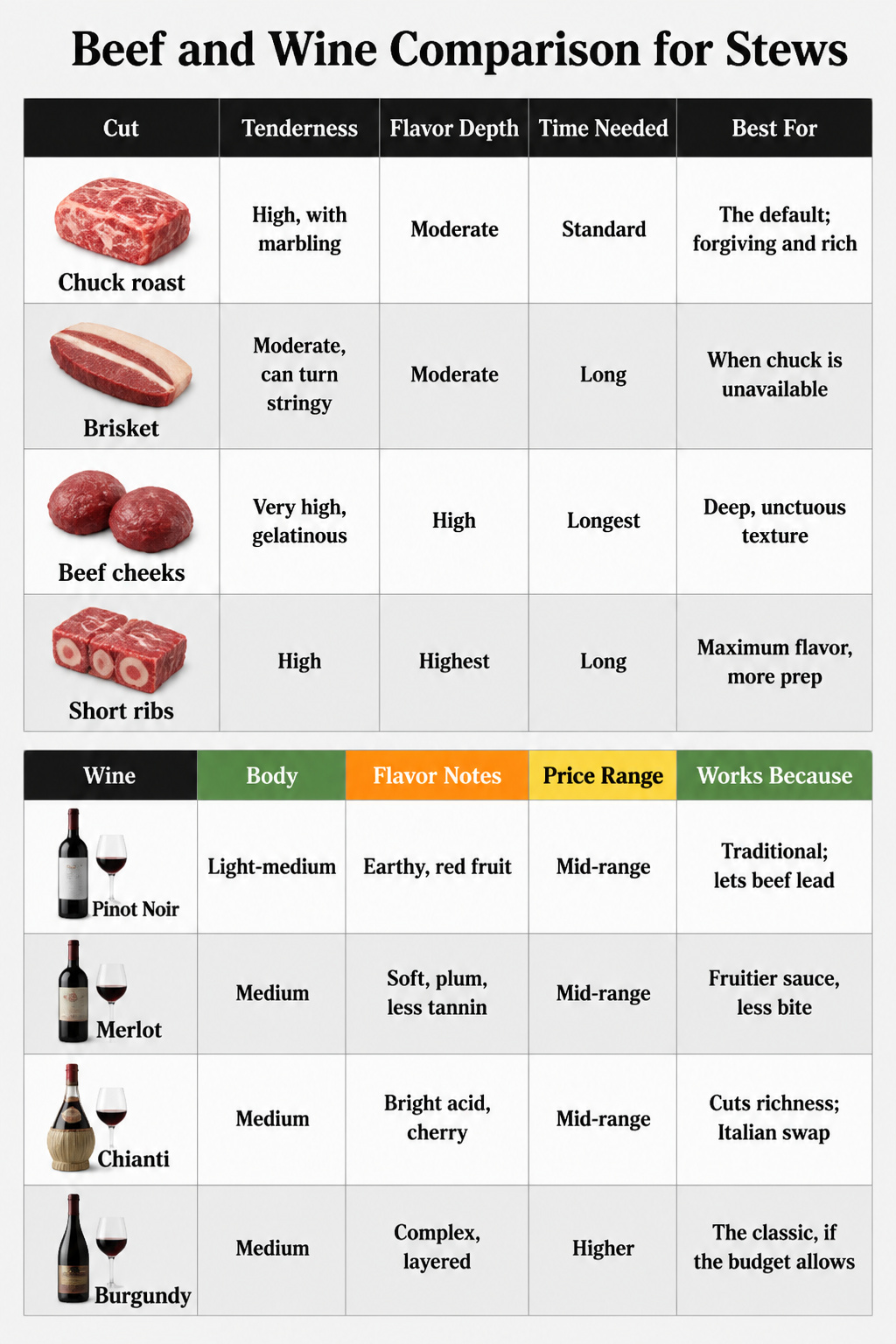
Chuck roast wins this matchup for the same reason it wins for pot roast: fat ribbons through the meat and melts into tenderness over a long braise. Brisket works but stays a little stringy even after hours.
Beef cheeks turn almost gelatinous, which some cooks love, though they need the longest time. Short ribs carry the deepest flavor of the four, yet the bones and thick fat seams make them a project.
If the butcher counter only has lean stew meat, the finished pot will taste fine but the texture never quite softens the same way.
The wine matters just as much. A whole bottle goes in, so its flavor becomes the sauce’s backbone.
Pinot Noir is the traditional call, light enough that the beef still reads as beef.
Merlot runs a little softer and fruitier, Chianti brings more acid to cut the richness, and an actual Burgundy splits the difference at a higher price. Dry is the non-negotiable part.
Sweet wine cooks down cloying, and the cheapest bottle on the shelf usually carries harsh, thin notes that concentrate instead of mellowing.
The rule I keep: if I would not pour a glass for a guest, I do not pour it into the pot.
| Cut | Tenderness | Flavor Depth | Time Needed | Best For |
|---|---|---|---|---|
| Chuck roast | High, with marbling | Moderate | Standard | The default; forgiving and rich |
| Brisket | Moderate, can turn stringy | Moderate | Long | When chuck is unavailable |
| Beef cheeks | Very high, gelatinous | High | Longest | Deep, unctuous texture |
| Short ribs | High | Highest | Long | Maximum flavor, more prep |
| Wine | Body | Flavor Notes | Price Range | Works Because |
|---|---|---|---|---|
| Pinot Noir | Light-medium | Earthy, red fruit | Mid-range | Traditional; lets beef lead |
| Merlot | Medium | Soft, plum, less tannin | Mid-range | Fruitier sauce, less bite |
| Chianti | Medium | Bright acid, cherry | Mid-range | Cuts richness; Italian swap |
| Burgundy | Medium | Complex, layered | Higher | The classic, if the budget allows |
Sides and Serving
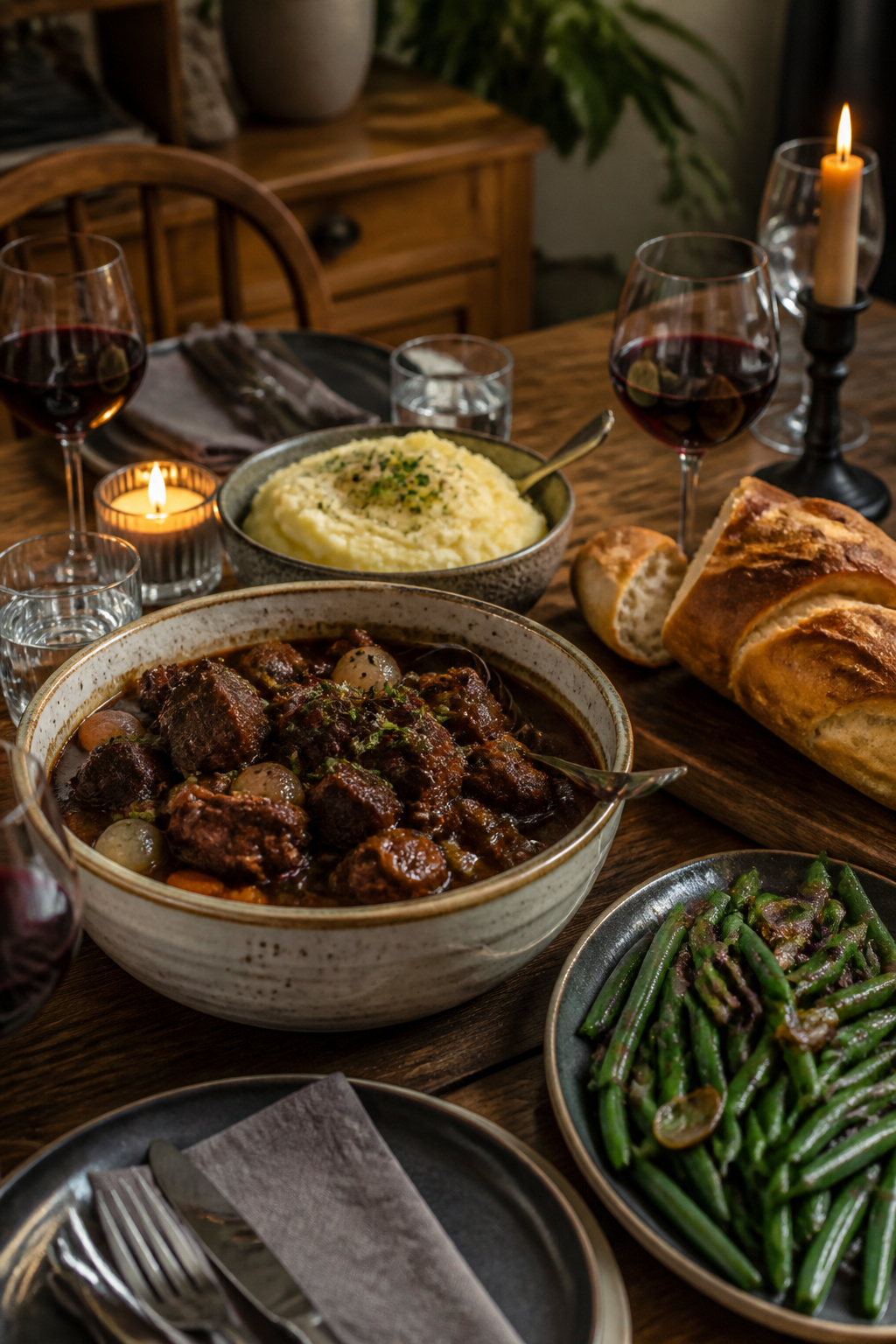
Mashed potatoes give beef bourguignon the starch it needs, and the butter in them softens the wine’s acidity without fighting it. I keep the potatoes plain, no garlic or cheese, because the stew already carries enough layers.
Crusty bread does almost the same job with less work; a store-bought baguette warmed for five minutes at 350°F costs about $1.50 per guest and saves the last of the sauce from being left in the bowl.
Green vegetables are the balance I actually notice on the plate. Roasted green beans or buttered peas cut through the richness in a way that feels necessary by the third bite, not decorative.
Frozen peas dropped into boiling water for two minutes work fine; no one asks if they were shelled that morning.
For a full plate, figure roughly $4 per guest if you buy the bread and use basic russets. The cost drops closer to $2.50 if you make the bread yourself, though that shifts the timeline by three hours.
Either way, the sides should stay quiet enough that the beef bourguignon stays the reason people sat down.
Frequently Asked Questions
What cut of beef is best for beef bourguignon?
Chuck roast is the best choice. Its fat marbling melts into tenderness during the two to three hour braise, giving you rich, fall-apart meat.
Pre-cut stew cubes work in a pinch but never soften quite the same way.
Can I use a different type of wine for beef bourguignon?
Any dry red works, though Pinot Noir is the traditional pick. Merlot runs softer and fruitier, Chianti brings more acid to cut the richness, and an actual Burgundy splits the difference at a higher price.
Skip sweet wines; they cook down cloying.
How do I store leftover beef bourguignon?
Refrigerate up to 4 days or freeze up to 3 months. The flavor actually improves after a night of rest.
Reheat gently in a covered pot over low to medium-low heat with a splash of broth or water if the sauce has tightened; a hard boil will shred the meat.
What can I serve with beef bourguignon?
Mashed potatoes or crusty bread are the classic choices for soaking up the sauce. Green vegetables like roasted green beans or buttered peas cut through the richness and keep the plate balanced.
Keep the sides simple so the stew stays the focus.
Is there a difference between beef stew and beef bourguignon?
Yes. Beef bourguignon uses a full bottle of red wine for its braising liquid, while beef stew calls for little to none.
Bourguignon also carries specific garnishes: bacon, pearl onions, and mushrooms that are browned separately and folded in at the end.
What’s the secret to great boeuf bourguignon?
Make it a day or two ahead. The rest deepens the flavor and lets the sauce meld.
Also use a wine you would actually drink; cheap, harsh wine concentrates into cheap, harsh sauce as it reduces.
What do French people eat with beef bourguignon?
Boiled potatoes are traditional in France, though mashed potatoes and pasta also appear. A warm baguette is the simplest and most common choice for mopping up the sauce at home.