
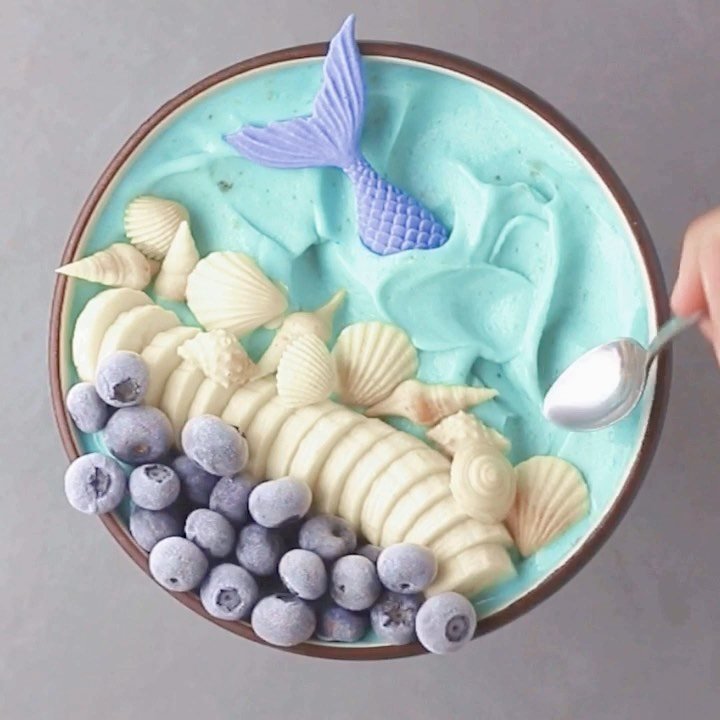
These smoothie bowl recipes run from a banana base to a splurge on frozen pitaya and blue spirulina powder, with the deciding factor being how much presentation matters versus how fast you need to eat.
Most take 4 to 10 minutes, though the split two-tone and coconut shell versions double that for washing and prep.
1. Strawberry Banana Smoothie Bowl

Frozen strawberries and one ripe banana whirled thick enough to eat with a spoon.
This is the bowl I make when I want something that looks pretty without trying: the pink base needs no filter, and toppings of sliced banana, a drizzle of honey, and a little citrus zest take 2 minutes.
It keeps me full through a morning of errands or desk work. Frozen strawberries keep this cheap any time of year, and the only thing that needs chopping is the banana on top.
Add granola if you want crunch, or skip it and keep the texture soft.
2. Chocolate Peanut Butter Smoothie Bowl

Cocoa powder and peanut butter turn a smoothie into something that reads dessert but still works for breakfast.
The base gets its thickness from frozen banana, and the peanut butter does double duty: blended in for body, drizzled on top for looks.
I top mine with sliced banana, a handful of granola, and cacao nibs for bite. The nibs add bitterness that keeps the sweetness from going flat.
A spoonful of cooked quinoa stirred into the blend is an option I skip when I am in a hurry, but it does add staying power.
This one suits a morning when you want to feel like you are getting away with something.
3. Berry Smoothie Bowl

Mixed berries give this bowl a deeper purple than any single fruit manages on its own. I use what I have, usually a blend of blueberries, raspberries, and strawberries, with half a banana for creaminess.
This Berry Smoothie Bowl takes 4 minutes to blend and another 3 to arrange, which I do only when someone else is watching.
The antioxidant talk is not why I make it. I make it because the color is honest, from actual fruit, and because the tartness wakes me up more than coffee does.
4. Blueberry Beet Smoothie Bowl

Raw beet and frozen blueberries together make a purple so deep it looks like you planned it.
Raw beet gives the bowl an earthy sweetness that keeps the berry from tasting like candy, and a small piece of fresh ginger keeps it from sitting too heavy.
I blend the beet raw, peeled and diced small, with frozen blueberries and enough liquid to keep the processor moving.
This is the bowl I bring out when I want to post something that gets asked about. Most of the time goes into peeling and dicing the beet, and the ginger is optional but I would not skip it.
5. Smoothie Bowl with Tahini

Tahini in a smoothie bowl sounds wrong until you taste it. The sesame paste adds a warm, bitter note that pairs better with coffee than I expected, and the fat helps the blend stay thick longer than fruit alone.
I use a tablespoon of tahini with frozen banana, a shot of cold brew, and a splash of milk. The top gets more tahini drizzled in a thin line, plus sliced banana, granola, and a few chocolate chips.
Coconut flakes and buckwheat groats are another direction, crunchier and less sweet.
This one is for when you have had enough fruit-forward bowls and want something that reads more like a meal.
6. Dragon Fruit Smoothie Bowl
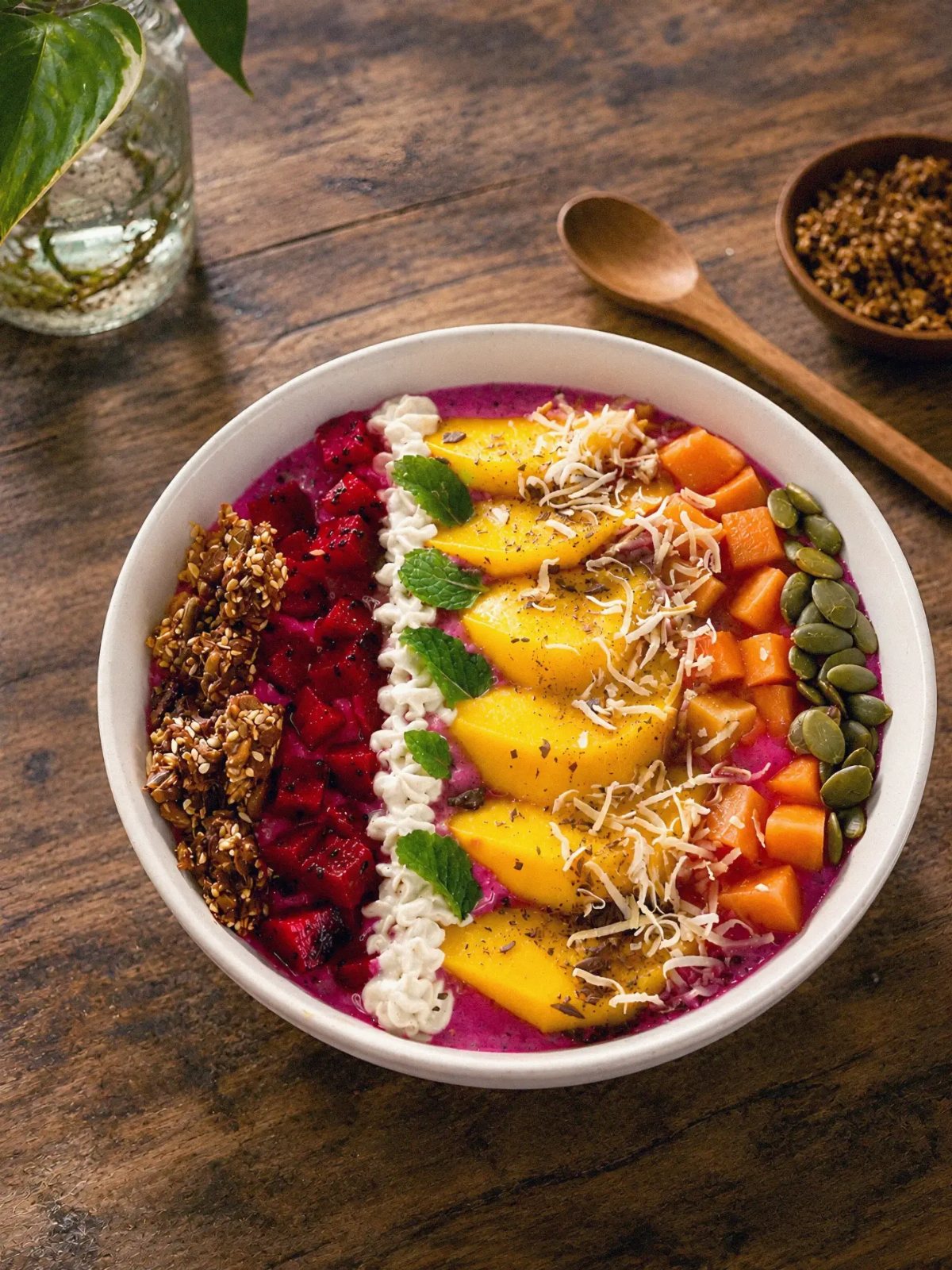
Pitaya, or dragon fruit, is the only ingredient I buy specifically for how it photographs. The frozen puree turns a blend shockingly pink, almost neon, and the taste behind the color is mild and clean.
I build the base with frozen pitaya, banana, and almond milk, then top with whatever looks tropical: mango slices, more dragon fruit diced small, pumpkin seeds, shredded coconut, and a handful of granola.
The seeds and coconut add texture without competing.
It is ready in 5 minutes and costs more than my usual bowls because the pitaya is not always easy to find.
I keep a bag of frozen puree for mornings when the routine needs interrupting, or for when I have company and want the table to look like I tried.
7. Peanut Butter Acai Bowl

Peanut butter and acai together taste like a deconstructed PB&J, only cold and thick enough to stand a spoon in.
The acai comes frozen in packs or as a puree, and I keep it in the freezer for mornings when the fruit bowl is empty.
The acai goes into the processor with a spoonful of peanut butter and the bare minimum of liquid to keep things moving.
The berry compote on top is optional; I skip it when I want less sugar and still get the sandwich flavor from the peanut butter alone. Granola is not optional.
This one takes 10 minutes and costs more than banana-based bowls because acai is not a local fruit. I make it when I want antioxidants without the virtuous taste.
8. Green Smoothie Bowl

Spinach in a smoothie disappears completely if you pair it with enough sweet fruit, which is the only reason I eat this much of it before noon.
The base is frozen mango or pineapple, a handful of greens, and coconut water instead of milk to keep the color bright.
I top mine with kiwi, banana, and coconut flakes because the green base deserves toppings that look like they belong in the same bowl. Honeyed almonds are another direction if you want more crunch than fruit gives.
The texture stays light, not creamy, and the flavor reads crisp rather than heavy. I make this after a morning workout or when I want to feel like I am doing something restorative without the effort of actual restoration.
9. Blue Spirulina Smoothie Bowl

Blue spirulina powder turns a smoothie an almost artificial blue, the color of pool water or a summer popsicle, and the taste behind it is mild enough to let the fruit speak.
I use frozen banana as the base, a teaspoon of the powder, and enough liquid to blend thick.
The toppings are where the work goes: sliced strawberries, dragon fruit, blueberries, pomegranate seeds, coconut flakes, and bee pollen if I have it. Each one adds a different texture and keeps the bowl from reading as monochrome.
The powder is not cheap and not always in stock at my regular grocery, so this is the bowl I make when I want to interrupt a gray week with something that looks like vacation.
10. Spiced Pumpkin Smoothie Bowl

Canned pumpkin and a pinch of pie spice turn a smoothie bowl into something that belongs on a Thanksgiving table, only cold and eaten with a spoon.
I use half a cup of pumpkin puree, frozen banana, and oat milk, plus cinnamon and a little ginger.
The orange color is honest from the pumpkin, not from powder, and the toppings of banana, granola, and pumpkin seeds pick up the fall theme without overdoing it.
Maple syrup on top is up to you; canned pumpkin is not sweet on its own and the maple helps it read as dessert.
I make this from October through January, when the can in my pantry feels like a seasonal staple rather than a leftover. It comes together fast and costs about the same as my usual banana base.
11. Split Two-Tone Smoothie Bowl
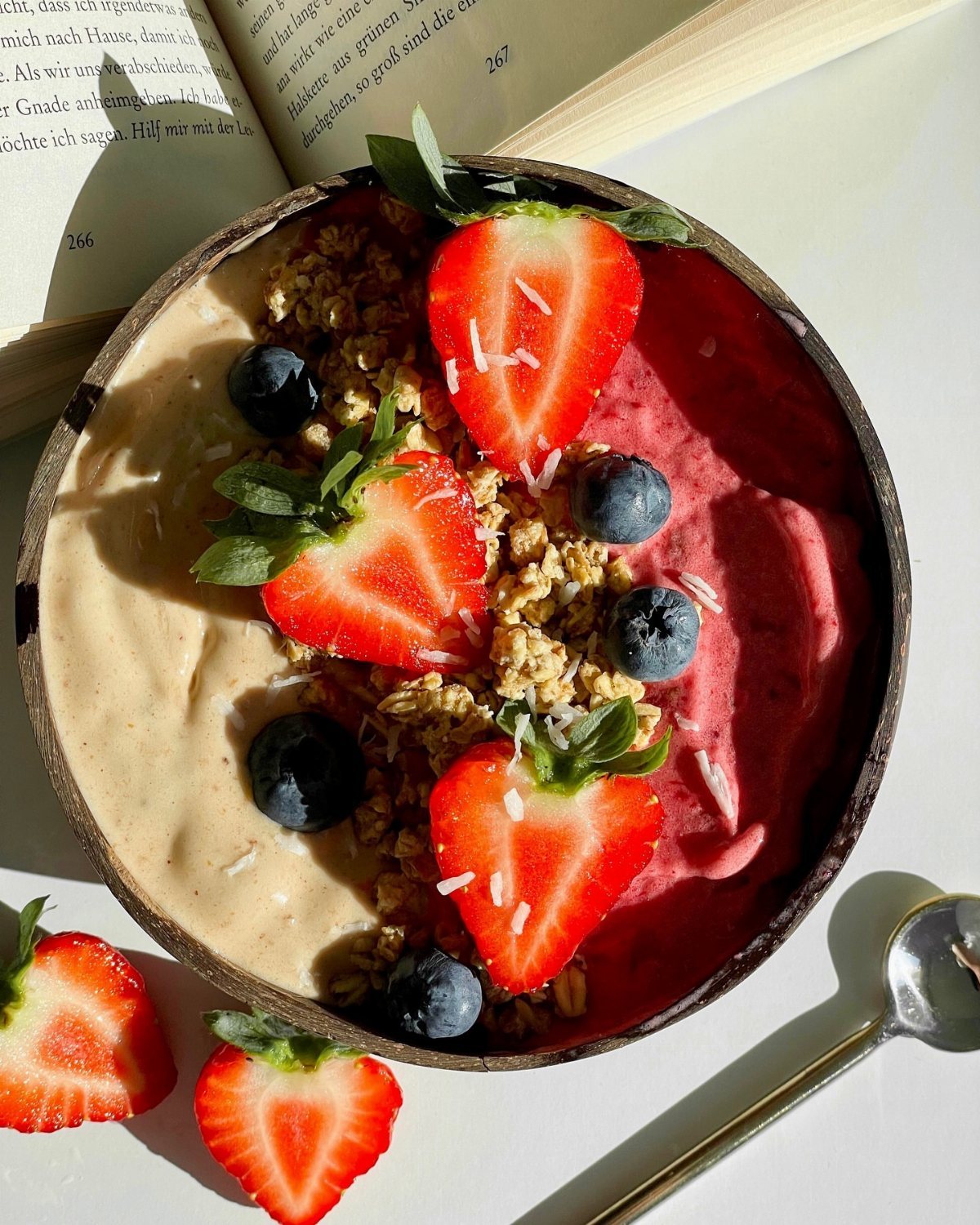
Two colors side by side in one bowl look harder than they are. I make two separate blends, half the usual amount each, one with mixed berries for the magenta and one with mango or peach for the tan.
A stiff base is key; runny smoothie bleeds across the line.
I pour them against each other in a wide bowl, using the back of a spoon to keep the seam neat, then add granola and berries across both so the colors read as one bowl rather than two smoothies forced together.
This takes twice the washing and twice the blending, so I save it for mornings when I am not rushing and someone else is at the table.
The split itself is the only flourish; the ingredients are whatever frozen fruit I have.
12. Coconut Shell Kiwi Smoothie Bowl

A coconut shell as the bowl does half the decorating for you, and the kiwi slices on top pick up the tropical note without needing to be explained.
I use a young coconut, the meat scooped out and either blended into the base or saved for another use.
The smoothie itself is vanilla-forward, from either extract or the seeds of a real bean if I am feeling precise.
Coconut flakes and chia seeds on top add crunch against the soft fruit, and the granola bridges the gap between breakfast and dessert.
Finding the coconut is the hardest part; my regular grocery does not always stock them, and the shell needs cleaning after use if I want to keep it.
I make this for brunch guests or for mornings when I want to feel like I am eating somewhere warmer than Los Angeles in February.
13. Nutty Banana Coconut Shell Bowl

A coconut shell bowl filled with banana-forward smoothie and piled with walnuts, raspberries, and a drizzle of peanut butter reads as breakfast that took effort without actually taking much.
The shell itself does the presentation work; finding a young coconut is the hardest step, and the meat inside can blend into the base or save for later.
I use frozen banana, coconut milk, and a little vanilla for thickness, then top with whatever nuts I have. Walnuts are my usual; pecans swap in fine.
The peanut butter drizzle is optional but I rarely skip it.
This is the bowl I make when I want the tropical look without the tropical fruit I do not always have on hand.
How to Make a Smoothie Bowl
The base needs to be thick enough to hold a spoon upright, which means less liquid than a drinkable smoothie and frozen fruit doing most of the work.
A couple of tricks keep the texture right. Greek yogurt adds protein and body, and it is worth the extra step if this is your breakfast.
Chia seeds or hemp hearts stirred in after blending can rescue a base that turned out looser than planned.
Toppings go on after the base is in the bowl. Arrangement is optional; I mostly just make sure the crunchy stuff does not sink.
The acai bowl that started this trend in Brazil in the 1980s used the same principle: frozen puree thick enough to carry what sits on top.
Nutritional Benefits
Greek yogurt in the base contributes about 12 grams of protein per serving, which matters if the bowl is replacing a meal. Without it or another protein source, the bowl burns off fast.
Frozen fruit keeps most of its vitamins through processing, and the fiber survives blending intact. What the toppings add depends on what you choose.
Granola brings carbohydrates and some fat; nuts and seeds add more fat and a little protein; coconut flakes are mostly fat with minimal protein.
"Superfood" powders like spirulina or collagen peptides are optional. They do not change the eating experience much, and the cost adds up.
I buy them when I want the color or when I am already at a store that stocks them, not because the bowl is incomplete without.
"Nutrient-dense" is the usual selling point, and it holds up against juice since the fiber stays in the bowl. Compared to eggs and toast, it depends on what you load in.
The health value is in the fruit and whatever protein you build in, not in the concept itself.
Customizing Smoothie Bowls
Frozen fruit determines the flavor, and almost any combination works if the color does not put you off. Mixed berries, straight strawberry, mango, pineapple, or peach are the obvious starting points.
Dairy-free bases swap coconut milk or oat milk for yogurt. Nut butters add fat and richness that replaces some of what dairy would have given.
For a lighter bowl, coconut water keeps the calories down and the color brighter than milk alternatives tend to.
Toppings are where the real variation happens. Granola adds crunch, seeds cut the sweetness, and fresh fruit works on top while frozen fruit builds the base.
Nut butter drizzles look nice and taste better than they need to.
The only rule is matching the base stiffness to the topping weight. Heavy granola on a thin base sinks and looks like gravel in soup.
When in doubt, less liquid in the blend is the safer error.
Thick, fruity, and loaded with superfood-centric toppings, smoothie bowls have found a cult following in the food world thanks to beautiful aesthetics and the health-focused community.
— VegNews
Frequently Asked Questions
What can I add to my smoothie bowl?
Fresh fruit, nuts, seeds, granola, and nut butter drizzles are the standard moves for texture and flavor. I reach for sliced banana, berries, coconut flakes, and whatever granola is in the pantry.
How many calories are in a smoothie bowl?
It depends entirely on what you load in. A banana base with yogurt runs lighter than one built on acai with peanut butter, granola, and a full drizzle of honey.
Can you give me an easy recipe for an acai smoothie bowl?
Blend frozen acai with a spoonful of peanut butter and the minimum liquid needed to keep the processor moving. Granola goes on top; berry compote is optional if you want the extra sugar.
You want the base thick enough that a spoon stands upright.