
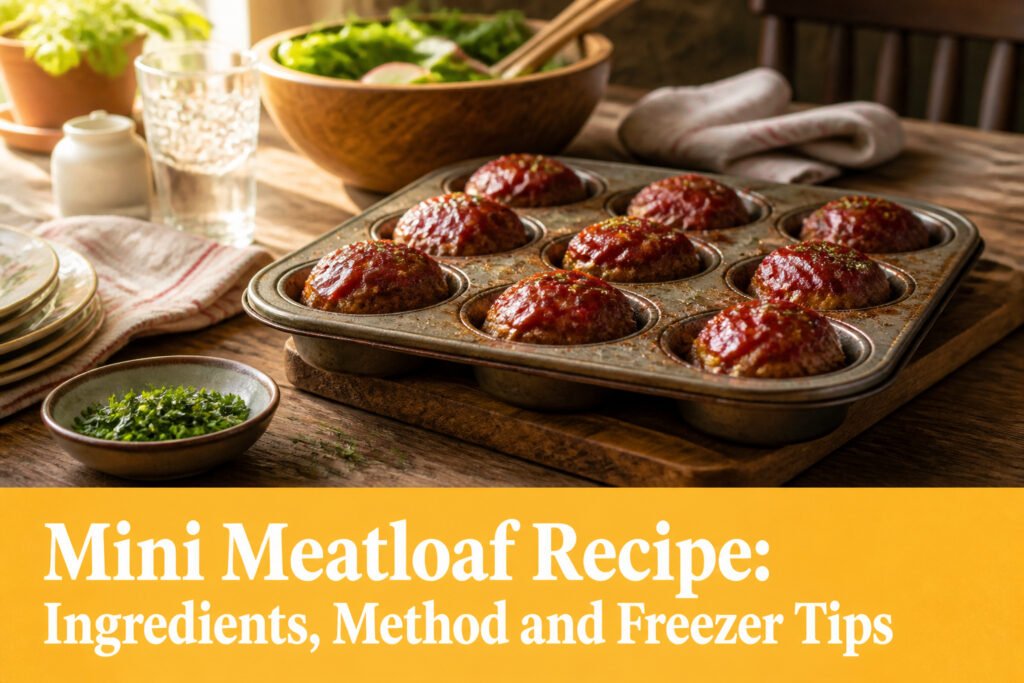
Mini meatloaves bake in a muffin tin with crisp edges all around and a sweet ketchup-brown sugar glaze, done in about half the time of a full loaf.
Watch the fat ratio: anything leaner than 85/15 ground beef dries out before the centers hit 160°F, which is the temperature that actually ends the bake, not the clock.
Mini Meatloaf

A mini meatloaf recipe turns the classic loaf into individual portions baked in a muffin tin, which cuts the oven time to about half that of a full-sized version.
The smaller shape means the edges crisp all around, so everyone gets that end-piece texture without fighting over the center slice.
I make these most often on weeknights when I need something on the table fast, or when I want a meal-prepped protein I can reheat after work without much thought.
They freeze well enough that a double batch pays off: one dinner now, another tucked away for a night when cooking sounds impossible.
Kids tend to gravitate toward the "mini" format, and the portioning makes it easy to pack one as a savory breakfast or a high-protein snack if dinner plans shift.
Ingredients

Lean ground beef with enough fat to stay moist carries the whole thing. I use 80/20 or 85/15 for twelve mini loaves, since anything leaner than that turns out dry and dense by the time the centers hit temperature.
- 2 pounds ground beef (80/20 or 85/15)
- 1 cup breadcrumbs or rolled oats, plain or seasoned both work
- 2 large eggs
- 1 small white onion, finely minced
- 2 teaspoons minced garlic or 1 teaspoon garlic powder
- 1 teaspoon Italian seasoning
- ½ teaspoon salt or seasoning salt
- ¼ teaspoon black pepper
- 1 tablespoon Worcestershire sauce
- ½ cup ketchup (divided; part goes in the mix, part in the glaze)
For the glaze, stirred together while the loaves rest:
- ¼ cup ketchup
- ¼ cup brown sugar
- 1 teaspoon Worcestershire sauce
The brown sugar melts into the ketchup fast, so the glaze thickens on its own without cooking down first.
Method
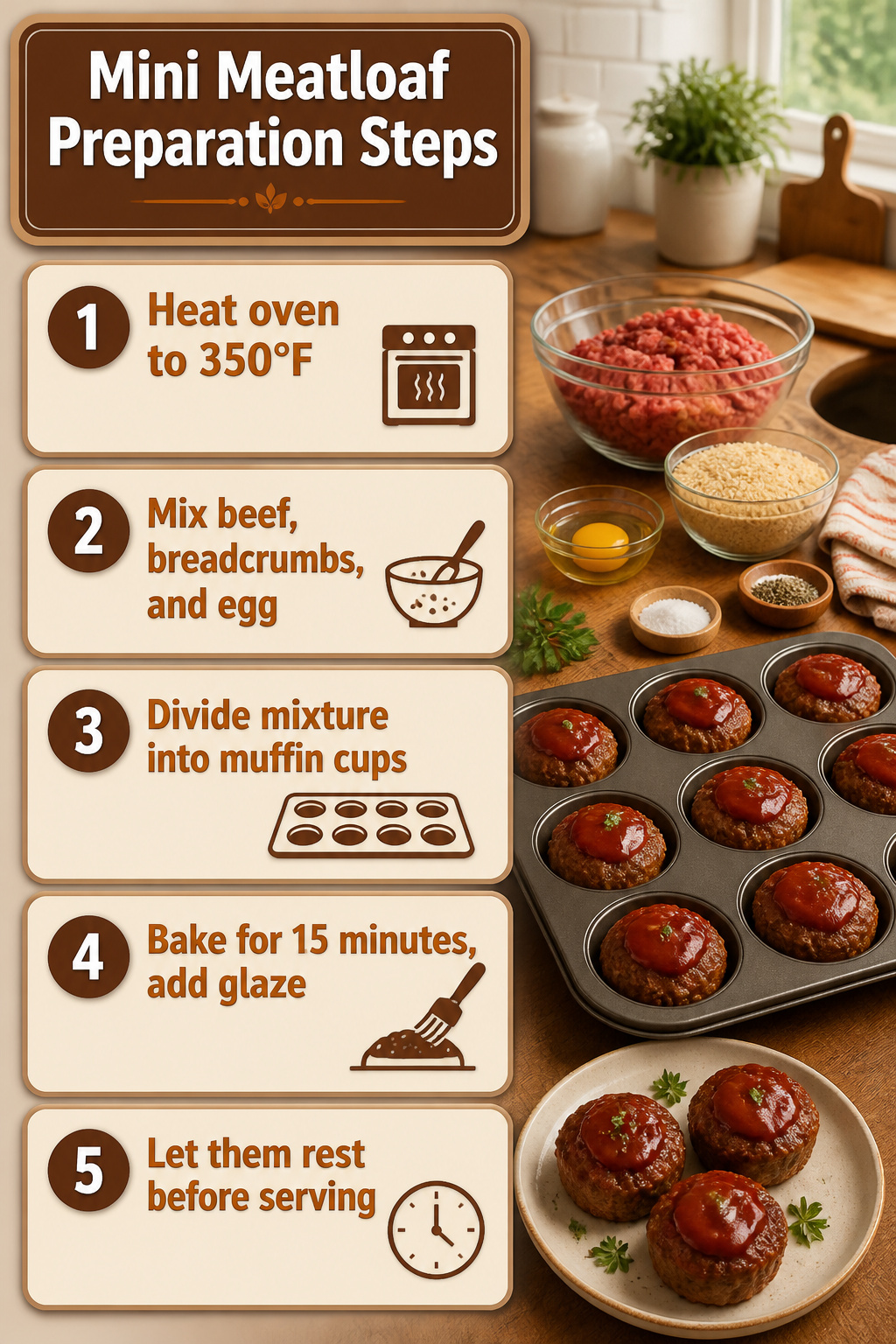
- Heat the oven to 350°F and grease a standard 12-cup muffin tin well; the meat shrinks as it cooks and you do not want it to stick.
- Mix the ground beef, breadcrumbs, egg, and whatever seasonings you are using until just combined. Clean hands work, a large spoon works, and a meat chopper works if you have one. I use my hands, but the chopper does keep the mixture cooler and less packed.
- Divide the mixture into 12 portions and press each one firmly into a muffin cup, filling it to the top. The meat will settle as it bakes.
- Bake for 15 minutes at 350°F, then pull the tin out. Spoon your glaze over each mini meatloaf and return to the oven for 10 to 15 minutes more, until the internal temperature hits 160°F on a meat thermometer.
- Let them rest for several minutes before serving. The juices redistribute, and the glaze sets enough that you are not burning your tongue.
Freezing and Storage

Both cooked and uncooked mini meatloaves freeze well, which matters more than you’d think when you’re staring down leftover ground beef and a packed week ahead.
I wrap each one in plastic first, then foil; the double layer keeps freezer burn out and the glaze from sticking to anything. They’ll hold for up to 3 months before the texture starts to suffer.
For reheating, the oven at 350°F for 20–25 minutes is my preference. The crust stays intact and the center heats evenly.
A microwave works in a pinch: 1–2 minutes per portion, though the glaze can turn tacky and you’ll want to check that the internal temperature hits 165°F. Thawing is split: some say fridge overnight, some say straight from frozen doubles the time.
One path is overnight in the refrigerator, which is safer and keeps the texture closer to fresh. The other is straight from frozen into the oven, which adds a few minutes but skips the planning.
I lean toward thawing when I can remember to set them out, and straight-to-oven when I can’t.
Cooking Times and Temperatures

Most ovens settle somewhere between 350°F and 375°F for mini meatloaf, and the difference is less dramatic than it sounds. At 350°F, a standard muffin-tin portion needs roughly 25 to 30 minutes; bump to 375°F and the window tightens to 20 to 25.
The higher-heat sources, around 400°F, tend to pair it with a two-stage bake: start at a moderate heat, glaze halfway through, then finish hot to set the sauce.
The figure that actually ends the bake is 160°F internal temperature, measured at the center of a middle muffin.
Clock time is a decent guess, but ovens vary, pan material matters, and a packed cup cooks slower than a loosely filled one.
I pull the tray at 155°F and let carryover do the last five degrees while the pan rests on a wire rack. That rest also keeps the glaze from sliding off when you try to unmold them.
Serving Suggestions

The glaze drippings that pool under each muffin-tin meatloaf are enough to sauce the plate without extra work.
I usually set two or three mini loaves on a bed of mashed potatoes so the drippings run downhill and the potato catches them like a built-in gravy boat.
- Roasted vegetables go on the same sheet pan while the meatloaves rest; the oven is already hot and the timing lines up without a second timer.
- A green salad with something acidic, pickles or a sharp vinaigrette, cuts the sweetness of the glaze before it cloys.
- Buttered egg noodles are the fastest option on a weeknight; the glaze coats them better than a separate sauce would, and cleanup stays one pan.
Meat and Binder Substitutions

Ground turkey works in these mini meatloaves, though the flavor stays lighter than beef and the lower fat content can change the texture.
I split the difference with half pork and half beef when I want something richer, or swap in a third of the total weight with turkey or pork if I am keeping some beef in the mix.
All-pork is another route, especially mixed half-and-half with beef for a more traditional depth.
For binders, breadcrumbs do the standard job, but oats absorb more moisture and the mix will feel noticeably wetter going in. Quick-cooking oats soften properly during baking; rolled oats work too, just with a slightly more noticeable chew.
Skip steel-cut, which stay too firm. The base recipe keeps dairy out entirely, so eggs and your chosen binder handle the moisture and structure without milk.
Yield

One pound of ground meat divides neatly into 12 mini meatloaves baked in a standard muffin tin. That count is deliberate: it matches the pan, so nothing gets shaped by hand and nothing sticks to a sheet tray.
Four of us ate three apiece for dinner with mashed potatoes, and the math still works for six guests at two each.
The 100daysofrealfood card calls that exact serving size, though I portion closer to three when nobody wants to cook tomorrow. Leftovers cool in the tin for five minutes, then stack flat in a container without the glaze sliding off.
Three mini loaves fill a lunchbox; the fourth is already missing by morning.
Frequently Asked Questions
Can mini meatloaf be frozen?
Yes, both cooked and uncooked mini meatloaves freeze well. Wrap each one in plastic first, then foil; the double layer blocks freezer burn and keeps the glaze from sticking to anything.
They hold for up to 3 months before texture suffers. Reheat thawed loaves at 350°F for 20–25 minutes, or microwave from frozen for 1–2 minutes until the center hits 165°F.
What is the best kind of meat to use for mini meatloaf?
Ground beef at 80/20 or 85/15 fat ratio works best for juicy, flavorful mini loaves. Anything leaner than 85/15 turns dry and dense by the time the centers reach temperature.
For extra richness, split the meat half-and-half with pork, or swap in a third of the total weight with turkey or pork.
How do you keep mini meatloaf from drying out?
Start with fatty enough beef, use a binder like breadcrumbs or oats, and mix only until the ingredients come together. Overworking the meat packs it tight and squeezes out moisture.
Pull the pan when the internal temperature hits about 155°F; carryover cooking will push it to the safe 160°F while the juices settle back in.
How long do you cook a mini meatloaf for?
At 350°F, standard muffin-tin portions need roughly 25 to 30 minutes total. After 15 minutes, pull the tin, spoon on glaze, and return for another 10 to 15 minutes.
At 375°F, the window tightens to 20 to 25 minutes. The real endpoint is 160°F internal temperature measured at the center of a middle muffin, not the clock.
What not to put in meatloaf?
Skip beef leaner than 85/15, which bakes out too dry in the time it takes centers to hit temperature. Skip steel-cut oats as a binder; they stay too firm and add grit.
Avoid packing the meat hard into the cups, since that squeezes out moisture and turns the texture dense.
What’s the secret ingredient to a great meatloaf?
Worcestershire sauce in the mix and in the glaze adds depth that reads as richer beef without showing up as its own flavor.
The brown sugar in the glaze melts fast into ketchup and thickens on its own without cooking down first, giving each mini loaf a sticky, caramelized coat that sets while the meat rests.
Can you give me a recipe for baby meatloaf?
A mini meatloaf recipe bakes individual portions in a standard 12-cup muffin tin, which is the same idea as baby meatloaf.
Two pounds of ground beef mixes with breadcrumbs, eggs, minced onion, garlic, Italian seasoning, salt, pepper, Worcestershire sauce, and ketchup, then bakes at 350°F for about 25 to 30 minutes with a ketchup-brown sugar glaze added halfway through.